
As I have been reading a lot of French and Latin American literature recently the issue of translations has been coming up, namely that it's often hard to know which translation of a foreign book to go for, and if you choose the wrong one you might be turned off from an author. In light of this, the Translators Association of the Society of Authors is celebrating their fiftieth year by compiling a list of the fifty best translation in the last fifty years. [via] While there are certainly some highlights on the list, some I've read and others I've been meaning to, I was disappointed to not find one of my favorite translators on the list, Stephen Mitchell, whose translations of Rainer Maria Rilke's works are some of the most breathtaking I have ever read. Equally masterful is Coleman Barks' translation of the spiritual poetry of Jalal al-Din Rumi.
Sometimes as an American it is easy to forget the difficulties that come in trying to get one's work read internationally. Beyond the barriers of communication there are also the challenges of time and space: dying before one's work is published, loosing it on a train... Here's a great article on forgotten and lost masterpieces that certainly got me drooling to think that one day someone might discover in a Polish attic Bruno Schulz's missing novel, The Messiah.


7.11.2008
The Soundtracks of Leszek Jankowski
Over the past several weeks I have become obsessed with tracking down the music of Leszek (or Lech) Jankowski, particularly with the soundtracks he wrote for the animations of the Brother's Quay. While there are a few songs available on his website, and there is a link to download his soundtrack to The Street of Crocodiles, there is remarkably little else available from him online (and it seems that he has not yet released an album of his work). Of course there's the avant-jam album Kultikula he released with a group of Polish jazz musicians, but that sounds about like many other pick-up groups jamming out on a batch of acid, and is a far cry from the dream-like and discordant soundtrack to Rehearsals For Extinct Anatomies:
There's also vague torrents out there, but was no good link to his soundtrack to Institute Benjamenta, which was released on cd, but only in a very limited number.

I'm not quite sure what the best way of financially supporting Leszek might be, but it felt to me that since I find his music so brilliant that the best thing I could do was to make it more widely available. Enjoy and pass it on.
There's also vague torrents out there, but was no good link to his soundtrack to Institute Benjamenta, which was released on cd, but only in a very limited number.
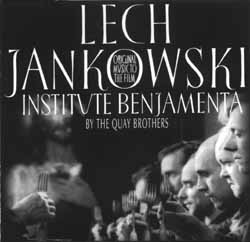
I'm not quite sure what the best way of financially supporting Leszek might be, but it felt to me that since I find his music so brilliant that the best thing I could do was to make it more widely available. Enjoy and pass it on.
7.10.2008
Review: "Blindness" by José Saramago
By writing a book where all but one character has suddenly been struck blind, Saramago presents himself with several challenges of technique. It is impressive to see a story written where visual descriptions have so little meaning and the best way of explaining events is to refer to tangible objects, sounds, feelings. Also an interesting literary choice is that up till more than half way through the book the characters are all passively acted upon, generally in increasingly negative ways as they are locked in an insane asylum and subject to the worst instincts of humanity in distress. While both these techniques challenge more conventional ways of storytelling, the second in particular made it difficult for me to really give myself to the story. We are generally given characters who have some realm of action that we can root for, and the choice to limit the protagonists to cowering in their blindness seems to suggest a moral stance on modern life and human ability that I personally don't agree with. Added to this is Saramago's slow and considered voice, page long paragraphs, punctuated regularly with commas, which read almost more like poetry than prose. While it is a unique and masterful narrative voice it was also somewhat distracting from reading the story itself- the language never quite disappeared (a problem I've had with all the Saramago I've read so far). Nonetheless, Saramago knows how to write a brilliant and gripping tale, and once the inmates finally escaped I was bound, curious to find out if they would survive and if everyone would regain their sight...

Here's also Walter Benjamin's 1940 Survey of French Literature and the discovery of some of Kafka's missing papers [via].
In further literary news, Salmon Rushdie wins the all-time best of Booker prize.

Here's also Walter Benjamin's 1940 Survey of French Literature and the discovery of some of Kafka's missing papers [via].
In further literary news, Salmon Rushdie wins the all-time best of Booker prize.
7.09.2008
Interim
I apologize for the lack of posts recently, but I've been a bit consumed by my life. Beyond many personal challenges I've been going through this summer, which this isn't the space to get into, I've been working a lot more and pursuing my various creative outlets. After a year spent not playing music I've started working on some multi-instrument recordings using the handy Garageband, a bit of a cross of Sigur Ros, Bill Frisell, Dvorak, and Leszek Jankowski (most famous for his soundtracks to the films of the Brothers Quay). I have also begun teaching guitar lessons (thanks in part to the lesson plans on this site), which has been an interesting challenge so far, and is teaching me more about the instrument than I "actually knew" in my fifteen years playing. On top of this I have also been writing a hundred+ page personal history of my lifelong relationship to spiritual questions and practices, from Catholicism to the occult, anarchism to the I Ching, entheogens and yoga to mythology and dreams, from all of which I could say that one of my foundational beliefs has been that world views are (or can be) remarkably subjective and flexible. Perhaps more on this later.


6.23.2008
More news of the word
I'm always glad to see news about literature and narratives out in the world, even if they are often cast in other mediums then good old paper.
Cormac McCarthy's "The Road," a father and son bonding story set in an ambiguous and bleak apocalypse, was arguably the best book published this past year. It has just finished filming [via reality sandwich], mainly around the Pittsburgh area (which of course to me is really the perfect post-apocalyptic landscape). The movie adaptation of McCarthy's "No Country For Old Men" was also pretty stellar, so I'm quite excited to go see this when it comes out.

In other news, Cory Doctorow at Boing Boing reports that the Stormworm computer virus is now inventing fictional events to entrap people, playing on such natural disaster and celebrity fears as 'Eiffel Tower damaged by massive earthquake' and 'Donald Trump missing, feared kidnapped.' It would be a rather interesting twist if some of these events started to become true...
For Sophie, here is a great collection of links on the writing of and critical controversy surrounding the poet Anne Carson for her birthday, whose novel-in-verse "Autobiography of Red" recasts the mythic monster Geryon as a a modern photographer and lover of Herakles, and really shows some of the ways that old stories can be recycled to reexamine their hidden themes.
And finally, laser-cut typographic scarves!

Cormac McCarthy's "The Road," a father and son bonding story set in an ambiguous and bleak apocalypse, was arguably the best book published this past year. It has just finished filming [via reality sandwich], mainly around the Pittsburgh area (which of course to me is really the perfect post-apocalyptic landscape). The movie adaptation of McCarthy's "No Country For Old Men" was also pretty stellar, so I'm quite excited to go see this when it comes out.

In other news, Cory Doctorow at Boing Boing reports that the Stormworm computer virus is now inventing fictional events to entrap people, playing on such natural disaster and celebrity fears as 'Eiffel Tower damaged by massive earthquake' and 'Donald Trump missing, feared kidnapped.' It would be a rather interesting twist if some of these events started to become true...
For Sophie, here is a great collection of links on the writing of and critical controversy surrounding the poet Anne Carson for her birthday, whose novel-in-verse "Autobiography of Red" recasts the mythic monster Geryon as a a modern photographer and lover of Herakles, and really shows some of the ways that old stories can be recycled to reexamine their hidden themes.
And finally, laser-cut typographic scarves!

6.22.2008
"to wound the autumnal city"
Early thursday morning I took the train down to Virginia for various family occasions (littlest brother graduating high school, parents' 40th anniversary, father's 60th birthday, helping them pack to move to a new home). I spent most of the trip looking out the windows, listening to the new Sigur Ros and Bill Frisell albums (along with several symphonies), and reading what is now one of my favorite books, "Dhalgren" by Samuel R. Delaney. Written in the 60s it reads like a sci-fi Pynchon or Joyce, about a mid-western city where some mysterious catastrophe took place and into which people arrive, looking for freedom. Many reviews tout the book's labyrinthine incomprehensibility along with its almost shocking questioning of issues of race, gender, and sexuality, which are certainly more than enough reason for anyone to pick up this tome. What really impressed me however were the masterful use of psychogeography and the fantastic, which rarely get enough play in modern literature. The entire city in the book shifts to correspond with the characters' moods and emotions, especially with the nameless protagonist, who thinks he is going mad. This plays into the element of the fantastic, in the sense used by the critic Todorov- that a potentially un- or hyper-real situation is presented and then doubts are established in the character and readers' minds (madness, dreams, drugs, etc) as to whether the event was real or just a fault of perception. I haven't finished it yet, so I'm not sure whether he will reveal just what happened to the city (I hope he doesn't!), but combined with its stellar discussions on artistic meaning and viscerally rendered sex scenes, "Dhalgren" is one of the most enjoyable, epic, and important books I've ever read. (Ironically enough it was hated within the sci-fi community, especially by Philip K. Dick and Harlan Ellison...which I suppose says something about its attempt to rise out of the genre).

While sorting through boxes to make more room to pack, I came across several fun books, a bestiary by T.H. White, a novel by Lord Dunsany and another by H.G. Wells, and a collection of literary ghost stories by many of the famous sci-fi and fantasy writers that should be a scream to flip through. I also just found (via Neil Gaiman's blog), that for its 85th anniversary issue Weird Tales magazine has released a list of the 85 weirdest storytellers of the past 85 years, including not just the expected authors but a wide selection of musicians, directors, and artists as well (Delaney is on the list for "Dhalgren"). It's a goldmine for anyone interested in the outré and peculiar, especially since they set up a permanent page for readers to share their own selection of weird storytellers, which I imagine will quickly become a rather interesting resource.

While sorting through boxes to make more room to pack, I came across several fun books, a bestiary by T.H. White, a novel by Lord Dunsany and another by H.G. Wells, and a collection of literary ghost stories by many of the famous sci-fi and fantasy writers that should be a scream to flip through. I also just found (via Neil Gaiman's blog), that for its 85th anniversary issue Weird Tales magazine has released a list of the 85 weirdest storytellers of the past 85 years, including not just the expected authors but a wide selection of musicians, directors, and artists as well (Delaney is on the list for "Dhalgren"). It's a goldmine for anyone interested in the outré and peculiar, especially since they set up a permanent page for readers to share their own selection of weird storytellers, which I imagine will quickly become a rather interesting resource.
6.17.2008
Alternate Controversial Models
Creationists may win the prize for suggesting an alternative take on how mankind and the universe came to be what they are now, but that doesn't mean that there aren't plenty of other uncertain models for the universe:

Also, check out this particularly amusing alternative religious reality:

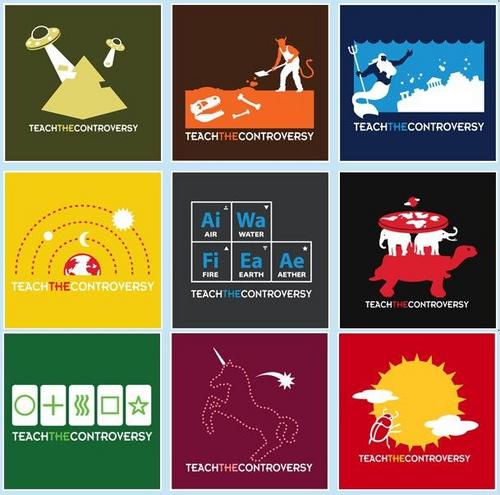
Also, check out this particularly amusing alternative religious reality:

6.15.2008
New Writings
I've added several more short stories to my Goodreads page for your reading pleasure: In The Roof, an older piece of psychic-fiction; Beast In The Eye Of, a recent story about a golem, religion, and control; and Echoplex, an unexpected horror story about love and underground shopping malls.
I also present to you this interesting and somewhat Beckettian blog, the fall and demise of the artist as a young man.
I also present to you this interesting and somewhat Beckettian blog, the fall and demise of the artist as a young man.
Subscribe to:
Posts (Atom)

