
*Claude Lévi-Strauss, French anthropologist and founder of structuralism, has passed away at 100.
*Slate on how Ayn Rand became an American icon
*The Index of Supernatural Collective Nouns
*Persuasion and the art of storytelling.
*A giant crack in Africa may create a new ocean
*US Troops in Afghanistan are burning copies of the Koran.
*Corey Doctorow on science fiction as an indicator of the present.
*Talking about interactive fiction in my narrative and technology class, here's a boingboing post about keeping interactive fiction alive.
*Nuclear accidents and the origins of superhero origins
*Alejandro Jodorowsky gets funding for his dream project 'Abel Cain'.
*And Horacio Castellanos Moya on the myth of Roberto Bolaño. What's exciting is that I'll be taking a class on contemporary fiction next semester from this irascible exile.
Showing posts with label Bolaño. Show all posts
Showing posts with label Bolaño. Show all posts
11.05.2009


10.04.2009
Mass Link Updates
It's been a while since I've posted a number of links to interesting articles that have caught my eye in my daily journeys through the internets. I often just don't have the time to say something insightful about everything that catches my eye, so the world will just have to speak for itself.
Muthos:
-Interactive Fiction Competition 09
-Submissions wanted for an anthology on The Immanence of Myth
-Fair Use copyright:1 the Estate of James Joyce:0
-Best Fiction of the Millennium so far (and critics vs. readers)
-Most challenged books of 2008 for banned book week
-Exquisite Corpse Adventure
-School of Witchcraft opens in Taiwan
-Nabokov Edits Kafka's Metamorphosis
-Horacio Castellanos Moya's Disgust with the Bolaño Myth
-Dan Brown gets D.C. all Wrong
-More youths write today than ever before
-Post-medium publishing
-Tolkien trained as British Spy
Logos:
-The Psychology of anxiety
-Religious experience linked to the social regions of the brain
-The connection between Schizophrenia and smoking
-Quantum Entanglement now visible to the naked eye
-The Decline of Polymathy and General Knowledge
-Indians find Water on the Moon
-Brain Scans closer to Revealing what we have seen
-the Sun gets its Spots back
-Cities Organized like Human Brains, and as battlesuits for surviving the future
-Earth's oldest living organism cloned
Muthos:
-Interactive Fiction Competition 09
-Submissions wanted for an anthology on The Immanence of Myth
-Fair Use copyright:1 the Estate of James Joyce:0
-Best Fiction of the Millennium so far (and critics vs. readers)
-Most challenged books of 2008 for banned book week
-Exquisite Corpse Adventure
-School of Witchcraft opens in Taiwan
-Nabokov Edits Kafka's Metamorphosis
-Horacio Castellanos Moya's Disgust with the Bolaño Myth
-Dan Brown gets D.C. all Wrong
-More youths write today than ever before
-Post-medium publishing
-Tolkien trained as British Spy
Logos:
-The Psychology of anxiety
-Religious experience linked to the social regions of the brain
-The connection between Schizophrenia and smoking
-Quantum Entanglement now visible to the naked eye
-The Decline of Polymathy and General Knowledge
-Indians find Water on the Moon
-Brain Scans closer to Revealing what we have seen
-the Sun gets its Spots back
-Cities Organized like Human Brains, and as battlesuits for surviving the future
-Earth's oldest living organism cloned
7.20.2009
Infinite Jest vs. the Importance of the Tome
Having hurtled through "Gravity's Rainbow" earlier in the summer, I decided to continue my roll of large-scale fiction and tackle another tome that's been on my list for half a decade, Infinite Jest, a task made easier by knowing that countless others are also slogging through David Foster Wallace's masterpiece. I am currently at the halfway point, some 550 pages in, and since that's beyond the Infinite Summer reading schedule I won't say anything specific about the novel's plot and instead focus on its extreme length. One might wonder, in an age of increasingly brief and fast communications, when narratives over 140 characters are considered too long for our casual attentions, why anyone would read, let alone write, a novel as thick and dense as a dictionary, despite the quote that "the enormous novel of technical, scientific, or historical knowledge [has] become the highest credential for male writers." Besides smarmy erudition, what purpose could such massive stories serve?
Personally I have always been partial to these sprawling and epic books, perhaps due to reading Tolkien's "Lord of the Rings" trilogy as a child, followed by an unabridged copy of "Les Misérables" in middle school, and have recently come to feel that what Tomes (as I distinguish them as a literary form) do is allow an author to create and represent a fully realized world or reality, far beyond the ability of lesser fictions. Certainly the novel as a form was originally invented (at the end of the 19th Century) in order to represent reality as it is, ie: Realism, though it never quite did this. Even contemporary realist novels fall into the same problems of being able to present only selected facets of reality (and hence are more artificial than realist), relying on current cultural assumptions to convey what there isn't room to say about how worlds work, and preferring to deploy the quotidian and inconsequential as the most available sign of "real life," while completely neglecting to address other, larger, and just as necessary (if not more so) aspects of human existence, as if reality only happened in small towns, bars, or foreign countries. Some examples: historical/global change (Pynchon and Neal Stephenson's more tome-like works), a person's lifetime (Eliade's "The Forbidden Forest," Ellison's "The Invisible Man," Rushdie's "Midnight's Children"), Familial generations (Marquez's "One Hundred Years of Solitude"), the fantastic/mythic ("Lord of the Rings" and other fantasy series, serving as an escape (in Tolkien's sense) from being too close to events so that we can see them on a larger perspective), or the worlds hidden and horrendous that lurk just behind the ones in which we live (Delaney's "Dhalgren," Bolaño's "2666). As Roberto Bolaño suggested, though I can't find the source, the quest and the apocalypse are the two most prominent themes in American literature, and I would argue in stories in general since long before stories were written down. And it seems preposterous that one could even think to tackle these themes, much less represent a real world, in anything less than 800 or so pages. The novel on the other hand can only capture a subset, most predominately the individual (person or location). Short stories best communicate a series of events or Poe's unified effect, and flash fictions the immediacy of an event. The tome meanwhile can convey all these at once, while at the same time placing the character in a local, national, and global milieu to which they have to respond, in a world that is not just fully articulated but is itself changing alongside (and at best reflective of) the character/s. What the shorter forms dangerously lack is the ability to remind us that we live in such a total world, with all a worlds' problems, peoples, beliefs, circumstances, etc, beyond the immediacy of our easily distractable and entertainment-starved attentions. One could argue that the briefer our narratives become the less they are able to represent to us humanity and its deepest struggles on that necessary ultimate level, leaving us to forget the past beyond our last twitter or status update. If the written word has a future it is in striving to keep representing reality as it really and vastly is: all-encompassing.
So how does Infinite Jest work as a tome? It clearly encompasses a lot, but this far in I don't think it encompasses enough. The world represented is on one hand a futuristic satire of the West, where the Americas are one country, years are subsidized by corporations, and everyone is still as hung up on pleasure as they were last century. But at the same time the actual action (if there is any) is set in a tennis academy and halfway house in Boston that already feel outdated, presumably late 1990's era, leaving the represented world feeling somewhat contradictory and slapdash, as if these disparate ideas were thrown together to satisfy DFW's theme of Entertainment rather than because they formed a cohesive, realistic whole, like most other tomes I've read manage. Secondly, though the novel takes place over a period of ten years, most of the action takes place in a period of several months, the last of which is told first, so that the reader is not given that epic sense of broad-scale changes taking place over large swathes of time (we only get these events in flashbacks), but instead a flattening of event-ness, where the action focuses solely on the minutiae of everyday life, so that it reads that nothing of narrative importance is happening at all (except for in what up to this point seems a series of subplots). Third, due to this focus on the quotidian unjuxtaposed with the epic or kairotic, told from the POV of multiple quotidian characters, I am hard pressed to believe that any of these narratives add up to something. Though supposedly they do. Though I have a sinking suspicion I already figured out what in the first hundred pages. Lastly, and most relevant to Infinite Jest's infinite length is the banal, unmusical, longwindednes of its language. DFW broke the primary rule of engaging storytelling and chose to tell descriptions instead of show events occurring, which is frightfully slow to plow through in search of the moving bits. Whole pages are spent describing the structural integrity of a roof for instance, or sentences will repeat information just given a sentence before, as if DFW thought the reader too stupid or distracted to remember what he just said, most of this description seeming to serve no other purpose than to showcase the erudition of the author and/or the hyper-intelligent main protagonist (though all the other characters speak this way too). Not even to mention the colloquial use of the word "like," which is not nearly as funny or enduring as Pynchon's use of "that," for instance. And then there are the endnotes, almost a hundred pages worth, which I respect for their contribution to Ergodic literature, though in this case these notes are often even more irrelevant details, could have just been included in the text, sound faux-academic like some of the more ghastly footnotes in Danielewski's "House of Leaves," or can't even be left unread/add another perspective like the extra chapters in Cortazar's "Hopscotch," because IJ's endnotes contain actual information about what's going on in the story, often more useful information than is ever presented in the main body of the text, which just comes off as unadoringly postmodern. In fact, it seems that the first half of the book is DFW's attempt at creating this world (with how this world was created being the payoff?), while he never seems capable of just letting the created world do its thing, as if he was afraid that if he stopped tinkering the whole thing would fall apart.
One thing Infinite Jest does well is that all its diverse characters/ruminations do in fact relate to the main theme of Entertainment (though admittedly a Western upper/middle class view of entertainment). This is particularly poignant in the Marathe/ Steeply dialogues, which are my favorite sections so far and could have been a much more streamlined philosophical document or cultural critique. I could care less about privileged tennis prodigies, and only find the AA digressions interesting due to knowing people in the program (though these bits are deeply informed, they are told in an ironic/hopeless manner almost counter to the kind of spiritual prescience and egolessness necessary it seems to really tackle the issue of addiction without mocking it, which leaves me thinking its no wonder DFW erased his own map last year if this was his worldview, or a worldview he was motivated enough to write over a thousand pages on). Nevertheless, I am still curious to see what happens, to see how and if it all ties together, and hope that my perspectives on the tome's style and discontinuities are proven wrong. If not then at least I will have the satisfaction, as an ardent reader, of having gotten through it, a satisfaction like that of mountain climbers who have reached the summit of a particularly challenging peak. As a tome, at least Infinite Jest is a challenging peak, and not just another narrative molehill.
Personally I have always been partial to these sprawling and epic books, perhaps due to reading Tolkien's "Lord of the Rings" trilogy as a child, followed by an unabridged copy of "Les Misérables" in middle school, and have recently come to feel that what Tomes (as I distinguish them as a literary form) do is allow an author to create and represent a fully realized world or reality, far beyond the ability of lesser fictions. Certainly the novel as a form was originally invented (at the end of the 19th Century) in order to represent reality as it is, ie: Realism, though it never quite did this. Even contemporary realist novels fall into the same problems of being able to present only selected facets of reality (and hence are more artificial than realist), relying on current cultural assumptions to convey what there isn't room to say about how worlds work, and preferring to deploy the quotidian and inconsequential as the most available sign of "real life," while completely neglecting to address other, larger, and just as necessary (if not more so) aspects of human existence, as if reality only happened in small towns, bars, or foreign countries. Some examples: historical/global change (Pynchon and Neal Stephenson's more tome-like works), a person's lifetime (Eliade's "The Forbidden Forest," Ellison's "The Invisible Man," Rushdie's "Midnight's Children"), Familial generations (Marquez's "One Hundred Years of Solitude"), the fantastic/mythic ("Lord of the Rings" and other fantasy series, serving as an escape (in Tolkien's sense) from being too close to events so that we can see them on a larger perspective), or the worlds hidden and horrendous that lurk just behind the ones in which we live (Delaney's "Dhalgren," Bolaño's "2666). As Roberto Bolaño suggested, though I can't find the source, the quest and the apocalypse are the two most prominent themes in American literature, and I would argue in stories in general since long before stories were written down. And it seems preposterous that one could even think to tackle these themes, much less represent a real world, in anything less than 800 or so pages. The novel on the other hand can only capture a subset, most predominately the individual (person or location). Short stories best communicate a series of events or Poe's unified effect, and flash fictions the immediacy of an event. The tome meanwhile can convey all these at once, while at the same time placing the character in a local, national, and global milieu to which they have to respond, in a world that is not just fully articulated but is itself changing alongside (and at best reflective of) the character/s. What the shorter forms dangerously lack is the ability to remind us that we live in such a total world, with all a worlds' problems, peoples, beliefs, circumstances, etc, beyond the immediacy of our easily distractable and entertainment-starved attentions. One could argue that the briefer our narratives become the less they are able to represent to us humanity and its deepest struggles on that necessary ultimate level, leaving us to forget the past beyond our last twitter or status update. If the written word has a future it is in striving to keep representing reality as it really and vastly is: all-encompassing.
So how does Infinite Jest work as a tome? It clearly encompasses a lot, but this far in I don't think it encompasses enough. The world represented is on one hand a futuristic satire of the West, where the Americas are one country, years are subsidized by corporations, and everyone is still as hung up on pleasure as they were last century. But at the same time the actual action (if there is any) is set in a tennis academy and halfway house in Boston that already feel outdated, presumably late 1990's era, leaving the represented world feeling somewhat contradictory and slapdash, as if these disparate ideas were thrown together to satisfy DFW's theme of Entertainment rather than because they formed a cohesive, realistic whole, like most other tomes I've read manage. Secondly, though the novel takes place over a period of ten years, most of the action takes place in a period of several months, the last of which is told first, so that the reader is not given that epic sense of broad-scale changes taking place over large swathes of time (we only get these events in flashbacks), but instead a flattening of event-ness, where the action focuses solely on the minutiae of everyday life, so that it reads that nothing of narrative importance is happening at all (except for in what up to this point seems a series of subplots). Third, due to this focus on the quotidian unjuxtaposed with the epic or kairotic, told from the POV of multiple quotidian characters, I am hard pressed to believe that any of these narratives add up to something. Though supposedly they do. Though I have a sinking suspicion I already figured out what in the first hundred pages. Lastly, and most relevant to Infinite Jest's infinite length is the banal, unmusical, longwindednes of its language. DFW broke the primary rule of engaging storytelling and chose to tell descriptions instead of show events occurring, which is frightfully slow to plow through in search of the moving bits. Whole pages are spent describing the structural integrity of a roof for instance, or sentences will repeat information just given a sentence before, as if DFW thought the reader too stupid or distracted to remember what he just said, most of this description seeming to serve no other purpose than to showcase the erudition of the author and/or the hyper-intelligent main protagonist (though all the other characters speak this way too). Not even to mention the colloquial use of the word "like," which is not nearly as funny or enduring as Pynchon's use of "that," for instance. And then there are the endnotes, almost a hundred pages worth, which I respect for their contribution to Ergodic literature, though in this case these notes are often even more irrelevant details, could have just been included in the text, sound faux-academic like some of the more ghastly footnotes in Danielewski's "House of Leaves," or can't even be left unread/add another perspective like the extra chapters in Cortazar's "Hopscotch," because IJ's endnotes contain actual information about what's going on in the story, often more useful information than is ever presented in the main body of the text, which just comes off as unadoringly postmodern. In fact, it seems that the first half of the book is DFW's attempt at creating this world (with how this world was created being the payoff?), while he never seems capable of just letting the created world do its thing, as if he was afraid that if he stopped tinkering the whole thing would fall apart.
One thing Infinite Jest does well is that all its diverse characters/ruminations do in fact relate to the main theme of Entertainment (though admittedly a Western upper/middle class view of entertainment). This is particularly poignant in the Marathe/ Steeply dialogues, which are my favorite sections so far and could have been a much more streamlined philosophical document or cultural critique. I could care less about privileged tennis prodigies, and only find the AA digressions interesting due to knowing people in the program (though these bits are deeply informed, they are told in an ironic/hopeless manner almost counter to the kind of spiritual prescience and egolessness necessary it seems to really tackle the issue of addiction without mocking it, which leaves me thinking its no wonder DFW erased his own map last year if this was his worldview, or a worldview he was motivated enough to write over a thousand pages on). Nevertheless, I am still curious to see what happens, to see how and if it all ties together, and hope that my perspectives on the tome's style and discontinuities are proven wrong. If not then at least I will have the satisfaction, as an ardent reader, of having gotten through it, a satisfaction like that of mountain climbers who have reached the summit of a particularly challenging peak. As a tome, at least Infinite Jest is a challenging peak, and not just another narrative molehill.
6.02.2009
Sex in the Library and the Eye of Eros
I am currently reading Lolita, as I haven't touched Nabokov before and would like to get through at least his most (in)famous works before the publication of his posthumous novel The Original of Laura. While Lolita is scandalous for its content, an aged European's ecstatic affair with a twelve-year old girl, the novel's style is perhaps the opposite of pornography: there is no mention of actual sexual acts (so far), or when they are they are couched in delicate, literary terms that apparently bore most readers, but to my mind heighten the impact of Humbert Humbert's desire.
Contrast this to recently-reviewed love letters from James Joyce to his wife Nora Barnacle, suppressed by their grandson because they contain some of the raunchiest, explicit sex acts (anal, S&M, masturbation, etc) as only a master linguist could describe them, including a fetish for farting: "It was the dirtiest fucking I ever gave you, darling. My prick was stuck up in you for hours, fucking in and out under your upturned rump. I felt your fat sweaty buttocks under my belly and say your flushed face and mad eyes. At every fuck I gave you your shameless tongue came bursting out through your lips and if I gave you a bigger stronger fuck than usual fat dirty farts came spluttering out of your backside. You had an arse full of farts that night, darling, and I fucked them out of you, big fat fellows, long windy ones, quick little merry cracks and a lot of tiny little naughty farties ending in a long gush from your hole.”
Over the winter I was working on a survey of sexual representation for an article called The Eye of Eros for my friend's sex anthology, the Living Room Handjob, an article I unfortunately never finished, that swings from the erotic symbolisms of Georges Bataille's "Story of the Eye" to philosophies of sexual perversions to paleolithic sexual cave art to the fascination of sexualized horror in the Ciudad Juárez femecides dramatized in Roberto Bolaño's "2666," showing the broad range of ways that people have expressed both their fascination and discomfort with sexual desire over history and literature:
The Eye of Eros
In 1928, Georges Bataille published “The Story of the Eye,” since considered a masterpiece of pornographic literature. In the novella, two teenage lovers embark on a series of disturbing sexual escapades, opening with the narrator watching his lover sit naked in a dish of milk and progressing through orgies and rape to the insertion of not only a bull testicle but also a human eyeball (of a priest) into the vagina of the heroine. There are conflicting critical opinions of whether or not this work classifies as pornography; Susan Sontag suggests the book is, through its juxtaposition of sex and death and recourse to the transgressive sexual narratives of the Marquis De Sade. Roland Barthes on the other hand points out the centrality and interchangeability of the sexual objects in the story: liquids of milk, blood, semen, urine, vomit, and ovoids of eggs, testicles, the sun, and the eye, suggesting instead that the coherence of the underlying metaphors moves the story away from a pornographic reading. While sex scenes and perversions abound in “The Story of the Eye,” what is most fascinating, most arousing about the text, is that the sexual images are pushed far past the point where they can be considered primarily sexual, sex is pushed beyond standing for just sex, and the reader is left with the feeling that any symbol meditated on in a sexual way can elicit similar feelings of arousal and fascination, the pleasure principle of Eros.
Biologically, human sexuality is little different from animal sexuality, in that its primary purpose is the reproduction of the species. Sex however is also pleasurable, evoking sensations of ludic play over ergic work, through foreplay, masturbation, intercourse, orgasm, and sexual fetishes or perversions. People tend to experiment with a range of sexual activities during their lives, generally settling on a few that they find most pleasurable. The philosopher Michel Foucault suggests that what activities and sensations that are considered “sexual” are culturally and historically determined, that is, what is acceptable sexually is determined by social rules of behavior and the status quo. Societies however define some sexual activities as inappropriate (wrong person, wrong activity, wrong place, etc.). These social rules are referred to as sexual morality (what can and can not be done by society's rules) and sexual norms (what is and is not expected). In the United States for example, attitudes towards premarital sex and the use of contraceptives correlate to religious beliefs and political affiliation. As Foucault points out, society defines what is considered sexually “normal,” and in order to escape this culture-bound sexuality one ought to focus on “bodies and pleasures.” But in an age of hyper, almost obsessive media depiction is it possible to only focus on pleasures and bodies outside of their attendant images and modes of representation?
Sexual perversions, or paraphilia, refer to any “powerful and persistent sexual interest other than sexual interest in copulatory or precopulatory behavior with phenotypically normal, consenting adult human partners” (that is, any sex beyond reproduction), and are described by the DSM as conditions which "are characterized by recurrent, intense sexual urges, fantasies, or behaviors that involve unusual objects, activities, or situations and cause clinically significant distress or impairment in social, occupational, or other important areas of functioning." Hundreds of paraphilias are listed in the DSM: exhibitionism, the recurrent urge or behavior to expose one's genitals to an unsuspecting person; fetishism, the use of inanimate objects to gain sexual excitement; pedophilia, a psychological disorder in which an adult experiences a sexual preference for prepubescent children; sexual masochism, the recurrent urge or behavior of wanting to be humiliated, beaten, bound, or otherwise made to suffer for sexual pleasure; sexual sadism, the recurrent urge or behavior involving acts in which the pain or humiliation of a person is sexually exciting; transvestic fetishism, arousal from clothing associated with members of the opposite sex; voyeurism, the recurrent urge or behavior to observe an unsuspecting person who is naked, disrobing or engaging in sexual activities. The DSM also mentions telephone scatalogia (obscene phone calls), necrophilia (corpses), partialism (exclusive focus on one part of the body), zoophilia (animals), coprophilia (feces), klismaphilia (enemas), urophilia (urine), emetophilia (vomit).
Reading a sex column like Dan Savage’s “Savage Love,” or browsing for any particular paraphilia on the internet, one almost gets the feeling that the majority of these perversions are now socially acceptable, that it is in fact straightforward, unkinky, heterosexual intercourse that is bizarre or perverse. But unless one is partial to one of these sexual fantasies, what is most likely to result in the mind on hearing of them are the images or objects associated with each perversion: the exhibitionist’s overcoat; dildos, butt plugs, and other insertable, fetishistic objects (including elongated vegetables and statuary); bondage belts, hoods, whips, chains, or soft rope and scarves; young boys talking to older teachers or priests; garter belts, underwear, and high heel shoes; and behind them all, the voyeur’s peeping eye behind a curtain. These images are such a vast part of popular culture and consciousness that it is enough to mention just one to evoke whole scenes and fantasies in an active imagination regardless of ones’ own sexual proclivities. The pleasure or fascination that results is derived from being able to see the experience, and the images of paraphilias add to the uniqueness (and thus visibility) of a sexual experience over other normal or perhaps boring sexual experiences. As such, the insertion of an eyeball into the vagina in “The Story of the Eye” becomes the ultimate fetish, the act of seeing itself sexualized, the witness of sex from the inside of the body.
But what of the body, which is perhaps the most common thing to human experience? Once unadorned, our differences are discernable by height, weight, shape, hair color, eye color, skin color, and physical age; generally the options one might find on a typical porn website, along with the previous lists of perversions. As opposed to erotica, which only uses or alludes to sexually arousing imagery, pornography is the explicit depiction of sexual subject matter with the sole intention of sexually exciting the viewer. It is important to note that it is not the sexual act itself that is pornographic but the depiction of the act. With more tolerant social attitudes towards sexual representation, an immense pornography industry has grown, using a variety of media – printed literature, photos, sculpture, drawing, painting, animation, sound recording, film, video, or video game – depicting not only real human sex but also situations involving fictional, cartoon, and video game characters. Studies in 2001 put the porn industry gross at between $2.6 billion and $3.9 billion a year, and the industry is considered influential in deciding format wars in media. The weight of the porn industry, the sheer amount of naked and sexualized bodies available for perusal, has to have some effect on the way we perceive the human body. And this is not even to consider the gratuitous use of sex to sell products in advertisements. Humans are multiplied, catalogued, anonymously masturbated to, in short, objectified beyond all personal experience, pleasure, or identity.
Feminist critics generally consider pornography demeaning to women. It eroticizes the domination, humiliation, and coercion of women, reinforces sexual and cultural attitudes that are complicit in rape and sexual harassment, and contributes to the male-centered objectification of women. Other recent feminists claim that appearing in or using pornography can be explained as each individual woman's choice, and is not guided by socialization in a capitalist patriarchy. Some researchers interestingly have concluded that there is an inverse relationship between availability of porn and per capita crime rates; that an increase in pornography equates to a decrease in sex crimes. Japan for example, which is noted for its large output of rape fantasy pornography, has the lowest reported sex crime rate in the industrialized world, though some attribute this to the emphasis on a woman's "honor" in Japanese culture, which makes victims of sex crime less likely to report it. The most shocking case of sex crimes are perhaps the over 400 women who have been victims of sexual homicide over the past ten years in the town of Ciudad Juárez, Mexico, which still remain unsolved. In his recently published novel, “2666,” Roberto Bolaño dramatizes these sex crimes in several hundred pages of false police reports, giving the incidental details of each victim’s discovery along with the recurring line, “the victim had been vaginally and anally raped.” Despite the horror of attempting to represent such brutal acts, the act of murder is itself never depicted, and what results is essentially a reduction of sexualized human bodies to a meaningless catalogue of names and images, albeit with the threat that someone still might find this arousing. Someone has to in order to keep committing the crimes, regardless of the amount of pornographic imagery or social sexual norms in Mexico. Perhaps what they find arousing is that they are the only one(s) who get to see the actual act and not just its aftermath. Pornographers and rapists control the lens of the modern sexual spectacle.
If bodies and pleasures have been reduced to dehumanized catalogues, how was sex seen in earlier ages? The depiction of sexual acts is as old as civilization, but the concept of pornography as understood today did not exist until the Victorian era. Previous to that time law did not stipulate looking at sexual objects or images. In some cases, specific books, engravings or image collections were censored or outlawed, but the trend to compose laws that restricted viewing of sexually explicit things in general was a Victorian construct. When large-scale excavations of Pompeii were undertaken in the 1860s, much of the erotic art of the Romans came to light, shocking the Victorians who saw themselves as the intellectual heirs of the Roman Empire. They did not know what to do with the frank depictions of sexuality, and endeavored to hide them away from everyone but upper class scholars. The Victorians’ morality and sexual conservatism is legendary, so much so that the earliest psychological analysis carried out by Sigmund Freud focused primarily on sexual repressions, conjecturing the concepts of erogenous zones, psychosexual development, and the Oedipus complex. Freud believed that all culture was essentially a response to cover up childhood sexual traumas, though later it was decided that his theories were based primarily out of his own experiences (while perhaps with a desire to shock his stiff-laced contemporaries).
What would Freud have made of the Paleolithic cave paintings and carvings that are the oldest surviving examples of erotica, much less the entire history of human civilization? The ancient Greeks painted sexual scenes onto their ceramics; many are famous for being some of the earliest depictions of same-sex relations and pederasty. The Moche of Peru in South America also sculpted explicit scenes of sex into their pottery. There has been a long tradition of erotic painting among the Eastern cultures as well. In Japan, shunga appeared in the 13th century and continued to grow in popularity until the late 19th century when photography was invented, and the erotic art of China reached its popular peak during the latter part of the Ming Dynasty. In India the Kama Sutra was written between the 1st and 6th centuries. It was intended as both an exploration of human desire, including seduction and infidelity, and a technical guide to pleasing a sexual partner within a marriage sex manual, and is still popularly read throughout the world. In Europe, starting with the Renaissance, there was a tradition of producing erotica for the amusement of the aristocracy. In the early 16th century, the text “I Modi” was a woodcut album created by the designer Giulio Romano, the engraver Marcantonio Raimondi and the poet Pietro Aretino. In 1601, Caravaggio painted the "Amor Vincit Omnia" for the collection of the Marquis Vincenzo Giustiniani. The tradition is continued by other, more modern painters, such as Fragonard, Courbet, Millet, Balthus, Picasso, Edgar Degas, Toulouse-Lautrec, and Egon Schiele, who served time in jail and had several works destroyed by the authorities for offending turn-of-the-century Austrian mores with his depiction of nude young girls. With the 20th Century, photography became the most interesting medium for erotic art, as it made the reproduction of images democratic, rapid, and widely distributable, a trend that has only continued through film to our present media overload. It would now be much more difficult to censor or legislate sexually explicit material, despite frequent governmental attempts to do so. The history of culture is too intertwined with the history of sexual representation to pull their sweating bodies apart. And yet how did we move from the erotic appreciation of sex as beauty to the pornographic selling of sex as spectacle, and what does this human fascination with sexual imagery mean?
Contrast this to recently-reviewed love letters from James Joyce to his wife Nora Barnacle, suppressed by their grandson because they contain some of the raunchiest, explicit sex acts (anal, S&M, masturbation, etc) as only a master linguist could describe them, including a fetish for farting: "It was the dirtiest fucking I ever gave you, darling. My prick was stuck up in you for hours, fucking in and out under your upturned rump. I felt your fat sweaty buttocks under my belly and say your flushed face and mad eyes. At every fuck I gave you your shameless tongue came bursting out through your lips and if I gave you a bigger stronger fuck than usual fat dirty farts came spluttering out of your backside. You had an arse full of farts that night, darling, and I fucked them out of you, big fat fellows, long windy ones, quick little merry cracks and a lot of tiny little naughty farties ending in a long gush from your hole.”
Over the winter I was working on a survey of sexual representation for an article called The Eye of Eros for my friend's sex anthology, the Living Room Handjob, an article I unfortunately never finished, that swings from the erotic symbolisms of Georges Bataille's "Story of the Eye" to philosophies of sexual perversions to paleolithic sexual cave art to the fascination of sexualized horror in the Ciudad Juárez femecides dramatized in Roberto Bolaño's "2666," showing the broad range of ways that people have expressed both their fascination and discomfort with sexual desire over history and literature:
The Eye of Eros
In 1928, Georges Bataille published “The Story of the Eye,” since considered a masterpiece of pornographic literature. In the novella, two teenage lovers embark on a series of disturbing sexual escapades, opening with the narrator watching his lover sit naked in a dish of milk and progressing through orgies and rape to the insertion of not only a bull testicle but also a human eyeball (of a priest) into the vagina of the heroine. There are conflicting critical opinions of whether or not this work classifies as pornography; Susan Sontag suggests the book is, through its juxtaposition of sex and death and recourse to the transgressive sexual narratives of the Marquis De Sade. Roland Barthes on the other hand points out the centrality and interchangeability of the sexual objects in the story: liquids of milk, blood, semen, urine, vomit, and ovoids of eggs, testicles, the sun, and the eye, suggesting instead that the coherence of the underlying metaphors moves the story away from a pornographic reading. While sex scenes and perversions abound in “The Story of the Eye,” what is most fascinating, most arousing about the text, is that the sexual images are pushed far past the point where they can be considered primarily sexual, sex is pushed beyond standing for just sex, and the reader is left with the feeling that any symbol meditated on in a sexual way can elicit similar feelings of arousal and fascination, the pleasure principle of Eros.
Biologically, human sexuality is little different from animal sexuality, in that its primary purpose is the reproduction of the species. Sex however is also pleasurable, evoking sensations of ludic play over ergic work, through foreplay, masturbation, intercourse, orgasm, and sexual fetishes or perversions. People tend to experiment with a range of sexual activities during their lives, generally settling on a few that they find most pleasurable. The philosopher Michel Foucault suggests that what activities and sensations that are considered “sexual” are culturally and historically determined, that is, what is acceptable sexually is determined by social rules of behavior and the status quo. Societies however define some sexual activities as inappropriate (wrong person, wrong activity, wrong place, etc.). These social rules are referred to as sexual morality (what can and can not be done by society's rules) and sexual norms (what is and is not expected). In the United States for example, attitudes towards premarital sex and the use of contraceptives correlate to religious beliefs and political affiliation. As Foucault points out, society defines what is considered sexually “normal,” and in order to escape this culture-bound sexuality one ought to focus on “bodies and pleasures.” But in an age of hyper, almost obsessive media depiction is it possible to only focus on pleasures and bodies outside of their attendant images and modes of representation?
Sexual perversions, or paraphilia, refer to any “powerful and persistent sexual interest other than sexual interest in copulatory or precopulatory behavior with phenotypically normal, consenting adult human partners” (that is, any sex beyond reproduction), and are described by the DSM as conditions which "are characterized by recurrent, intense sexual urges, fantasies, or behaviors that involve unusual objects, activities, or situations and cause clinically significant distress or impairment in social, occupational, or other important areas of functioning." Hundreds of paraphilias are listed in the DSM: exhibitionism, the recurrent urge or behavior to expose one's genitals to an unsuspecting person; fetishism, the use of inanimate objects to gain sexual excitement; pedophilia, a psychological disorder in which an adult experiences a sexual preference for prepubescent children; sexual masochism, the recurrent urge or behavior of wanting to be humiliated, beaten, bound, or otherwise made to suffer for sexual pleasure; sexual sadism, the recurrent urge or behavior involving acts in which the pain or humiliation of a person is sexually exciting; transvestic fetishism, arousal from clothing associated with members of the opposite sex; voyeurism, the recurrent urge or behavior to observe an unsuspecting person who is naked, disrobing or engaging in sexual activities. The DSM also mentions telephone scatalogia (obscene phone calls), necrophilia (corpses), partialism (exclusive focus on one part of the body), zoophilia (animals), coprophilia (feces), klismaphilia (enemas), urophilia (urine), emetophilia (vomit).
Reading a sex column like Dan Savage’s “Savage Love,” or browsing for any particular paraphilia on the internet, one almost gets the feeling that the majority of these perversions are now socially acceptable, that it is in fact straightforward, unkinky, heterosexual intercourse that is bizarre or perverse. But unless one is partial to one of these sexual fantasies, what is most likely to result in the mind on hearing of them are the images or objects associated with each perversion: the exhibitionist’s overcoat; dildos, butt plugs, and other insertable, fetishistic objects (including elongated vegetables and statuary); bondage belts, hoods, whips, chains, or soft rope and scarves; young boys talking to older teachers or priests; garter belts, underwear, and high heel shoes; and behind them all, the voyeur’s peeping eye behind a curtain. These images are such a vast part of popular culture and consciousness that it is enough to mention just one to evoke whole scenes and fantasies in an active imagination regardless of ones’ own sexual proclivities. The pleasure or fascination that results is derived from being able to see the experience, and the images of paraphilias add to the uniqueness (and thus visibility) of a sexual experience over other normal or perhaps boring sexual experiences. As such, the insertion of an eyeball into the vagina in “The Story of the Eye” becomes the ultimate fetish, the act of seeing itself sexualized, the witness of sex from the inside of the body.
But what of the body, which is perhaps the most common thing to human experience? Once unadorned, our differences are discernable by height, weight, shape, hair color, eye color, skin color, and physical age; generally the options one might find on a typical porn website, along with the previous lists of perversions. As opposed to erotica, which only uses or alludes to sexually arousing imagery, pornography is the explicit depiction of sexual subject matter with the sole intention of sexually exciting the viewer. It is important to note that it is not the sexual act itself that is pornographic but the depiction of the act. With more tolerant social attitudes towards sexual representation, an immense pornography industry has grown, using a variety of media – printed literature, photos, sculpture, drawing, painting, animation, sound recording, film, video, or video game – depicting not only real human sex but also situations involving fictional, cartoon, and video game characters. Studies in 2001 put the porn industry gross at between $2.6 billion and $3.9 billion a year, and the industry is considered influential in deciding format wars in media. The weight of the porn industry, the sheer amount of naked and sexualized bodies available for perusal, has to have some effect on the way we perceive the human body. And this is not even to consider the gratuitous use of sex to sell products in advertisements. Humans are multiplied, catalogued, anonymously masturbated to, in short, objectified beyond all personal experience, pleasure, or identity.
Feminist critics generally consider pornography demeaning to women. It eroticizes the domination, humiliation, and coercion of women, reinforces sexual and cultural attitudes that are complicit in rape and sexual harassment, and contributes to the male-centered objectification of women. Other recent feminists claim that appearing in or using pornography can be explained as each individual woman's choice, and is not guided by socialization in a capitalist patriarchy. Some researchers interestingly have concluded that there is an inverse relationship between availability of porn and per capita crime rates; that an increase in pornography equates to a decrease in sex crimes. Japan for example, which is noted for its large output of rape fantasy pornography, has the lowest reported sex crime rate in the industrialized world, though some attribute this to the emphasis on a woman's "honor" in Japanese culture, which makes victims of sex crime less likely to report it. The most shocking case of sex crimes are perhaps the over 400 women who have been victims of sexual homicide over the past ten years in the town of Ciudad Juárez, Mexico, which still remain unsolved. In his recently published novel, “2666,” Roberto Bolaño dramatizes these sex crimes in several hundred pages of false police reports, giving the incidental details of each victim’s discovery along with the recurring line, “the victim had been vaginally and anally raped.” Despite the horror of attempting to represent such brutal acts, the act of murder is itself never depicted, and what results is essentially a reduction of sexualized human bodies to a meaningless catalogue of names and images, albeit with the threat that someone still might find this arousing. Someone has to in order to keep committing the crimes, regardless of the amount of pornographic imagery or social sexual norms in Mexico. Perhaps what they find arousing is that they are the only one(s) who get to see the actual act and not just its aftermath. Pornographers and rapists control the lens of the modern sexual spectacle.
If bodies and pleasures have been reduced to dehumanized catalogues, how was sex seen in earlier ages? The depiction of sexual acts is as old as civilization, but the concept of pornography as understood today did not exist until the Victorian era. Previous to that time law did not stipulate looking at sexual objects or images. In some cases, specific books, engravings or image collections were censored or outlawed, but the trend to compose laws that restricted viewing of sexually explicit things in general was a Victorian construct. When large-scale excavations of Pompeii were undertaken in the 1860s, much of the erotic art of the Romans came to light, shocking the Victorians who saw themselves as the intellectual heirs of the Roman Empire. They did not know what to do with the frank depictions of sexuality, and endeavored to hide them away from everyone but upper class scholars. The Victorians’ morality and sexual conservatism is legendary, so much so that the earliest psychological analysis carried out by Sigmund Freud focused primarily on sexual repressions, conjecturing the concepts of erogenous zones, psychosexual development, and the Oedipus complex. Freud believed that all culture was essentially a response to cover up childhood sexual traumas, though later it was decided that his theories were based primarily out of his own experiences (while perhaps with a desire to shock his stiff-laced contemporaries).
What would Freud have made of the Paleolithic cave paintings and carvings that are the oldest surviving examples of erotica, much less the entire history of human civilization? The ancient Greeks painted sexual scenes onto their ceramics; many are famous for being some of the earliest depictions of same-sex relations and pederasty. The Moche of Peru in South America also sculpted explicit scenes of sex into their pottery. There has been a long tradition of erotic painting among the Eastern cultures as well. In Japan, shunga appeared in the 13th century and continued to grow in popularity until the late 19th century when photography was invented, and the erotic art of China reached its popular peak during the latter part of the Ming Dynasty. In India the Kama Sutra was written between the 1st and 6th centuries. It was intended as both an exploration of human desire, including seduction and infidelity, and a technical guide to pleasing a sexual partner within a marriage sex manual, and is still popularly read throughout the world. In Europe, starting with the Renaissance, there was a tradition of producing erotica for the amusement of the aristocracy. In the early 16th century, the text “I Modi” was a woodcut album created by the designer Giulio Romano, the engraver Marcantonio Raimondi and the poet Pietro Aretino. In 1601, Caravaggio painted the "Amor Vincit Omnia" for the collection of the Marquis Vincenzo Giustiniani. The tradition is continued by other, more modern painters, such as Fragonard, Courbet, Millet, Balthus, Picasso, Edgar Degas, Toulouse-Lautrec, and Egon Schiele, who served time in jail and had several works destroyed by the authorities for offending turn-of-the-century Austrian mores with his depiction of nude young girls. With the 20th Century, photography became the most interesting medium for erotic art, as it made the reproduction of images democratic, rapid, and widely distributable, a trend that has only continued through film to our present media overload. It would now be much more difficult to censor or legislate sexually explicit material, despite frequent governmental attempts to do so. The history of culture is too intertwined with the history of sexual representation to pull their sweating bodies apart. And yet how did we move from the erotic appreciation of sex as beauty to the pornographic selling of sex as spectacle, and what does this human fascination with sexual imagery mean?
5.24.2009
Manifestoes from Beyond the Real
Artists from all times have attempted to escape or transcend the constraints they saw in the culturally constructed realities in which they found themselves, often through the penning of manifestoes as statements of purpose for the new realities they wanted to instead create. I have also often struggled with this desperation against the day, in this age against the quotidian, the snarky, the postmodern, the realism that is "just this," when clearly there is so much more to living that can not be contained by pale reiterations of last century's visionaries whose words and worlds no longer apply, at the edge of the future, the crumbling edge of what may be left for us, the necessity of human survival let alone all the possibilities of the imagination, which are vast and untapped except by scattered madmen and genre writers. Despite the beauty of the manifestoes given below though, I have been trying to formulate a new perspective, not against reality or realism, because obviously we do live in the real world, if a limited constructed one, but a sense of reality that contains all that, all the horror and wonder, all the magic, dreams, the future, alternative histories and galactic alignments with the stars spiraling out of all expected orbits, the sense that every day, every moment, is an ultimate moment, reality being pushed to the furthest edges of where we have been, with the realization that we are only now barely learning just how far and fantastic we can go.
"The Transrealist writes about immediate perceptions in a fantastic way. Any literature which is not about actual reality is weak and enervated. But the genre of straight realism is all burnt out. Who needs more straight novels? The tools of fantasy and SF offer a means to thicken and intensify realistic fiction. By using fantastic devices it is actually possible to manipulate subtext. The familiar tools of SF — time travel, antigravity, alternate worlds, telepathy, etc. — are in fact symbolic of archetypal modes of perception. Time travel is memory, flight is enlightenment, alternate worlds symbolize the great variety of individual world-views, and telepathy stands for the ability to communicate fully. This is the “Trans” aspect. The “realism” aspect has to do with the fact that a valid work of art should deal with the world the way it actually is. Transrealism tries to treat not only immediate reality, but also the higher reality in which life is embedded." [from Rudy Rucker's A Transrealist Manifesto]
"Leave it all, new... the entrance is in the area and the entry into adventure: the poem as a journey and the poet as a hero of heroes unveiled. Tenderness as an exercise in speed. Respiration and heat. Experience fired, structures that are devouring themselves, crazy contradictions. If the poet is interfered, the reader will have to interfere... The true imagination is one that dynamite elucidated, injected into other microbes esmeraldas imaginations. In poetry and whatever, the entry must be in the area and the entry into adventure. Create tools for the subversion of everyday life. The stations of the subjective human being, with its beautiful trees and huge obscene, as laboratories of experimentation. Fix parallel glimpse situations and so heartbreaking as a large scratch on the chest, in the face. Analogy endless gestures. There are so many that are new or when we notice, although we are doing / watching in front of a mirror. Stormy night. The perception is opened by an ethical-aesthetic brought to the last." [from Roberto Bolaño's "Primer Manifiesto Infrarrealista" (translated by Googlebots)]
"We will sing of the great crowds agitated by work, pleasure and revolt; the multi-colored and polyphonic surf of revolutions in modern capitals: the nocturnal vibration of the arsenals and the workshops beneath their violent electric moons: the gluttonous railway stations devouring smoking serpents; factories suspended from the clouds by the thread of their smoke; bridges with the leap of gymnasts flung across the diabolic cutlery of sunny rivers: adventurous steamers sniffing the horizon; great-breasted locomotives, puffing on the rails like enormous steel horses with long tubes for bridle, and the gliding flight of aeroplanes whose propeller sounds like the flapping of a flag and the applause of enthusiastic crowds." [from F. T. Marinetti's The Futurist Manifesto]
"The realistic attitude, inspired by positivism, from Saint Thomas Aquinas to Anatole France, clearly seems to me to be hostile to any intellectual or moral advancement. I loathe it, for it is made up of mediocrity, hate, and dull conceit. It is this attitude which today gives birth to these ridiculous books, these insulting plays. It constantly feeds on and derives strength from the newspapers and stultifies both science and art by assiduously flattering the lowest of tastes; clarity bordering on stupidity... Taking into consideration only the time of pure dreaming, that is the dreams of sleep, is not inferior to the sum of the moments of reality, or, to be more precisely limiting, the moments of waking, has still today been so grossly neglected. I have always been amazed at the way an ordinary observer lends so much more credence and attaches so much more importance to waking events than to those occurring in dreams" [from Andre Breton's Manifesto of Surrealism]
"So what really is the situation? It's the realization of a better game, which more exactly is provoked by the human presence." [from The Situationist Manifesto
"The Transrealist writes about immediate perceptions in a fantastic way. Any literature which is not about actual reality is weak and enervated. But the genre of straight realism is all burnt out. Who needs more straight novels? The tools of fantasy and SF offer a means to thicken and intensify realistic fiction. By using fantastic devices it is actually possible to manipulate subtext. The familiar tools of SF — time travel, antigravity, alternate worlds, telepathy, etc. — are in fact symbolic of archetypal modes of perception. Time travel is memory, flight is enlightenment, alternate worlds symbolize the great variety of individual world-views, and telepathy stands for the ability to communicate fully. This is the “Trans” aspect. The “realism” aspect has to do with the fact that a valid work of art should deal with the world the way it actually is. Transrealism tries to treat not only immediate reality, but also the higher reality in which life is embedded." [from Rudy Rucker's A Transrealist Manifesto]
"Leave it all, new... the entrance is in the area and the entry into adventure: the poem as a journey and the poet as a hero of heroes unveiled. Tenderness as an exercise in speed. Respiration and heat. Experience fired, structures that are devouring themselves, crazy contradictions. If the poet is interfered, the reader will have to interfere... The true imagination is one that dynamite elucidated, injected into other microbes esmeraldas imaginations. In poetry and whatever, the entry must be in the area and the entry into adventure. Create tools for the subversion of everyday life. The stations of the subjective human being, with its beautiful trees and huge obscene, as laboratories of experimentation. Fix parallel glimpse situations and so heartbreaking as a large scratch on the chest, in the face. Analogy endless gestures. There are so many that are new or when we notice, although we are doing / watching in front of a mirror. Stormy night. The perception is opened by an ethical-aesthetic brought to the last." [from Roberto Bolaño's "Primer Manifiesto Infrarrealista" (translated by Googlebots)]
"We will sing of the great crowds agitated by work, pleasure and revolt; the multi-colored and polyphonic surf of revolutions in modern capitals: the nocturnal vibration of the arsenals and the workshops beneath their violent electric moons: the gluttonous railway stations devouring smoking serpents; factories suspended from the clouds by the thread of their smoke; bridges with the leap of gymnasts flung across the diabolic cutlery of sunny rivers: adventurous steamers sniffing the horizon; great-breasted locomotives, puffing on the rails like enormous steel horses with long tubes for bridle, and the gliding flight of aeroplanes whose propeller sounds like the flapping of a flag and the applause of enthusiastic crowds." [from F. T. Marinetti's The Futurist Manifesto]
"The realistic attitude, inspired by positivism, from Saint Thomas Aquinas to Anatole France, clearly seems to me to be hostile to any intellectual or moral advancement. I loathe it, for it is made up of mediocrity, hate, and dull conceit. It is this attitude which today gives birth to these ridiculous books, these insulting plays. It constantly feeds on and derives strength from the newspapers and stultifies both science and art by assiduously flattering the lowest of tastes; clarity bordering on stupidity... Taking into consideration only the time of pure dreaming, that is the dreams of sleep, is not inferior to the sum of the moments of reality, or, to be more precisely limiting, the moments of waking, has still today been so grossly neglected. I have always been amazed at the way an ordinary observer lends so much more credence and attaches so much more importance to waking events than to those occurring in dreams" [from Andre Breton's Manifesto of Surrealism]
"So what really is the situation? It's the realization of a better game, which more exactly is provoked by the human presence." [from The Situationist Manifesto
5.18.2009
The Convergence of the Dynamo and the Virgin
I'm currently rereading, well, trying to finally finish Gravity's Rainbow, before Pynchon's newest novel comes out (a 60s noir novel Inherent Vice) and wanted to share these angles on Pynchon's trajectory and early influence:
"The larger principle of the V, the allegory of increasing death and dehumanization as the Modern world begins the downward slope of the parabola of “gravity’s rainbow,” the parable of self-destruction inscribed in the history of the nineteenth and twentieth centuries. Distinctions, political and otherwise, disappear, revealing a broader concept, the V, the idea of convergence of possibility into certainty, of diversity into uniformity.
"We discover in “Entropy” the origin of Pynchon’s symbol of the V... "Henry Adams, three generations before [Callisto’s] own, had stared aghast at Power; Callisto found himself now in much the same state over Thermodynamics, the inner life of that power, realizing like his predecessor that the Virgin and the dynamo stands as much for love as for power “ (280). Pynchon may have found the title for V--and the concept of the V as allegory--in Henry Adams’s Education. In the novel V, the V is embodied in a female principle of death, the Lady V. In Gravity’s Rainbow, it is the V-2 rocket.
"Pynchon also shows in “Entropy” that he has copied Henry Adams’s historical method and that his novels are “historical” in the sense that, like Adams, he rewrites history to deal with events and signs that conventional history tends to ignore.
[from allegoria paranoia on Pynchon's early short story Entropy]
"But to [Henry] Adams the dynamo became a symbol of infinity. As he grew accustomed to the great gallery of machines, he began to feel the forty-foot dynamos as a moral force, much as the early Christians felt the Cross. The planet itself seemed less impressive, in its old-fashioned, deliberate, annual or daily revolution, than this huge wheel... Before the end, one began to pray to it; inherited instinct taught the natural expression of man before silent and infinite force. Among the thousand symbols of ultimate energy the dynamo was not so human as some, but it was the most expressive.
"[The virgin and the dynamo] were as different as a magnet is from gravitation, supposing one knew what a magnet was, or gravitation, or love. The force of the Virgin was still felt at Lourdes, and seemed to be as potent as X-rays; but in America neither Venus nor Virgin ever had value as force -- at most as sentiment. No American had ever been truly afraid of either.
"The symbol was force, as a compass-needle or a triangle was force, as the mechanist might prove by losing it, and nothing could be gained by ignoring their value. Symbol or energy, the Virgin had acted as the greatest force the Western world ever felt, and had drawn man's activities to herself more strongly than any other power, natural or supernatural, had ever done; the historian's business was to follow the track of the energy."
(This one also supports what I would call Pynchon's apocryphal use of history and culture) "Historians undertake to arrange sequences, -- called stories, or histories -- assuming in silence a relation of cause and effect These assumptions, hidden in the depths of dusty libraries, have been astounding, but commonly unconscious and childlike; so much so, that if any captious critic were to drag them to light, historians would probably reply, with one voice, that they had never supposed themselves required to know what they were talking about."
[from The Education of Henry Adams]
The whole idea of a converging point of history seems similar to Bolano's use of the year 2666, a date set far enough in the future that the meaning of current events is like a shadow leading toward it. A similar concept is the singularity; technological, astronomical, apocalyptic, or otherwise. Pynchon's beauty is setting the horror and sublimity of any inevitable future against the possibility of that future also containing love, Adam's virgin. From Gravity's Rainbow: "The whole point is that lovers always get together, isolation is overcome, and like it or not that is the one great centripetal movement of the World. Throuh the machineries of greed, pettiness, and the abuse of power, love occurs."

[from the internet]
"The larger principle of the V, the allegory of increasing death and dehumanization as the Modern world begins the downward slope of the parabola of “gravity’s rainbow,” the parable of self-destruction inscribed in the history of the nineteenth and twentieth centuries. Distinctions, political and otherwise, disappear, revealing a broader concept, the V, the idea of convergence of possibility into certainty, of diversity into uniformity.
"We discover in “Entropy” the origin of Pynchon’s symbol of the V... "Henry Adams, three generations before [Callisto’s] own, had stared aghast at Power; Callisto found himself now in much the same state over Thermodynamics, the inner life of that power, realizing like his predecessor that the Virgin and the dynamo stands as much for love as for power “ (280). Pynchon may have found the title for V--and the concept of the V as allegory--in Henry Adams’s Education. In the novel V, the V is embodied in a female principle of death, the Lady V. In Gravity’s Rainbow, it is the V-2 rocket.
"Pynchon also shows in “Entropy” that he has copied Henry Adams’s historical method and that his novels are “historical” in the sense that, like Adams, he rewrites history to deal with events and signs that conventional history tends to ignore.
[from allegoria paranoia on Pynchon's early short story Entropy]
"But to [Henry] Adams the dynamo became a symbol of infinity. As he grew accustomed to the great gallery of machines, he began to feel the forty-foot dynamos as a moral force, much as the early Christians felt the Cross. The planet itself seemed less impressive, in its old-fashioned, deliberate, annual or daily revolution, than this huge wheel... Before the end, one began to pray to it; inherited instinct taught the natural expression of man before silent and infinite force. Among the thousand symbols of ultimate energy the dynamo was not so human as some, but it was the most expressive.
"[The virgin and the dynamo] were as different as a magnet is from gravitation, supposing one knew what a magnet was, or gravitation, or love. The force of the Virgin was still felt at Lourdes, and seemed to be as potent as X-rays; but in America neither Venus nor Virgin ever had value as force -- at most as sentiment. No American had ever been truly afraid of either.
"The symbol was force, as a compass-needle or a triangle was force, as the mechanist might prove by losing it, and nothing could be gained by ignoring their value. Symbol or energy, the Virgin had acted as the greatest force the Western world ever felt, and had drawn man's activities to herself more strongly than any other power, natural or supernatural, had ever done; the historian's business was to follow the track of the energy."
(This one also supports what I would call Pynchon's apocryphal use of history and culture) "Historians undertake to arrange sequences, -- called stories, or histories -- assuming in silence a relation of cause and effect These assumptions, hidden in the depths of dusty libraries, have been astounding, but commonly unconscious and childlike; so much so, that if any captious critic were to drag them to light, historians would probably reply, with one voice, that they had never supposed themselves required to know what they were talking about."
[from The Education of Henry Adams]
The whole idea of a converging point of history seems similar to Bolano's use of the year 2666, a date set far enough in the future that the meaning of current events is like a shadow leading toward it. A similar concept is the singularity; technological, astronomical, apocalyptic, or otherwise. Pynchon's beauty is setting the horror and sublimity of any inevitable future against the possibility of that future also containing love, Adam's virgin. From Gravity's Rainbow: "The whole point is that lovers always get together, isolation is overcome, and like it or not that is the one great centripetal movement of the World. Throuh the machineries of greed, pettiness, and the abuse of power, love occurs."
[from the internet]
4.30.2009
Review: "The Savage Detectives" by Roberto Bolaño
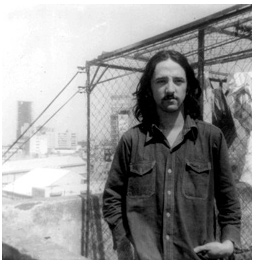
Having read Bolaño's 2666 prior to this, I am perhaps more apt to "get" the Savage Detectives. One of the biggest complaints is that this novel does not have a plot (or one that gets tied together). Following the journal of a young poet through the sex and literary references of his friendship with two anti-hero poets, the visceral realists, the individual narrative suddenly comes to a screeching halt as the characters escape into the Sonoro desert in search of an older poet, and to escape the murderous revenge of a pimp. Then twenty years pass, told only in monologues from people around the world who met the poets afterward, and their decline into the entropic nothingness of modernity (though personally I was expecting at least a hundred more narrators for the story to really get interesting). Eventually one realizes that the poets are fleeing some horrible crime, and that all the narratives are essentially interviews with someone looking for them. The beauty of this narrative move is that the point is not "what happens," but the effect of time and desire/desperation on our sense of reality, particularly through the use of choral narratives that everyone's got their own (flawed and limited) perspective. This is a move similar to in 2666, where no one character is the story's central protagonist, but we have an end date hundreds of years in the future that acts as a sort of existential crossroads for the present, casting the long shadow called history back onto events that, for the characters living them, are relatively important but soon fade into the otherworldly insignificance of the desert. As Bolaño himself suggests, this is a threnody, a death song for those still living. On the other hand, this story can be read as a comment on the discourse of the "other," that two Mexicans lost in the rest of the world is a parallel of the "noble savage" myths that accompanied the colonization of the new world. The visceral realist poets are so foreign that everyone whom they encounter become alien to themselves, and through the lack of closure, we the reader become equally as displaced from our own lives and sense of history. Despite all the literature and culture we acquire, Bolaño seems to suggest that on the most visceral level of reality we are all still savages, unsure what we are looking for and just as likely to kill the object of our desire when we find it.
12.23.2008
Quotes from Bolaño on Literature and the Abyss
"All literature, in a certain sense, is political. I mean, first, it’s a reflection on politics, and second, it’s also a political program. The former alludes to reality—to the nightmare or benevolent dream that we call reality—which ends, in both cases, with death and the obliteration not only of literature, but of time. The latter refers to the small bits and pieces that survive, that persist; and to reason. Although we know, of course, that in the human scale of things, persistence is an illusion and reason is only a fragile railing that keeps us from plunging into the abyss. But don’t pay any attention to what I just said."
"For me, the word writing is the exact opposite of the word waiting. Instead of waiting, there is writing. Well, I’m probably wrong—it’s possible that writing is another form of waiting, of delaying things. I’d like to think otherwise."
"Yes, plots are a strange matter. I believe, even though there may be many exceptions, that at a certain moment a story chooses you and won’t leave you in peace. Fortunately, that’s not so important—the form, the structure, always belong to you, and without form or structure there’s no book, or at least in most cases that’s what happens. Let’s say the story and the plot arise by chance, that they belong to the realm of chance, that is, chaos, disorder, or to a realm that’s in constant turmoil (some call it apocalyptic). Form, on the other hand, is a choice made through intelligence, cunning and silence, all the weapons used by Ulysses in his battle against death. Form seeks an artifice; the story seeks a precipice. Or to use a metaphor from the Chilean countryside (a bad one, as you’ll see): It’s not that I don’t like precipices, but I prefer to see them from a bridge."
[from an interview with RB]
The adventure tradition and the apocalyptic are "the only two traditions that remain alive on our continent, perhaps because they're the only two to get close to the abyss that surrounds us."
[from New York Review of Books]
"For me, the word writing is the exact opposite of the word waiting. Instead of waiting, there is writing. Well, I’m probably wrong—it’s possible that writing is another form of waiting, of delaying things. I’d like to think otherwise."
"Yes, plots are a strange matter. I believe, even though there may be many exceptions, that at a certain moment a story chooses you and won’t leave you in peace. Fortunately, that’s not so important—the form, the structure, always belong to you, and without form or structure there’s no book, or at least in most cases that’s what happens. Let’s say the story and the plot arise by chance, that they belong to the realm of chance, that is, chaos, disorder, or to a realm that’s in constant turmoil (some call it apocalyptic). Form, on the other hand, is a choice made through intelligence, cunning and silence, all the weapons used by Ulysses in his battle against death. Form seeks an artifice; the story seeks a precipice. Or to use a metaphor from the Chilean countryside (a bad one, as you’ll see): It’s not that I don’t like precipices, but I prefer to see them from a bridge."
[from an interview with RB]
The adventure tradition and the apocalyptic are "the only two traditions that remain alive on our continent, perhaps because they're the only two to get close to the abyss that surrounds us."
[from New York Review of Books]
12.14.2008
2666: Bolaño's Oasis of Horror
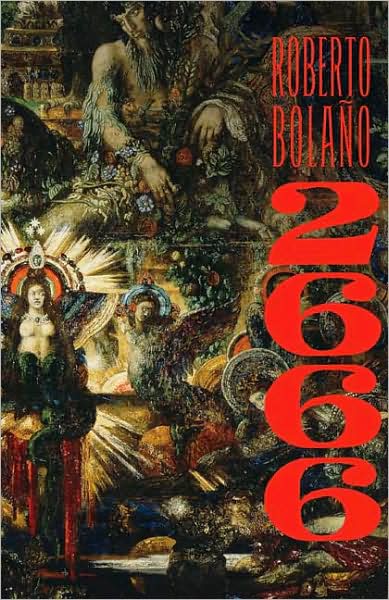
In the beginning of Roberto Bolaño's posthuomous masterpiece is a quote from Baudelaire, "An oasis of horror in a desert of boredom." That about sums up the aesthetic approach of the tome, the first section of which begins with the seemingly irrelevant story of an international group of academics chasing as elusive German author to the small Mexican border town of Santa Teresa. Sure, the academics give conferences, fall in love, and learn just briefly of a series of crimes in which hundreds of women have been killed in Santa Teresa over the past decade, but ultimately nothing happens, the academics do not find their author, and the story continues without them.
But this desert of boredom is the genius of the work, for in each section we get closer and closer to what is happening in Santa Teresa, reaching through the boredom to an unmistakable and spine-chilling horror that seems to lurk just below the surface of the page. Even the section about the crimes, essentially 200 pages worth of crime reports on every single raped and murdered woman in Santa Teresa (the crimes based off the still unsolved murders of women in the real Ciudad Juárez) told with the "false neutrality of a police report." These page are brutal, graphic, and yet, still part of the desert of boredom surrounding the horror that has not yet been revealed. As such it is interesting to note that Bolaño has turned Baudelaire's quote into a kind of architectonic structure for the plot of his novel. Instead of moving forward in time, or with building events, we have a microscope that starts off on the boring international level and gradually circles closer and closer to the terrifying circumstances of one small town.
Subscribe to:
Comments (Atom)

