
Christmas
One God is born. Others die. Truth
Did not come or go. Error changed.
Eternity is different now.
What happened was better always.
Blind Science plows the useless sod.
Fool Faith lives the dream of its observance.
A new God is but a word.
Search not, nor believe. All is hidden.
Showing posts with label belief. Show all posts
Showing posts with label belief. Show all posts
12.16.2009


12.11.2009
In the Desert of the Soul: Early Symbols in Jung's Red Book
I finally started reading the text of Jung's Red Book last night, and it is as revelatory, revolutionary, and vitally important as I suspected it would be, not just in terms of Jung's psychological theories but in taking a stance for a broader spiritual approach to reality that is even more lacking now than when Jung was writing. Reading this is like reading Blake, I want to quote every passage (as they are almost all brilliant), but if my cat will get off the tome I'll constrain myself to just one before looking at some of the important symbols and themes that Jung was attempting to articulate.
Potent symbols and themes in the first seven sections:
The spirit of the times vs. the spirit of the depths - Jung makes a distinction between the spirit or stance of the time in which he lives vs. the spirit of a greater, ancient, and universal reality that is entirely overlooked by the present, and is striving to come forth through Jung. This is historical consciousness vs. the mythic subconsciousness, and Jung frames the Red Book as a way of getting past all the small-minded, violent, materialistic impulses of his age (including a harsh criticism of Christianity), while recognizing that this present world may entirely ignore his warning and call for an understanding of the subconscious.
The supreme meaning - Jung claims that God and gods are only images of an eternal supreme meaning oscillating between meaning and absurdity, and it is this supreme meaning that men must come to recognize as a solution to the spirit of the times. This is entirely consistent with my concept of ultimate significance, in that the supreme meaning is more truly real than the images we conceive of it through.
Dreams and epiphanic visions - Jung recounts a number of visions prophesying the world wars as well as his own future work. He claims an uncontrollable compulsion to record these dreams, though he never did before. Similarly, a number of the passages Jung claims are actually the spirit of the depths or his soul speaking through him as a medium.
The soul - Much of the early part of this book is Jung's attempt to reconnect with his soul. This is the formation of his archetype of the anima/animus, but it is not made explicit in his academic writings that the archetype is not just an image but one's actual, living soul, which encourages us to live and do everything we dream of living and doing. The soul is one's God and opposite, which perfects us in the supreme meaning. The soul is not part of us, we are only the expression and symbol of our soul in the world.
The desert - Though Jung's academic writings discuss the archetypes they do not discuss (as far as I've read) the importance of subconscious locations. In particular Jung discusses here the image of the desert, which is the conception of oneself and soul that one must journey into and rejuvenate in order to overcome the spirit of the times. Jung believes he saw a desert because his soul had been withered (and perhaps those in touch with their souls experience a garden). From my own explorations of the subconscious I also found this "desert of the soul" as the location for the deeper, mythic realities I had to contend with outside of the city (the symbol for the everyday world and times). As my own process continued, this desert was first flooded and became a garden before the entire inner world was set to flames so that a new internal reality could form. I am curious how these locations change through Jung's process in the remainder of the Red Book, as I find such psychogeographies an essential compliment to the character archetypes.
The descent into hell - Jung has a vision in which he realizes that he must descend to hell in order to individuate himself and find the supreme meaning. Such descensus avernum are common in mythic and revelatory literature and serve as another example of the importance of place as symbol for Jung's theories. Jung equates this descent with the possibility of going mad, and sees himself as a sacrificed hero who must overcome that potential madness for a more divine madness lacking in the spirit of the times. This section (and the titles of the other sections) suggest that Jung is on a hero's journey comparable to that described by Joseph Campbell. This hell is all the absurd meaninglessness of our times that we must go through in order to construct our own meaning of events, which is the supreme meaning.
Alright, I'll close with another short passage: "You thought you knew the abyss? Oh you clever people! It is another thing to experience it. Everything will happen to you."
"The spirit of the depths took my understanding and all my knowledge and placed them at the service of the inexplicable and the paradoxical. He robbed me of speech and writing for everything that was not in his service, namely the melting together of sense and nonsense, which produces the supreme meaning.
But the supreme meaning is the path, the way and the bridge to what is to come. That is the God yet to come. It is not the coming God himself, but his image which appears in the supreme meaning. God is an image, and those who worship him must worship him in the images of the supreme meaning.
The supreme meaning is not a meaning and not an absurdity, it is image and force in one, magnificence and force together.
The supreme meaning is the beginning and the end. It is the bridge of going across and fulfillment [a reference to the way of becoming the superman from Nietzsche's Zarathustra].
The other gods died of their temporality, yet the supreme meaning never dies, it turns into meaning and then into absurdity, and out of the fire and the blood of their collision the supreme meaning rises up rejuvenated anew.
The image of God has a shadow. The supreme meaning is real and casts a shadow. For what can be actual and corporeal and have no shadow?
The shadow is nonsense. It lacks force and has no continued existence through itself. But nonsense is the inseparable and undying brother of the supreme meaning...
The image of God throws a shadow that is as great as itself.
The supreme meaning is great and small, it is as wide as the starry Heaven and as narrow as the cell of the living body.
The spirit of this time in me wanted to recognize the greatness and extent of the supreme meaning, but not its littleness. The spirit of the depths, however, conquered this arrogance, and I had to swallow the small as a means of healing the immortal in me. It completely burnt up my innards since it was inglorious and unheroic. It was even ridiculous and revolting."
Potent symbols and themes in the first seven sections:
The spirit of the times vs. the spirit of the depths - Jung makes a distinction between the spirit or stance of the time in which he lives vs. the spirit of a greater, ancient, and universal reality that is entirely overlooked by the present, and is striving to come forth through Jung. This is historical consciousness vs. the mythic subconsciousness, and Jung frames the Red Book as a way of getting past all the small-minded, violent, materialistic impulses of his age (including a harsh criticism of Christianity), while recognizing that this present world may entirely ignore his warning and call for an understanding of the subconscious.
The supreme meaning - Jung claims that God and gods are only images of an eternal supreme meaning oscillating between meaning and absurdity, and it is this supreme meaning that men must come to recognize as a solution to the spirit of the times. This is entirely consistent with my concept of ultimate significance, in that the supreme meaning is more truly real than the images we conceive of it through.
Dreams and epiphanic visions - Jung recounts a number of visions prophesying the world wars as well as his own future work. He claims an uncontrollable compulsion to record these dreams, though he never did before. Similarly, a number of the passages Jung claims are actually the spirit of the depths or his soul speaking through him as a medium.
The soul - Much of the early part of this book is Jung's attempt to reconnect with his soul. This is the formation of his archetype of the anima/animus, but it is not made explicit in his academic writings that the archetype is not just an image but one's actual, living soul, which encourages us to live and do everything we dream of living and doing. The soul is one's God and opposite, which perfects us in the supreme meaning. The soul is not part of us, we are only the expression and symbol of our soul in the world.
The desert - Though Jung's academic writings discuss the archetypes they do not discuss (as far as I've read) the importance of subconscious locations. In particular Jung discusses here the image of the desert, which is the conception of oneself and soul that one must journey into and rejuvenate in order to overcome the spirit of the times. Jung believes he saw a desert because his soul had been withered (and perhaps those in touch with their souls experience a garden). From my own explorations of the subconscious I also found this "desert of the soul" as the location for the deeper, mythic realities I had to contend with outside of the city (the symbol for the everyday world and times). As my own process continued, this desert was first flooded and became a garden before the entire inner world was set to flames so that a new internal reality could form. I am curious how these locations change through Jung's process in the remainder of the Red Book, as I find such psychogeographies an essential compliment to the character archetypes.
The descent into hell - Jung has a vision in which he realizes that he must descend to hell in order to individuate himself and find the supreme meaning. Such descensus avernum are common in mythic and revelatory literature and serve as another example of the importance of place as symbol for Jung's theories. Jung equates this descent with the possibility of going mad, and sees himself as a sacrificed hero who must overcome that potential madness for a more divine madness lacking in the spirit of the times. This section (and the titles of the other sections) suggest that Jung is on a hero's journey comparable to that described by Joseph Campbell. This hell is all the absurd meaninglessness of our times that we must go through in order to construct our own meaning of events, which is the supreme meaning.
Alright, I'll close with another short passage: "You thought you knew the abyss? Oh you clever people! It is another thing to experience it. Everything will happen to you."
12.09.2009
A Magnet for Possibilities (news)
APA Philosophy Referee Hand Sginals (above)
Rumors that first Dark Matter Particle has been discovered
US finally to settle Native American Trust Lawsuit
What Philosophers Believe
How the iPhone could Reboot Education (which I've already seen with my own eyes at Pitt)
Tom Waits may be up for a role in the Hobbit
David Bowie and the Occult
The Fortsas Bibliohoax
The Milky Way at different Wavelengths
Don't Believe in God? Can't Hold Office in NC
MIT's Mind Machine Project takes AI research to 2.0
Dave Eggers publishes a newspaper
Casual Sex found to not be psychologically dangerous for young people
Henry Miller's Watercolors
Should Earth Scientists take a Hippocratic Oath? (I say yes)
The Mystery of the Magically Braided Horse Manes
Music for Water Bears
100 Best last lines of novels, the first of which and my favorite is from Beckett's The Unnameable:
".... ...you must go on, I can’t go on, I’ll go on."
12.06.2009
A Yarn: The Burden of Proof (Unlimited Story #1)
[This is the first story generated by the now finished Unlimited Story Deck (beta version). The underlined words refer to the cards played.]

I was at the bar writing when I was approached by a girl who didn’t look old enough to get in, but she was dressed like a hipster, so maybe that’s the style of the week. We got into a debate about oppression, from parental to existential lacks of personal control, and I told her that a girl once told me that sometimes you have to wait, or ask, for help from outside the situation, like from a god in the machine of our world.
Who are you, the hip chick quarried, some outcast from the middle ages? No one believes in God anymore. Or maybe you’re just one of those androids who believes whatever they’ve been told enough times. I just smiled, and she for some reason followed, and later as we were walking toward the carnival through the milling crowds, a turn of fate showed her why.
The turn was that some eco-hackers had forced a viral attack on the nearby zoo’s computer system, hoping to liberate the animals; but they had accidentally released the creatures in a disastrous stampede! In order to escape the war-zone of terrified pedestrians we ducked into the closest café, but even there could not escape the TV’s blaring noise, advertising the doom and dying of the latest war. But just when all seemed hopeless, and she didn’t believe any help could come, out from a hidden lair beneath the kitchen hearth flew a whole mythic pantheon, turning all the rules of logic on their head as they saved the day!
Celebrating this miracle afterward with drinks and dancing back at the bar, the girl apologized for calling me names, and said that I must actually be some angelic messenger to have been so certain the gods would come. But what would really be convincing, she said, would be to next time catch it all on camera.

After just this one play, I am really pleased with how the deck works. The story, though randomly constrained, manages to convey the same kind of aesthetic, tone, pacing, etc. that I would usually put into a story of this length, but managed to be written in about a quarter of the time. Even more intriguing is that where I usually plot out the turn and ending hook of my flash stories, I was not able to here (since who knew what cards would later come up), and yet they happened to work with a fair amount of continuity. Part of this I suspect is foreshadowing: the otherwise arbitrary debate about oppression resolved through a deus ex machina became, as I constructed the tale, something of a goal or end state, the conflict to be resolved, which I continually kept in mind as I drew and played cards. Of course, with just one narrator, I knew what kinds of cards could possibly be played from my hand, and could group certain ones for later scenes or resolutions. At the same time though there were definitely several points when the story could have spiraled out of control; with so many ways of using any of the cards there is an over-determination of imaginative possibility. But I think that is only part of this deck's beauty: anything truly can happen!
Now to play it with more than one person...

I was at the bar writing when I was approached by a girl who didn’t look old enough to get in, but she was dressed like a hipster, so maybe that’s the style of the week. We got into a debate about oppression, from parental to existential lacks of personal control, and I told her that a girl once told me that sometimes you have to wait, or ask, for help from outside the situation, like from a god in the machine of our world.
Who are you, the hip chick quarried, some outcast from the middle ages? No one believes in God anymore. Or maybe you’re just one of those androids who believes whatever they’ve been told enough times. I just smiled, and she for some reason followed, and later as we were walking toward the carnival through the milling crowds, a turn of fate showed her why.
The turn was that some eco-hackers had forced a viral attack on the nearby zoo’s computer system, hoping to liberate the animals; but they had accidentally released the creatures in a disastrous stampede! In order to escape the war-zone of terrified pedestrians we ducked into the closest café, but even there could not escape the TV’s blaring noise, advertising the doom and dying of the latest war. But just when all seemed hopeless, and she didn’t believe any help could come, out from a hidden lair beneath the kitchen hearth flew a whole mythic pantheon, turning all the rules of logic on their head as they saved the day!
Celebrating this miracle afterward with drinks and dancing back at the bar, the girl apologized for calling me names, and said that I must actually be some angelic messenger to have been so certain the gods would come. But what would really be convincing, she said, would be to next time catch it all on camera.

After just this one play, I am really pleased with how the deck works. The story, though randomly constrained, manages to convey the same kind of aesthetic, tone, pacing, etc. that I would usually put into a story of this length, but managed to be written in about a quarter of the time. Even more intriguing is that where I usually plot out the turn and ending hook of my flash stories, I was not able to here (since who knew what cards would later come up), and yet they happened to work with a fair amount of continuity. Part of this I suspect is foreshadowing: the otherwise arbitrary debate about oppression resolved through a deus ex machina became, as I constructed the tale, something of a goal or end state, the conflict to be resolved, which I continually kept in mind as I drew and played cards. Of course, with just one narrator, I knew what kinds of cards could possibly be played from my hand, and could group certain ones for later scenes or resolutions. At the same time though there were definitely several points when the story could have spiraled out of control; with so many ways of using any of the cards there is an over-determination of imaginative possibility. But I think that is only part of this deck's beauty: anything truly can happen!
Now to play it with more than one person...
12.05.2009
Truth and the Transcendent Function
Still preparing to dive into "The Red Book," I reread Jung's essay, "The Transcendent Function," in which he describes the technique that he used for his process of self-experimentation, a method for consciously delving into the subconscious and uniting them, which was also the practice he recommended to patients in order to continue working on their subconscious materials after or outside of therapy.
The method is one of active imagining, and involves taking whatever emotional state one is in and allowing that mood to become more conscious, at the same time writing down associations of that state (in a controlled manner, in order to not go off into other areas of the subconscious), until the unconscious emotion is enriched and clarified. Or, if there is no particular emotion to focus on, one should remove critical attention and let inner images, voices, or movements emerge, taking similar associative or symbolic notes. Once this material has been collected, Jung suggests (here from his own experience, viz. the Red Book), to either subject it to creative formulation or analytical understanding, that is, to give the unconscious an aesthetic form or concrete meaning, depending on one's tendencies towards either art or logic. The important thing though, is not to get caught up in either the form or meaning alone, but to be able to go back and forth between the two, essentially creating an internal dialogue by which the antipathy between the unconscious and conscious minds is transcended.
I have personally had much success with such methods of active imagination, particularly through dreaming (which Jung claims was too difficult to generally recommend as a method) and elaboration as internal fiction, which over the years has put me into direct contact with many of the subconscious forces and symbols that hold play over my psychology. My intention in reading "The Red Book" slowly and through Jung's techniques is in order to return to another stage in my own psychic self-experimentations.
One of the more interesting things I've discovered through becoming more in tune with my subconscious is a decreasing need for such conscious graspings as truth, non-contradiction, and blunt logic (while at the same time being able, ideally, to apply these to a wider scope). As Jung so deftly puts it in this essay:
I encountered this kind of grasping in my Wisdom class the other day, discussing Berger's concept of the social construction of reality, which my teacher wanted to refute logically, at all costs. Granted, this teacher has applied logical arguments and the principle of truth = non-contradiction to everything we've read this semester, from Aristotle to Lao-tzu, and seems to find all of them lacking as logically consistent systems of wisdom, while I sit there baffled, wondering how logic will ever get you to wisdom, which for me seems at least equal parts belief. Now if this wasn't frustrating enough, the teacher's specific beef with Berger's theory (which I haven't read, so won't comment on myself), was that: to construct reality implies that reality has been made up or fabricated, and as a fiction it is thus false and a pack of lies of no value, etc. And that's the rub, the assumption that fiction necessarily equals falsehood, that things imagined can not convey truth or really effect the world, regardless of if the contents represent any historical, existent reality. Even the too-smart-for-his-britches philosophy major I usually disagree with was aghast, and despite our best arguments the teacher refused to listen to that his "truth" might be wrong.
It seems to me that this perspective is like someone only using the conscious part of their mind, ignoring or fending off the "demons of the irrational" subconscious instead of accepting them as equally a part of who we are, which they are, and if that boundary is transcended then we can begin to enjoy ourselves more fully in the world and more fully accept this world in all its irrational and boundless glory.
The method is one of active imagining, and involves taking whatever emotional state one is in and allowing that mood to become more conscious, at the same time writing down associations of that state (in a controlled manner, in order to not go off into other areas of the subconscious), until the unconscious emotion is enriched and clarified. Or, if there is no particular emotion to focus on, one should remove critical attention and let inner images, voices, or movements emerge, taking similar associative or symbolic notes. Once this material has been collected, Jung suggests (here from his own experience, viz. the Red Book), to either subject it to creative formulation or analytical understanding, that is, to give the unconscious an aesthetic form or concrete meaning, depending on one's tendencies towards either art or logic. The important thing though, is not to get caught up in either the form or meaning alone, but to be able to go back and forth between the two, essentially creating an internal dialogue by which the antipathy between the unconscious and conscious minds is transcended.
I have personally had much success with such methods of active imagination, particularly through dreaming (which Jung claims was too difficult to generally recommend as a method) and elaboration as internal fiction, which over the years has put me into direct contact with many of the subconscious forces and symbols that hold play over my psychology. My intention in reading "The Red Book" slowly and through Jung's techniques is in order to return to another stage in my own psychic self-experimentations.
One of the more interesting things I've discovered through becoming more in tune with my subconscious is a decreasing need for such conscious graspings as truth, non-contradiction, and blunt logic (while at the same time being able, ideally, to apply these to a wider scope). As Jung so deftly puts it in this essay:
"One of the greatest obstacles to psychological understanding is the inquisitive desire to know whether the psychological factor is "true" or "correct." If the description of it is not erroneous or false, then the factor is valid in itself and proves its validity by its very existence. One might just as well ask if the duck-billed platypus is a "true" or "correct" invention of the Creator's will. Equally childish is the prejudice against the role which mythological assumptions play in the life of the psyche. Since they are not "true," it is argued, they have no place in a scientific explanation. But mythologems exist, even though their statements do not coincide with our incommensurable idea of "truth."Of course, one runs into such grasping for truth and consistency almost everywhere you turn, spying every day yet another atheistic rebuttal of belief, such as this article from Alternet on demanding evidence from religious believers (which asks: “Why do you think God or the supernatural exists? What makes you think this is true? What evidence do you have for this belief?”), when the important thing about belief is that one believes without proof, to demand evidence or a truth behind beliefs is to entirely miss the point of believing (at least for me; I will never apologize or condone dogmatism of any flavor). And furthermore, as Jung seems to agree, the important thing is not whether the contents of our belief are true or false, but what those beliefs allow us to feel or do in the real world. The belief exists, and extends beyond truthiness.
I encountered this kind of grasping in my Wisdom class the other day, discussing Berger's concept of the social construction of reality, which my teacher wanted to refute logically, at all costs. Granted, this teacher has applied logical arguments and the principle of truth = non-contradiction to everything we've read this semester, from Aristotle to Lao-tzu, and seems to find all of them lacking as logically consistent systems of wisdom, while I sit there baffled, wondering how logic will ever get you to wisdom, which for me seems at least equal parts belief. Now if this wasn't frustrating enough, the teacher's specific beef with Berger's theory (which I haven't read, so won't comment on myself), was that: to construct reality implies that reality has been made up or fabricated, and as a fiction it is thus false and a pack of lies of no value, etc. And that's the rub, the assumption that fiction necessarily equals falsehood, that things imagined can not convey truth or really effect the world, regardless of if the contents represent any historical, existent reality. Even the too-smart-for-his-britches philosophy major I usually disagree with was aghast, and despite our best arguments the teacher refused to listen to that his "truth" might be wrong.
It seems to me that this perspective is like someone only using the conscious part of their mind, ignoring or fending off the "demons of the irrational" subconscious instead of accepting them as equally a part of who we are, which they are, and if that boundary is transcended then we can begin to enjoy ourselves more fully in the world and more fully accept this world in all its irrational and boundless glory.
12.02.2009
Belief confirms Belief
Taking a break from working on a philosophy paper about free will to comment on this research presented in New Scientist showing that people ascribe their own beliefs to God:
I think this is very useful research, as the way our beliefs, and the stories we tell to authenticate those beliefs, influences our actions is, for me, one of the prime functions of mythology, and highly overlooked in our polarized age. I think it is very important right now to look at the way the stories we tell influence us, as culturally we are aflood with stories telling us all kinds of wondrous and troubling things. Violence in video games is just the tip of the iceberg. It's not surprising though to find that God is less a moral compass than a sounding board; people have been using the concept of an ultimate reference for this purpose since we've been able to conceive of such an "objective" stance. The difference I think though is that originally (as conceived in both ancient Greece and theology), God was a sounding board for our conception of the largest possible scope of reference and goodness, that is, one which was bigger than our individual perspectives and could thus serve as a map or guide to them. Nowadays though the popular conception of God has become much smaller, inimical to a total perspective of belief, and very specific beliefs have been attached to the attendant texts and rituals that support belief in God (ie: all the dogma and hatred and ignorance of religious fundamentalists that are in us and not in It). Unfortunately it seems that we have grown to believe more in the one-sided interpretations that have codified over history than in the total set of possibilities inherent in an ultimate god belief, and as such project those back on that image in order to reinforce these negative views.
As always, it is important to remember that whether or not you believe that we are created by God, we create gods ourselves through our belief in them, which allows us to believe in ourselves. As I like to put it, gods are solely everything that has been said or believed about them or has been done in their names.
God may have created man in his image, but it seems we return the favour. Believers subconsciously endow God with their own beliefs on controversial issues.
"Intuiting God's beliefs on important issues may not produce an independent guide, but may instead serve as an echo chamber to validate and justify one's own beliefs," writes a team led by Nicholas Epley of the University of Chicago in Proceedings of the National Academy of Sciences.
The researchers started by asking volunteers who said they believe in God to give their own views on controversial topics, such as abortion and the death penalty. They also asked what the volunteers thought were the views of God, average Americans and public figures such as Bill Gates. Volunteers' own beliefs corresponded most strongly with those they attributed to God.
Next, the team asked another group of volunteers to undertake tasks designed to soften their existing views, such as preparing speeches on the death penalty in which they had to take the opposite view to their own. They found that this led to shifts in the beliefs attributed to God, but not in those attributed to other people.
"People may use religious agents as a moral compass, forming impressions and making decisions based on what they presume God as the ultimate moral authority would believe or want," the team write. "The central feature of a compass, however, is that it points north no matter what direction a person is facing. This research suggests that, unlike an actual compass, inferences about God's beliefs may instead point people further in whatever direction they are already facing."
I think this is very useful research, as the way our beliefs, and the stories we tell to authenticate those beliefs, influences our actions is, for me, one of the prime functions of mythology, and highly overlooked in our polarized age. I think it is very important right now to look at the way the stories we tell influence us, as culturally we are aflood with stories telling us all kinds of wondrous and troubling things. Violence in video games is just the tip of the iceberg. It's not surprising though to find that God is less a moral compass than a sounding board; people have been using the concept of an ultimate reference for this purpose since we've been able to conceive of such an "objective" stance. The difference I think though is that originally (as conceived in both ancient Greece and theology), God was a sounding board for our conception of the largest possible scope of reference and goodness, that is, one which was bigger than our individual perspectives and could thus serve as a map or guide to them. Nowadays though the popular conception of God has become much smaller, inimical to a total perspective of belief, and very specific beliefs have been attached to the attendant texts and rituals that support belief in God (ie: all the dogma and hatred and ignorance of religious fundamentalists that are in us and not in It). Unfortunately it seems that we have grown to believe more in the one-sided interpretations that have codified over history than in the total set of possibilities inherent in an ultimate god belief, and as such project those back on that image in order to reinforce these negative views.
As always, it is important to remember that whether or not you believe that we are created by God, we create gods ourselves through our belief in them, which allows us to believe in ourselves. As I like to put it, gods are solely everything that has been said or believed about them or has been done in their names.
11.24.2009
On Ultimate Realism
I haven't written much yet publicly on the new perspective or belief system I have been attempting to formulate over this past year, a perspective that I call Ultimate Realism, which is perhaps best summed up by the quote from Patchen's Memoirs of a Shy Pornogrpaher: "Everything which man can imagine, dream, or conceivably want to exist... does exist."
This view first occurred to me one day last year during a week of spiritual-existential difficulty. I had gone to a local bar and ran into an acquaintance, who said, having not seen me in ages due to my focus on school and writing, "welcome back to the real world," to which I could only reply, but isn't everywhere also just as real? and then wandered down the street struck by the total implications of everything around me being that real. There is some sense in which we tend to believe that only those habits and experiences that we usually have are really real, or at least of the most real importance to us, forgetting that other experiences we don't have are just as real. And beyond existing situations, every content of our imaginations and the stories we tell is real, in that these have real effects in the real world. And ultimately, any perspective that will allow us to articulate our lives in the whole of such a multifaceted reality, and perhaps allow us to formulate a perspective of global significance and understanding, will have to put us in relation to that whole, not just as it is scientifically and historically understood, but in relation to all that humans have said, imagined, believed, and dreamed.
This view has come out of years of questioning spiritual beliefs and the nature of the stories we tell. How do we, as human beings in a world with other human beings, deal with the fact that people have divergent and often contradictory views on what the world is and our place in it? Historically, belief systems have clashed, and continue to clash because each side takes their perspective as most true and right, whereas if one view was somehow objectively true and right there should be no cause for conflict; and yet there is. In my own life I have struggled with such limited perspectives, not knowing in what to believe, as the beliefs always seemed too small, and yet needing to believe in something, to tell some kind of story, and finally recognizing that any belief I would want to hold would have to be large enough to contain all possibilities of believing.
Similarly I fear global destruction due to the clash of these limited perspectives, and that we as a species do not have the stories to set us in relation to where we are now that might allow us to continue into the future in a meaningful, healthy, and positive way. The stories we are prone to tell today are often too small, quotidian, dealing with failure, comeuppance, and the meaningless joy ride of post-modernity, whereas we need a perspective that can address the Universe as a whole, for future generations of humanity in this Universe. These stories must be ultimate in order to place us and our actions in the widest set of meaning or significance necessary for survival.
My old professor, Dr. Fred Clothey (a student of famed mythographer Mircea Eliade), suggested that the stories we tell can tell us about ourselves, in effect modeling our understanding of reality in order to authenticate current actions and allow future actions. Our stories/ myths/ beliefs/ perspectives, etc. can do this precisely when they are cast in an "aura of ultimate significance," that is, by referring us to the widest possible scope of experience and understanding, to our cosmic and social beginnings, to our longed for and feared endings, to our ideals taking on human form. We find our place and being in between the limits of the real as we know it.
One such ultimate signifier, that has had a direct effect on real occurrences, is the concept of God(s). While belief in supernatural beings has allowed articulation of our relation to society and mortality, is has, perhaps most clearly and distressingly, served as a justification for centuries worth of horror and cruelty: crusades, inquisitions, terrorism, or just plain ignorance. But we are prone to forget in our polarized times that this personification of ultimate ideals was also a necessary and integral perspective for the development of scientific reasoning, framing an objective and total perspective that we humans could then hope to achieve ourselves, a belief that has existed coterminous to science up through the 20th century. Contemporary atheists might be glad that God is no longer a reference for rational understanding, but "His" death has negative impacts as well: God has traditionally not only been a signifier for ultimate perspective and knowing, but also for perfection and goodness, in short, ethical understanding of behavior, without which we do things like build the atomic bomb. Technology runs rampant when not placed in the widest relation to how it might rightly be used, or the lack of an ethical signifier allows the cultural insecurities that haunt us to become manifest, and such horrors not only be imagined but made real. One imagines a similar lack of ultimate significance in the perspectives that have allowed western culture's unparalleled material consumption, environmental destruction, and continued ideological warfare on the rest of humanity.
I am not arguing here for a return to a belief in the traditional monotheistic God or earlier gods. These stories, as we have seen, are just too small and conflict-provoking compared to those perspectives that now need to be adopted. I am arguing though for a greater belief in the reality and efficacy of the contents of our stories and imaginations, and an awareness of how these otherwise subconscious narratives influence the real world.
One of the problems to this approach is the primacy we give to literal truth, vs. the obvious falsity of our "true" representations of reality. I am a huge fan of stories of the fantastic, of the magical, supernatural, weird, heroic, or sci-fi, which, looking at the predominance of these themes in the current cultural media and imagination, I believe I am not alone in. But why do we love supermen, zombies, and the end of the world? There has been a trend in storytelling, dating from the late 18th century, of attempting to represent reality as it "really is," social or quotidian realism, and not as an allegorical reference for otherwise real things. Fiction, when it first was read as not literally true, was cast as "petite histories," in order to accept stories they had to mimic reality while being divorced from talking about reality. My immediate response to all this is, there's already too much of the world we experience on a daily basis, why create more of it, when stories beyond the everyday may raise possibilities of experience and understanding more than that which we are already familiar with. That familiarity constrains us, by being real, to the obviously inadequate belief systems we now live under. We hold up what we believe is a mirror and say, this is real, and because we say it, that marks the bounds up what we will allow to be really real.
My second issue with realism is that it is not reality despite how it primps and masquerades itself as such. It may represent aspects of reality, but does so by relying on and reaffirming our assumptions about how the world is and should be, which constrains us to accepting those views and realities as more true or valid, to the exclusion of wider views. And today it seems our view of the real is that it frankly sucks and nothing matters anymore. And any attempt to actually discuss real human issues in an emotionally valid way is negated by the irony and scorn with which we articulate the real world. The fantastic however, by being non-real and symbolic of the real (mythopoetic in Tolkien's terms), precisely allows us to highlight those human themes and conditions we want to examine in truthful ways. But in order to even accept the contents of fantastic stories we must (as Coleridge first suggested) suspend our disbelief of those things that couldn't be literally true in our everyday experience. We no longer have a problem leaping into wizard fights or across star systems, we can suspend disbelief but we are never asked to truly believe, and thus are not as prone to take such fantasies as being symbolic or ultimately significant for how we really are or could be in the world. We are content to let them be mere entertainments and diversions rather than suggestions of possibility.
Yet, are ghosts and gods really real, or is this even the right way of framing the question? There is a sense that certain things are existentially real, they commit us to accepting their physical reality, being right in front of us. The invisible and imaginative do not so commit us; one can not empirically and scientifically prove a god's actual existence. To argue one way or the other for this is to miss the entire point about gods. But one can clearly see the effects that belief in such unprovables has on our world, both on our perspectives and psychologies and in actual historical occurrences. Ignoring and belittling the immaterial causes of such beliefs and effects does little to add to our understanding of ourselves in the world, allows the results of inappropriate or too-small beliefs to continue unchecked, and limits the human imagination to articulate new possibilities of being and understanding being, which are necessary for our current and continued survival, let alone enjoyment and well being. On the other hand, if we do not remember that the stories we tell are only stories, that have been made up despite their real effects, we run the risk of mistaking the stories as literally true, thus causing us to act in dangerous and inappropriate ways, when imagining better stories to live by and through is always an option (and it is this lack of awareness of the power of our symbols that I mean by the absent narrative).
I do not know where we will go from here, but I am wary and sick of the post-modern skepticism that rejects any ultimate significance in favor of what we can directly lay our hands on (and in so doing, strangle it to death). I would prefer to see interconnections of the layers of reality rather than the whole's deconstruction and rebuttal. Acting as if we know everything and nothing really matters is perhaps the smallest and most dangerous perspective one could hold. Ultimately, we exist in a Universe which we barely understand, and in which we are a bare speck, and perhaps in that widest view humanity is indeed meaningless and fated to extinction for lack of any better options. And yet it is also possible to believe, and live by the belief, that life and our consciousness of life may be more than a random fluke or evolutionary mistake; not that we serve some clear teleological purpose or extant will of God, but that for all these unknowns we are still real, and still here, and confronted with the implications of that for all reality.
Though reality may be inherently meaningless we have the choice to take on meanings and act on those meanings, to continue to be and gather greater understanding and significance, both on this planet and in the Universe as a whole, should we choose to accept this mission. Anything less than such an Ultimately Realist perspective sells ourselves short, and will only propel us down the road of meaninglessness and destruction. But if we can perhaps articulate a perspective wide enough, not just for all humans, but all life in general and beyond life, then perhaps we can continue on until that perspective, and all else we can imagine, becomes real.
This view first occurred to me one day last year during a week of spiritual-existential difficulty. I had gone to a local bar and ran into an acquaintance, who said, having not seen me in ages due to my focus on school and writing, "welcome back to the real world," to which I could only reply, but isn't everywhere also just as real? and then wandered down the street struck by the total implications of everything around me being that real. There is some sense in which we tend to believe that only those habits and experiences that we usually have are really real, or at least of the most real importance to us, forgetting that other experiences we don't have are just as real. And beyond existing situations, every content of our imaginations and the stories we tell is real, in that these have real effects in the real world. And ultimately, any perspective that will allow us to articulate our lives in the whole of such a multifaceted reality, and perhaps allow us to formulate a perspective of global significance and understanding, will have to put us in relation to that whole, not just as it is scientifically and historically understood, but in relation to all that humans have said, imagined, believed, and dreamed.
This view has come out of years of questioning spiritual beliefs and the nature of the stories we tell. How do we, as human beings in a world with other human beings, deal with the fact that people have divergent and often contradictory views on what the world is and our place in it? Historically, belief systems have clashed, and continue to clash because each side takes their perspective as most true and right, whereas if one view was somehow objectively true and right there should be no cause for conflict; and yet there is. In my own life I have struggled with such limited perspectives, not knowing in what to believe, as the beliefs always seemed too small, and yet needing to believe in something, to tell some kind of story, and finally recognizing that any belief I would want to hold would have to be large enough to contain all possibilities of believing.
Similarly I fear global destruction due to the clash of these limited perspectives, and that we as a species do not have the stories to set us in relation to where we are now that might allow us to continue into the future in a meaningful, healthy, and positive way. The stories we are prone to tell today are often too small, quotidian, dealing with failure, comeuppance, and the meaningless joy ride of post-modernity, whereas we need a perspective that can address the Universe as a whole, for future generations of humanity in this Universe. These stories must be ultimate in order to place us and our actions in the widest set of meaning or significance necessary for survival.
My old professor, Dr. Fred Clothey (a student of famed mythographer Mircea Eliade), suggested that the stories we tell can tell us about ourselves, in effect modeling our understanding of reality in order to authenticate current actions and allow future actions. Our stories/ myths/ beliefs/ perspectives, etc. can do this precisely when they are cast in an "aura of ultimate significance," that is, by referring us to the widest possible scope of experience and understanding, to our cosmic and social beginnings, to our longed for and feared endings, to our ideals taking on human form. We find our place and being in between the limits of the real as we know it.
One such ultimate signifier, that has had a direct effect on real occurrences, is the concept of God(s). While belief in supernatural beings has allowed articulation of our relation to society and mortality, is has, perhaps most clearly and distressingly, served as a justification for centuries worth of horror and cruelty: crusades, inquisitions, terrorism, or just plain ignorance. But we are prone to forget in our polarized times that this personification of ultimate ideals was also a necessary and integral perspective for the development of scientific reasoning, framing an objective and total perspective that we humans could then hope to achieve ourselves, a belief that has existed coterminous to science up through the 20th century. Contemporary atheists might be glad that God is no longer a reference for rational understanding, but "His" death has negative impacts as well: God has traditionally not only been a signifier for ultimate perspective and knowing, but also for perfection and goodness, in short, ethical understanding of behavior, without which we do things like build the atomic bomb. Technology runs rampant when not placed in the widest relation to how it might rightly be used, or the lack of an ethical signifier allows the cultural insecurities that haunt us to become manifest, and such horrors not only be imagined but made real. One imagines a similar lack of ultimate significance in the perspectives that have allowed western culture's unparalleled material consumption, environmental destruction, and continued ideological warfare on the rest of humanity.
I am not arguing here for a return to a belief in the traditional monotheistic God or earlier gods. These stories, as we have seen, are just too small and conflict-provoking compared to those perspectives that now need to be adopted. I am arguing though for a greater belief in the reality and efficacy of the contents of our stories and imaginations, and an awareness of how these otherwise subconscious narratives influence the real world.
One of the problems to this approach is the primacy we give to literal truth, vs. the obvious falsity of our "true" representations of reality. I am a huge fan of stories of the fantastic, of the magical, supernatural, weird, heroic, or sci-fi, which, looking at the predominance of these themes in the current cultural media and imagination, I believe I am not alone in. But why do we love supermen, zombies, and the end of the world? There has been a trend in storytelling, dating from the late 18th century, of attempting to represent reality as it "really is," social or quotidian realism, and not as an allegorical reference for otherwise real things. Fiction, when it first was read as not literally true, was cast as "petite histories," in order to accept stories they had to mimic reality while being divorced from talking about reality. My immediate response to all this is, there's already too much of the world we experience on a daily basis, why create more of it, when stories beyond the everyday may raise possibilities of experience and understanding more than that which we are already familiar with. That familiarity constrains us, by being real, to the obviously inadequate belief systems we now live under. We hold up what we believe is a mirror and say, this is real, and because we say it, that marks the bounds up what we will allow to be really real.
My second issue with realism is that it is not reality despite how it primps and masquerades itself as such. It may represent aspects of reality, but does so by relying on and reaffirming our assumptions about how the world is and should be, which constrains us to accepting those views and realities as more true or valid, to the exclusion of wider views. And today it seems our view of the real is that it frankly sucks and nothing matters anymore. And any attempt to actually discuss real human issues in an emotionally valid way is negated by the irony and scorn with which we articulate the real world. The fantastic however, by being non-real and symbolic of the real (mythopoetic in Tolkien's terms), precisely allows us to highlight those human themes and conditions we want to examine in truthful ways. But in order to even accept the contents of fantastic stories we must (as Coleridge first suggested) suspend our disbelief of those things that couldn't be literally true in our everyday experience. We no longer have a problem leaping into wizard fights or across star systems, we can suspend disbelief but we are never asked to truly believe, and thus are not as prone to take such fantasies as being symbolic or ultimately significant for how we really are or could be in the world. We are content to let them be mere entertainments and diversions rather than suggestions of possibility.
Yet, are ghosts and gods really real, or is this even the right way of framing the question? There is a sense that certain things are existentially real, they commit us to accepting their physical reality, being right in front of us. The invisible and imaginative do not so commit us; one can not empirically and scientifically prove a god's actual existence. To argue one way or the other for this is to miss the entire point about gods. But one can clearly see the effects that belief in such unprovables has on our world, both on our perspectives and psychologies and in actual historical occurrences. Ignoring and belittling the immaterial causes of such beliefs and effects does little to add to our understanding of ourselves in the world, allows the results of inappropriate or too-small beliefs to continue unchecked, and limits the human imagination to articulate new possibilities of being and understanding being, which are necessary for our current and continued survival, let alone enjoyment and well being. On the other hand, if we do not remember that the stories we tell are only stories, that have been made up despite their real effects, we run the risk of mistaking the stories as literally true, thus causing us to act in dangerous and inappropriate ways, when imagining better stories to live by and through is always an option (and it is this lack of awareness of the power of our symbols that I mean by the absent narrative).
I do not know where we will go from here, but I am wary and sick of the post-modern skepticism that rejects any ultimate significance in favor of what we can directly lay our hands on (and in so doing, strangle it to death). I would prefer to see interconnections of the layers of reality rather than the whole's deconstruction and rebuttal. Acting as if we know everything and nothing really matters is perhaps the smallest and most dangerous perspective one could hold. Ultimately, we exist in a Universe which we barely understand, and in which we are a bare speck, and perhaps in that widest view humanity is indeed meaningless and fated to extinction for lack of any better options. And yet it is also possible to believe, and live by the belief, that life and our consciousness of life may be more than a random fluke or evolutionary mistake; not that we serve some clear teleological purpose or extant will of God, but that for all these unknowns we are still real, and still here, and confronted with the implications of that for all reality.
Though reality may be inherently meaningless we have the choice to take on meanings and act on those meanings, to continue to be and gather greater understanding and significance, both on this planet and in the Universe as a whole, should we choose to accept this mission. Anything less than such an Ultimately Realist perspective sells ourselves short, and will only propel us down the road of meaninglessness and destruction. But if we can perhaps articulate a perspective wide enough, not just for all humans, but all life in general and beyond life, then perhaps we can continue on until that perspective, and all else we can imagine, becomes real.
11.20.2009
Review: Kenneth Patchen's Memoirs of a Shy Pornographer
I was already a big fan of Kenneth Patchen after reading his terrifyingly beautiful anti-war novel, The Journal of Albion Moonlight, but he really nailed it with his surreal Memoirs of a Shy Pornographer. The loose plot follows the comedic adventures of a shy man who accidentally writes a work of pornography and ends up in a variety of absurd social situations. Like the scathing poetic rants against war in Albion Moonlight, Patchen turns his raging eye here on society, cultural production, and genres, satirizing the failure of culture to produce meaning. What really makes this novel work though is the protagonist Alfred Budd, an innocent and honest man who has the ability of manifesting anything he imagines into reality. Unlike contemporary fictions that would ridicule such a figure, Budd is presented as the sole source of sanity and possibility in a world falling into surreal meaninglessness, especially in his attempts to heal a crippled girl by imagining hard enough that she can walk again, and convincing her to believe that this is possible. What really sealed my love of this hilarious and moving book was a scene where Budd tries to convince the girl that she can walk by saying that god doesn't need to exist, as belief is only about things that we don't understand or aren't real, except that everything we can imagine is real:
I think that this idea that everything we can imagine is real is very important and entirely missing today, an age where we are all too aware of the falsity of the Spectacle that confronts us in every direction, that despite their unreality, the productions of culture do effect us in very real ways, that the imagination does (and has always been the only human means to) make reality real. As such, Patchen offers a way out or beyond this, suggesting that the kinds of stories we are used to telling are not the only kinds of stories, and that the frail aesthetic irreality we give these stories might be replaced by a belief in the possibility of anything we can imagine.
"And what would you say the God who stands before you is?"
"Everything."
"That's certainly narrowing it down."
"Everything which man can imagine, dream, or conceivably want to exist-"
"Will exist?"
"Does exist. How else could we conceive of them? It amazes me to think that there are people who suppose they believe in God, and yet won't believe that there are butterflies bigger than the earth, that there are fires raging at the bottom of the sea, that there are leopards made of golden wire circling the sun-"
"And these things prove there is a God?"
"Prove there isn't - because there's no need for one."
I think that this idea that everything we can imagine is real is very important and entirely missing today, an age where we are all too aware of the falsity of the Spectacle that confronts us in every direction, that despite their unreality, the productions of culture do effect us in very real ways, that the imagination does (and has always been the only human means to) make reality real. As such, Patchen offers a way out or beyond this, suggesting that the kinds of stories we are used to telling are not the only kinds of stories, and that the frail aesthetic irreality we give these stories might be replaced by a belief in the possibility of anything we can imagine.
11.10.2009
Disasters are Waiting for All of Us
Despite the fact that the Mayans have strongly emphasized that the western world has entirely misinterpreted and appropriated the year of 2012, that their myths say nothing about the end of the world, our telling of that story has become so hyped up by the media that the "2012 Prophecy" is actually sparking real fear and suicides. As the new movie convinces people that we are all going to die, others try to combat the myth by hopefully providing more accurate information. Or if that fails, suggestions on plans to ensure the continuity of our species. While asteroid defense, planet hacking, terrestrial seed vaults, lunar doomsday arcs, and off-world colonization all seem like noble, albeit sci-fi options (along with more actual attempts at space elevators and solar sails), it seems that culturally there is still the tendency to either believe that we are all going to die in 2012 (and perhaps that's a good thing) or that none of this is true (not even environmental degradation) and we should continue to live the technologically destructive lives we've been living throughout the last century.
Personally I hold the middle ground, that the whole 2012 phenomena is a myth, a story we have taken to heart because it is very suggestive to us of the possibilities of what might happen and what we ought to do about it. This means that 1). it is unlikely that anything untoward will actually happen on this date (besides perhaps some spectacular astronomical movements), and 2). despite this myth not being literally true, it is still figuratively significant in telling us that we really do fear the end of the world in some form, and that we are either responsible for bringing it about or for stopping it if at all possible. I feel that if we really are concerned with the continuity of our species, along with that of the planet that makes life possible for our species, instead of coming up with far fetched worse case scenarios or ignoring the mess altogether, we instead have to begin telling truthful stories about what is actually going on in the world, what might actually happen, and those immediate steps that will have to be taken to deal with it. No more fear-mongering or denial, but futurestance. We need stories that tell us how we are in the world, and why, and what we need to do.
Part of the problem here is a lack of any current mythology to address the rampant technological changes of the last century, which combined with the continually growing disbelief in the value of belief seems to spell disaster at every turn. One of the earliest functions of myth, as maps for human action, was casting reality in terms of ultimate significance. We are here and act as we do because the gods do it/ our ancestors do it, etc. The most we can say now is that we do because our celebrities and politicians do it, but we are as avid in taking them down to our level and know they are just as fallible, just as human. Not to advocate a return to belief in gods as really real, but our lack of contemporary myths of such large significance pushes us out to the meaningless edges of the cosmos where we no longer have any reason to believe or act with even the present in mind, let alone the future. I feel that what is lacking and most needed are new myths that replace us as central characters of our own story, not Earth as the physical center of the Universe, but us as the storytellers as the key for the meaning of our experiences, that is, myths that stress the responsibility we have as stewards of ourselves and the world which we've decided we control, stories that suggest that cooperation, multiple points of view, responsibility, awareness of actions, etc. are all heroic qualities that may have the most real effects in staving off whatever apocalypses we come up with to amuse and frighten ourselves.
Personally I hold the middle ground, that the whole 2012 phenomena is a myth, a story we have taken to heart because it is very suggestive to us of the possibilities of what might happen and what we ought to do about it. This means that 1). it is unlikely that anything untoward will actually happen on this date (besides perhaps some spectacular astronomical movements), and 2). despite this myth not being literally true, it is still figuratively significant in telling us that we really do fear the end of the world in some form, and that we are either responsible for bringing it about or for stopping it if at all possible. I feel that if we really are concerned with the continuity of our species, along with that of the planet that makes life possible for our species, instead of coming up with far fetched worse case scenarios or ignoring the mess altogether, we instead have to begin telling truthful stories about what is actually going on in the world, what might actually happen, and those immediate steps that will have to be taken to deal with it. No more fear-mongering or denial, but futurestance. We need stories that tell us how we are in the world, and why, and what we need to do.
Part of the problem here is a lack of any current mythology to address the rampant technological changes of the last century, which combined with the continually growing disbelief in the value of belief seems to spell disaster at every turn. One of the earliest functions of myth, as maps for human action, was casting reality in terms of ultimate significance. We are here and act as we do because the gods do it/ our ancestors do it, etc. The most we can say now is that we do because our celebrities and politicians do it, but we are as avid in taking them down to our level and know they are just as fallible, just as human. Not to advocate a return to belief in gods as really real, but our lack of contemporary myths of such large significance pushes us out to the meaningless edges of the cosmos where we no longer have any reason to believe or act with even the present in mind, let alone the future. I feel that what is lacking and most needed are new myths that replace us as central characters of our own story, not Earth as the physical center of the Universe, but us as the storytellers as the key for the meaning of our experiences, that is, myths that stress the responsibility we have as stewards of ourselves and the world which we've decided we control, stories that suggest that cooperation, multiple points of view, responsibility, awareness of actions, etc. are all heroic qualities that may have the most real effects in staving off whatever apocalypses we come up with to amuse and frighten ourselves.
11.09.2009
Adaptive Fictions
This is an interesting look from evolutionist Erin Johnson at the adaptive role fictions play in helping humans survive (from an article on Atheism as a Stealth Religion), not just in religions' use of gods, but in any thought or belief, that is expression as mythology:
This leads to a crucial distinction between what I call factual and practical realism. Consider Hans and Igor, who are mortal enemies. Hans understands that Igor is much like himself, even to the point of competing for the same square of ground. Igor regards Hans as an inhuman monster, completely unlike himself. If Igor's belief makes him fight with greater determination, then it counts as practically realistic, even if it is factually incorrect. Now imagine similar contests among beliefs--and the brains that create beliefs--taking place over thousands of generations of genetic and cultural evolution. Voila! We arrive at a conception of human mentality that is far more nuanced and interesting than the black-and-white cartoon of atheism vs. religion.
Factual and practical realism are not always at odds. To pick an obvious example, a hunter needs to know the exact location of his quarry. The point is that the relationship between the two is complex and that our minds are prepared to massively depart from factual realism, when necessary, in ways that motivate effective action. This is not a sign of mental weakness but a time-tested survival strategy. Moreover, adaptive fictions are not restricted to religions. Patriotic histories of nations have the same distorted and purpose-driven quality as religions, a fact that becomes obvious as soon as we consider the histories of nations other than our own. Intellectual movements such as feminism and postmodernism are often shamelessly open about yoking acceptable truths to perceived consequences. That's what it means to be politically correct. Scientific theories are not immune. Many scientific theories of the past become weirdly implausible with the passage of time, just like religions. When this happens, they are often revealed as not just wrong but as purpose-driven. Scientific theories cannot be expected to approximate factual reality when they are proposed, but only after they have been winnowed by empirical evidence.
These and other belief systems are not classified as religions because they don't invoke supernatural agents, but they are just like religions when they sacrifice factual realism on the altar of practical realism. The presence or absence of supernatural agents--a particular departure from factual realism--is just a detail. It is humbling to contemplate that the concerns typically voiced about religion need to be extended to virtually all forms of human thought. If anything, non-religious belief systems are a greater cause for concern because they do a better job of masquerading as factual reality. Call them stealth religions.
10.22.2009
Atheism 3.0 vs the Functions of Faith and God
More news from the front lines of the war between faith and rationalism [via disinfo]:
I'm glad to see that rationalists are beginning to rationally recognize that there are tangible evolutionary benefits to at least the tangible ephemera of the intangible. Certainly community, a sense of well-being, health, cultural growth, etc. are all valuable things for humanity, but (without reading his book yet) I still think Sheiman is missing the whole point about faith, which is that he may never get his coherent rational argument for the existence of God: Faith does not rely on rational proof but on acceptance of things as being true whether or not you can see or prove them, and there are distinct evolutionary advantages in that.
I will try to illustrate: I have faith that there are forces larger than myself at work in the Universe. I (personally) can not prove they are real, nor can I directly observe them, but my ability to prove or observe does not make these forces any less real, or any less active on my life. These statements could just as easily apply to black holes, electromagnetism or other not readily observable scientific phenomena just as much as they could apply to God. Yes I know I can see light from a light bulb, and someone could explain how light comes from a light bulb, but I dare anyone to show me an electromagnetic field directly, without pointing only to its effects. Science for many centuries refused to admit the existence of fields precisely for this reason, that it seemed you had to believe in them. Just because we do not see God, except for in its tangible effects (under which some might group religion, culture, even consciousness and life), does not mean that it is not just an active and real force. Faith just accepts that you may never see it, and gets right along to making use of its effects without all the rejection and consternation of reason.
But there are even clearer and more direct benefits of believing in God. Granted, I have much doubt myself, not that there are intangible forces, but whether these forces are God, rather than malevolent demons intent upon deceiving me and making life miserable. The thing is, at least demons would be an excuse; without them there is absolutely no explanation for why I often feel deceived or miserable, other than saying it is human nature, or my pscyhology or upbringing. Without reference to some larger, intelligent, or teleological force in the Universe, we are hard pressed to find any true meaning or reason for life existing at all, except to eventually die. As Buddhists say, life is suffering, and all an illusion. The thing that God grants (referring mainly to the traditional Western conception of God as all powerful, knowing, and, most particularly, good), is something that a friend of mine in AA pointed out recently: that we can give up to God our feelings of helplessness in the face of cosmic pointlessness, we can give up to God our need for responsibility for all the things in our lives which for the most part aren't in our control to begin with. Not that God or equivalent powers absolve us of responsibility or grant us ultimate meaning, but by standing as metaphors for the possible existence of an ultimate meaning, goodness, or responsibility, especially because unseen, we get to choose to believe that these things are possible, and are thus given a bit of leeway to seek out these things in our own lives where we can, without killing ourselves or each other first. Evolutionarily, belief in God gives us hope and grace, which allow just enough room to trust in and build relationships and civilizations and keep this whole mess going, until we find out if there really is some larger point to any of it.
Bruce Sheiman doesn’t believe in God, but he does believe in religion.
Setting aside the question of whether God exists, it’s clear that the benefits of faith far outweigh its costs, he argues in his new book, An Atheist Defends Religion: Why Humanity is Better Off With Religion than Without It.
“I don’t know if anybody is going to be able to convince me that God exists,” Sheiman said in an interview, “but they can convince me that religion has intrinsic value.”
The old atheists said there was no God. The so-called “New Atheists” said there was no God, and they were vocally vicious about it. Now, the new “New Atheists” — call it Atheism 3.0 — say there’s still no God, but maybe religion isn’t all that bad.
Faith provides meaning and purpose for millions of believers, inspires people to tend to each other and build communities, gives them a sense of union with a transcendent force, and provides numerous health benefits, Sheiman says. Moreover, the galvanizing force behind many achievements in Western civilization has been faith, Sheiman argues, while conceding that he limits his analysis, for the most part, to modern Western religion.
“More than any other institution, religion deserves our appreciation and respect because it has persistently encouraged people to care deeply — for the self, for neighbors, for humanity, and for the natural world — and to strive for the highest ideals humans are able to envision,” Sheiman writes…
I'm glad to see that rationalists are beginning to rationally recognize that there are tangible evolutionary benefits to at least the tangible ephemera of the intangible. Certainly community, a sense of well-being, health, cultural growth, etc. are all valuable things for humanity, but (without reading his book yet) I still think Sheiman is missing the whole point about faith, which is that he may never get his coherent rational argument for the existence of God: Faith does not rely on rational proof but on acceptance of things as being true whether or not you can see or prove them, and there are distinct evolutionary advantages in that.
I will try to illustrate: I have faith that there are forces larger than myself at work in the Universe. I (personally) can not prove they are real, nor can I directly observe them, but my ability to prove or observe does not make these forces any less real, or any less active on my life. These statements could just as easily apply to black holes, electromagnetism or other not readily observable scientific phenomena just as much as they could apply to God. Yes I know I can see light from a light bulb, and someone could explain how light comes from a light bulb, but I dare anyone to show me an electromagnetic field directly, without pointing only to its effects. Science for many centuries refused to admit the existence of fields precisely for this reason, that it seemed you had to believe in them. Just because we do not see God, except for in its tangible effects (under which some might group religion, culture, even consciousness and life), does not mean that it is not just an active and real force. Faith just accepts that you may never see it, and gets right along to making use of its effects without all the rejection and consternation of reason.
But there are even clearer and more direct benefits of believing in God. Granted, I have much doubt myself, not that there are intangible forces, but whether these forces are God, rather than malevolent demons intent upon deceiving me and making life miserable. The thing is, at least demons would be an excuse; without them there is absolutely no explanation for why I often feel deceived or miserable, other than saying it is human nature, or my pscyhology or upbringing. Without reference to some larger, intelligent, or teleological force in the Universe, we are hard pressed to find any true meaning or reason for life existing at all, except to eventually die. As Buddhists say, life is suffering, and all an illusion. The thing that God grants (referring mainly to the traditional Western conception of God as all powerful, knowing, and, most particularly, good), is something that a friend of mine in AA pointed out recently: that we can give up to God our feelings of helplessness in the face of cosmic pointlessness, we can give up to God our need for responsibility for all the things in our lives which for the most part aren't in our control to begin with. Not that God or equivalent powers absolve us of responsibility or grant us ultimate meaning, but by standing as metaphors for the possible existence of an ultimate meaning, goodness, or responsibility, especially because unseen, we get to choose to believe that these things are possible, and are thus given a bit of leeway to seek out these things in our own lives where we can, without killing ourselves or each other first. Evolutionarily, belief in God gives us hope and grace, which allow just enough room to trust in and build relationships and civilizations and keep this whole mess going, until we find out if there really is some larger point to any of it.
10.14.2009
Is the Large Hadron Collider being Sabotaged from the Future? (and other strange news)

This NY Times article was too good not to post, it reminds me of some of the flash science-fictions I was working on in the spring [via metafilter]:
A pair of otherwise distinguished physicists have suggested that the hypothesized Higgs boson, which physicists hope to produce with the collider, might be so abhorrent to nature that its creation would ripple backward through time and stop the collider before it could make one, like a time traveler who goes back in time to kill his grandfather.
It sounds like the funny thing is that this theory is getting valid coverage and consideration as a real reason why no Higgs-producing collider has yet worked. Though Chinese scientists have created a miniature black hole without the world exploding.
On the other side of the spectrum we have the case of this man [via disinfo]:
"From January 2006 until today, at least 2000 people have claimed they have seen this man in their dreams, in many cities all over the world: Los Angeles, Berlin, Sao Paulo, Tehran, Beijing, Rome, Barcelona, Stockholm, Paris, New Dehli, Moskow etc.
"At the moment there is no ascertained relation or common trait among the people that have dreamed of seeing this man. Moreover, no living man has ever been recognized as resembling the man of the portrait by the people who have seen this man in their dreams."
[Edit: or is this man just a marketing ploy?]
And lastly, the vegetarian spider, which prefers hunting plants to insects, of all the strange permutations nature could come up with.
10.13.2009
From a Notebook that Never Was
From a Notebook that Never Was, by Fernando Pessoa [via 3:AM Magazine]:
This series of quotes, particularly the line about personality being a belief impossible to the reasoner, seemed an interesting response to a recent and frustrated rant from Black Sun Gazette on the struggle between rationalists and believers. As I keep pointing out, faith is about telling a story to contextualize our experiences, and what kind of story do rational atheists tell to cover the horror and randomness of being movements of particles? Are they even logically allowed to tell such stories?
"Believing in nothing firmly and therefore accepting as equally valid, in principle (which is as far as they go), all opinions, and considering that a theory is worth only as much as the theorist, an emotion as much as the emotion’s expresser, I could never take seriously the literary dogma that consists in the use of a personality. Personality is a form of belief and, like all belief, impossible for the reasoner.
"It’s a short step from believing in outer truth to believing in inner truth, from accepting a concept of the world as true to accepting a concept of our self as true. I don’t affirm that everything is fluid, since that would be an affirmation, but to our understanding everything is indeed fluid, and the truth, unfolding for us into various truths, disappears, since it cannot be multiple.
* * *
"Thank God for that ironic element in human destinies that makes dreams the mode of thought for the poor in life, even as it makes life the mode of thought—or thought the mode of life—for the poor in dreams.
"But even dreaming channeled through thinking ends up making me weary. At which point I open my eyes from dreaming, go to the window, and transfer my dream to the streets and rooftops. And it’s in my distracted and profound contemplation of so very many roof tiles divided into rooftops, covering the astral contagion of people organized into streets, that my soul becomes truly detached from me, and I don’t think, I don’t dream, I don’t see, I don’t need to. Then I truly contemplate the abstraction of Nature—of Nature, the difference between man and God."
This series of quotes, particularly the line about personality being a belief impossible to the reasoner, seemed an interesting response to a recent and frustrated rant from Black Sun Gazette on the struggle between rationalists and believers. As I keep pointing out, faith is about telling a story to contextualize our experiences, and what kind of story do rational atheists tell to cover the horror and randomness of being movements of particles? Are they even logically allowed to tell such stories?
10.07.2009
Possession and Schizophrenia
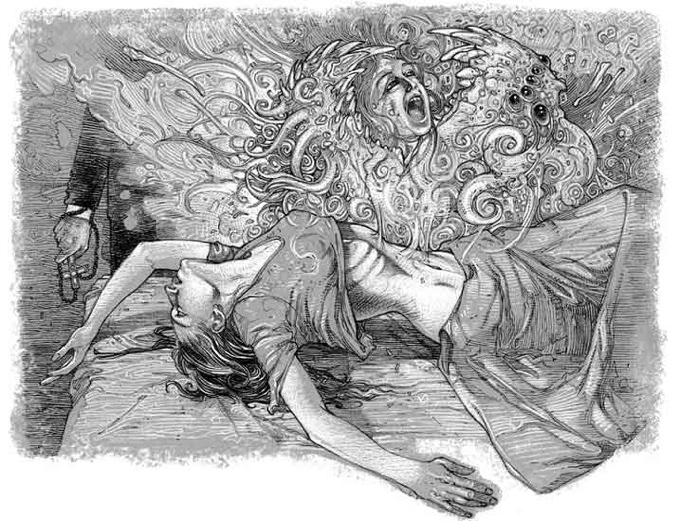
There is an interesting article from boingboing on exorcism and schizophrenia, which explains how patients in cultures with a strong belief in spirit possession, who have been possessed, have often been more successfully treated through schizophrenic medications than through exorcism. While this suggests that possession may be some cultures' ways of articulating the kinds of bizarre behaviors exhibited by schizophrenics, the article also cites a case where one of these medically treated possessees was actually seen to be possessed by other people.
So this might be an otherwise unremarkable psychiatric case if it were not for the fact that the prison chaplain, and several of the patient's cellmates, saw the spirit possess the patient as a ghostly mist. The chaplain was convinced this was a genuine case of possession, as had priests from several other faiths who had previously carried out exorcisms on the patient.
This begs the question, if the patient was treated for his belief in spirit possession and his apparent hallucinations as to the reality of the ghost, why were the chaplain and the others not considered to be ill ?
One could argue for mass hallucination, or conversely for some kind of cultural imagination at work, but perhaps it could mean that actual ghosts/spirits may be affected by chemical procedures? Not knowing off hand how medicines like trifluoperazine and clopenthixol work, I'd hazard a guess that whatever neural site/receptor these chemicals effect is also the neural site/receptor ghosts take possession of.
9.16.2009
Faith and the Pattern
Over the past year I have been going through an extreme crisis of faith. Due to a number of physical, emotional, and psychic challenges I found myself last winter in a state of disillusionment, that everything I had previously held to be good, desirable, possible, and expected in the world may not have been the case at all, a state close to feeling jaded, except that the crisis is precisely in trying to find some reason to carry on, to still believe: in love, the power of the human spirit, self-growth, god, some point to life as we know it, or at least a deeper understanding. But the closer I looked at any of these things the further they seemed to recede, from view, from understanding, so I was left wondering if they really existed. In centuries of the human quest for the truth and goodness we are still no closer to truth it seems, and people can be as ignorant, violent, and uncaring as they always have been, if not more so, which is rather disheartening to someone who feels they have spent their life searching for and hoping to bring these positive qualities into being. More recently I have summed up my quandary in asking, what is the point of self-growth, of struggling to improve how one is in the world, when the work is hard and there seems to be no real “reward” no incentive from society to do so (though that I take this as a valid question shows at least some will towards growing). How can I spend roughly the same amount of time writing on my novel as watching a TV show, and find the same amount of satisfaction in both? And sometimes more in the casual, indulgent activities, because they are easier? This is baffling to me. I believe that everything is real, even those things we can only imagine, but nevertheless there seems to be a primacy to the everyday, to those things, which when we pick ourselves off the floor or put down our books we still have to deal with, of which we can sigh and say, well maybe this is it. But is it? Ultimately everything is real, but some things are more real than others. Worrying about money or physical pain unfortunately feel to be some of the most real there is.
The problem, I know, is one of perspective. To say, this is it, is to presuppose that we know everything there is to know about life, enough to cast some judgment on it, when really we can know nothing with any such certainty. I am aware that the mystery of the Universe is far deeper than we can fathom. Not even the scientific method can say what is really true, either point at a position or velocity of a particle but not both, or how and why they are entangled and add up to all this. Any other human effort to value one mode of the world over another is based on subjective claims, of perception, of intuition, of faith. On some level even an atheist claims, I believe God doesn’t exist, because it is a statement that can’t be proven one way or another. For centuries scientists laughed at the notion of atoms, of forces and fields, because they couldn’t be seen, only to find that maybe they really are there, and though still unseen may be more real than this, but just as inexplicable and mystic as when the ancient Greeks first made up the story. How can I know this is just it, when my intuitions, the evidence my senses have gathered over a lifetime of searching, have suggested otherwise, if but to say, maybe it’s too hard to keep looking, no one else is really looking, not everywhere at once, and the whole edifice of Western knowledge is constructed on the basis of looking only at the visible and provable, and when confronted with a reality greater than that which can be known, it crumbles, is shown to be a charade based on the misapplication of ancient dialectical devices and assumptions: that dialectics can really tell us anything about anything, for when you point at or name something it always creates the thing it is not, and the thing neither of those are, ad nauseum, the way a proton pulled from an atomic nucleus mysteriously creates another proton in its place. This is beautiful and mysterious, but then you still have to go to work, or patch up an argument with your beloved. And there is no place to escape from that reality to, no one to turn to in our need outside this predicament. No matter what your perspective is on the world/Universe, or what you believe is our place and purpose in it, we are still within that system, like an existential Goedel’s Theorem, constrained by our physical senses and abilities and ways of knowing, and still have to find some reason to get out of bed in the morning, some small joy, and maybe the courage to choose to act as decent human beings, for ourselves and others, if we have any strength and calmness left over.
But how, and why? Because most days I feel full of rage, time slipping through the eye of it and feeling there is something more I could be doing that is the thing I really am meant to be doing, except I only have a vague, limited notion of what that is and no one has stepped down from on high to let me in on the secret plan for the Universe and my role in it. I feel a lot like the character John Locke from the show Lost, who, unlike the more reason-based characters trying to escape from the Island,, has an intuitive faith that he can and is meant to solve the labyrinthine puzzle and mystery that surrounds the place, following his gut, connecting scraps of information, seeking ever deeper in the mystery, and yet still plagued by doubts, hoping someone will tell him where to look next, constrained like the original philosopher Locke to the empiricism of believing what he can see, yet unable to explain that he has seen things beyond what most people would ever believe could be real. I relate to this and wonder how many others can. I think of my neighbor, watching sports on his big-screened TV, driving his motorcycle noisily up and down our street. He seems totally fulfilled in this, as far as I can see. There is not a question or even a need for a question of is this it.
The Presocratics (who I am studying in a class on the historical roots of science in mythology), were the first to systematically ask the questions, what is really real, can and do things change, can and what do we know? These ontological and epistemological questions are the foundation of any philosophy or metaphysics, and without before realizing that, they have also been my pivotal questions (along with that bugaboo, are we free/active agents). In answer to what is really real, they posit everything from water, to air, to numbers as the foundational substance of reality, or there is Anaximander, who believed it was the Apeiron, the unlimited storehouse of potential qualities of all things as the one underlying substance. My teacher, a younger grad student, laughed, this all seems absurd or primitive in light of our current scientific conceptions of reality, and the class all nodded. Except for me it doesn’t. For me the idea of some fount, of imagination or possibility, seems more intuitively true than the random motion of subatomic particles. In fact, it is an idea recorded in a number of different spiritual traditions: the Theosophic Akashic Records, the Sufi Scriptorum, the Hebraic Book of Life, even the Platonic Forms as an underlying reality. Is this really so absurd then, or are they all wrong? And more confounding, it is something that I have experienced, with my own senses (admittedly under a mystical trance state), but without knowing of it beforehand or expecting anything of the sort. But how could I explain this in class, in the face of the entire academic apparatus that is not about my experiences but recorded “facts?” These are two entirely different views of reality, like the conflict between Evolution and Creationism, both of which are mistaken for Truth, when they can never be anything more than descriptions, stories, metaphors for processes we can never really know anything about. Pirsig’s “Zen and the Art of Motorcycle Maintenance,” (reading in my class on Narrative and Technlogy), does a good job of framing this problem, n the context of a metaphysical detective story: we can either romantically-intuitively appreciate the surface aesthetic of things, or logically seek out the structures beneath them. But not both, though that is exactly what it seems we must do. That ability and desire however were lost centuries ago, when Aristotle argued down the Sophists in the forum, paving the way for Dialectical Materialism. And the world has been a cold calculating place since, lit by moments of decadence and revelry, but with no real new understanding or wisdom, meaning or faith to guide us out of this spiritual morass.
To what can we turn then, if not to our own experiences and the way we choose to pick them up in our daily lives (this division between events and our intentions or them being my definitions of fate and destiny). Are we just trapped on this island in space or do we choose to explore what being here could mean? When the stars that guided the ancients (both in sea travel and in mythic timekeeping) now begin to fade, there are still the stars in our hearts, which is the meaning of that word desire. As Crowley said, each and every one of us is a star. For most of my life I have been a proponent of a magical worldview, most clearly as spelled out in Bill Whitcomb’s Axioms, the first three of which are that reality is created from our worldviews that can be changed, that we reaffirm or change our worldviews through attention, and that seemingly disconnected events can strike us as being intricately connected, what Jung called synchronicity, or meaningful coincidence, but I call constellations of meaning, because meaning does not exist in events but in our interpretation of the relationships between them in relation to the patterns of our worldviews. Though I have actively sought out such constellations of meaning, in the last several years they have grown few and far between, a feeling I keep expressing as that always before the pattern of meanings suggested where to look next, except recently they haven’t, and everywhere has felt like a dead end, not at all that personal Eureka moment I recall first feeling reading James Joyce’s description of that Eureka moment in “Portrait of the Artist as a Young Man” and I’ve chased after ever since. Perhaps I have stopped looking in as active or connected a manner. Or perhaps, as I fear, that though I’ve looked and connected, the net of my looking wasn’t wide enough, and the pattern or destiny I found meaningful for myself in following certain dreams and ideas is too small, is not interrelated to Reality as a whole, as was the case with the Apeiron in class. Am I crazy for having experienced something no one else has, or are they for not even considering that such things could be? So that I lost faith with any of it being meaningful. And lastly, I have been afraid, for to connect our own meanings to any larger collective meaning takes work, and forces us to confront ourselves in wholly new ways, and precisely where our old maps no longer fit the territory of actual existence.
I have come to recognize recently that my novel, and indeed my task as a creative being, is an attempt to create such interconnected maps of our experience of Reality, a daunting and seemingly impossible task (though less impossible due to our current information technologies), yet one I am driven to through whatever genetic or spiritual reasons. To this end I have to start experiencing again the world, the larger world, as synchronistically connected, however those mechanisms work, but from scratch. Because if my patterns before are what I expected to find, but clearly didn’t, then I have to forgo faith in my expectations and recreate a new pattern from nothing, from everything, but not with the certainty in thinking that Descates had in his doubting of all. And in this letting go was confronted yesterday with a number of synchronicities if not answering than at least pointing to ways out of my current crisis. I wrote a letter to my beloved discussing love in terms of encouraging another’s and our own self-growth, an idea from Peck’s “The Road Less Traveled,” and immediately after in my Wisdom class in which we are reading that book, I had to write a letter as if to a distant friend on that very subject, allowing me to better clarify my questions. Then, finishing “Zen and the Art of…” came upon a summation passage equating Pirsig’s concept of Quality (as that missing from the Western dialectical tradition) to the Presocratic Ariste, excellence or heroic virtue, virtue already being a term personally loaded with positive meaning of acting right in the world, here defined not as virtue for others but of the self, improvement and growth into what one can most be, a joy in the process that I had forgotten, also connected to the Buddhist Dharma (further constellated in relation to the mystery in Lost as well as the self-mythologizing of Kerouac). All of which left me with a big Yes! And further constellated into this essay, which before I started writing I found a blog on synchronicities, cementing the point.
But the question remains, as much as I live this and find it necessary to my life, it seems mainly like a metaphysical thought experiment, and still does not connect back to the mundane, having to work sleep, relate to other people, go the bathroom, let alone all the wars and environmental degradation and illness at large in the world. Years ago I had a chance to sit in on a Zen retreat and told the Monk that it felt like I was in a dream from which I couldn’t wake up. He said, all our ideas, knowledge, stories, expectations, these are the dream, when Reality is just this. But now I realize that what I really meant was that that just this is what feels dreamlike, or actually worse, nightmarish, when the stories and ideas would be much more wonderful if they were that primarily real. I may find joy in contemplating quantum entanglement or synchronicity, but I see my friends struggling daily to find jobs or housing, getting robbed, sick, or mentally ill, and I wonder, why is that more real? Why am I not satisfied with it, except for perhaps being raised with some religious notion of an afterlife that has crushed me on idealism and hope for more? I understand that I am in a way very privileged to be able to even ask these questions. I have a steady job, a home, friends and family and fairly good health, I was raised with an education of intelligence, creativity, and faith, and questioning. Many do not have this, or if they did they got bogged down in the tribulations of the everyday, or just don’t care. I doubt for instance that my neighbor, if he were to take time away from his TV and motortoys, would he feel inclined to ask any of this? The meaning of his everyday life and material possessions seems to be enough for him (if they really are). Does he not want to spiritually grow, or is that process different for each person? Who can answer any of this? I on the other hand do not feel like I have a choice; even at my poorest and most downtrodden I have always felt the urge and made the time to ask these questions. I suspect that, being raised to have a capacity and willingness towards belief, but always questioning the presumed things one might believe in, it is like this large, too large hole that no material thing and few non-material things have ever come close to filling, or even fitting into, that leaves me with this internal tension, a spiritual angst like a spring about to burst, that might only find ease with ordering the whole reality in myself, and then what of everything out of reality? And then what of still having to live, and share this with others? It is as if, what are these questions for if they cannot be interconnected and applied in our daily lives, for everyone’s lives? What god is a map or pattern if other people can’t follow it somewhere they want to go? That I do not know, and only raises further questions. As Rilke put it, the pattern grows more intricate and subtle & being swept along is no longer enough.
The problem, I know, is one of perspective. To say, this is it, is to presuppose that we know everything there is to know about life, enough to cast some judgment on it, when really we can know nothing with any such certainty. I am aware that the mystery of the Universe is far deeper than we can fathom. Not even the scientific method can say what is really true, either point at a position or velocity of a particle but not both, or how and why they are entangled and add up to all this. Any other human effort to value one mode of the world over another is based on subjective claims, of perception, of intuition, of faith. On some level even an atheist claims, I believe God doesn’t exist, because it is a statement that can’t be proven one way or another. For centuries scientists laughed at the notion of atoms, of forces and fields, because they couldn’t be seen, only to find that maybe they really are there, and though still unseen may be more real than this, but just as inexplicable and mystic as when the ancient Greeks first made up the story. How can I know this is just it, when my intuitions, the evidence my senses have gathered over a lifetime of searching, have suggested otherwise, if but to say, maybe it’s too hard to keep looking, no one else is really looking, not everywhere at once, and the whole edifice of Western knowledge is constructed on the basis of looking only at the visible and provable, and when confronted with a reality greater than that which can be known, it crumbles, is shown to be a charade based on the misapplication of ancient dialectical devices and assumptions: that dialectics can really tell us anything about anything, for when you point at or name something it always creates the thing it is not, and the thing neither of those are, ad nauseum, the way a proton pulled from an atomic nucleus mysteriously creates another proton in its place. This is beautiful and mysterious, but then you still have to go to work, or patch up an argument with your beloved. And there is no place to escape from that reality to, no one to turn to in our need outside this predicament. No matter what your perspective is on the world/Universe, or what you believe is our place and purpose in it, we are still within that system, like an existential Goedel’s Theorem, constrained by our physical senses and abilities and ways of knowing, and still have to find some reason to get out of bed in the morning, some small joy, and maybe the courage to choose to act as decent human beings, for ourselves and others, if we have any strength and calmness left over.
But how, and why? Because most days I feel full of rage, time slipping through the eye of it and feeling there is something more I could be doing that is the thing I really am meant to be doing, except I only have a vague, limited notion of what that is and no one has stepped down from on high to let me in on the secret plan for the Universe and my role in it. I feel a lot like the character John Locke from the show Lost, who, unlike the more reason-based characters trying to escape from the Island,, has an intuitive faith that he can and is meant to solve the labyrinthine puzzle and mystery that surrounds the place, following his gut, connecting scraps of information, seeking ever deeper in the mystery, and yet still plagued by doubts, hoping someone will tell him where to look next, constrained like the original philosopher Locke to the empiricism of believing what he can see, yet unable to explain that he has seen things beyond what most people would ever believe could be real. I relate to this and wonder how many others can. I think of my neighbor, watching sports on his big-screened TV, driving his motorcycle noisily up and down our street. He seems totally fulfilled in this, as far as I can see. There is not a question or even a need for a question of is this it.
The Presocratics (who I am studying in a class on the historical roots of science in mythology), were the first to systematically ask the questions, what is really real, can and do things change, can and what do we know? These ontological and epistemological questions are the foundation of any philosophy or metaphysics, and without before realizing that, they have also been my pivotal questions (along with that bugaboo, are we free/active agents). In answer to what is really real, they posit everything from water, to air, to numbers as the foundational substance of reality, or there is Anaximander, who believed it was the Apeiron, the unlimited storehouse of potential qualities of all things as the one underlying substance. My teacher, a younger grad student, laughed, this all seems absurd or primitive in light of our current scientific conceptions of reality, and the class all nodded. Except for me it doesn’t. For me the idea of some fount, of imagination or possibility, seems more intuitively true than the random motion of subatomic particles. In fact, it is an idea recorded in a number of different spiritual traditions: the Theosophic Akashic Records, the Sufi Scriptorum, the Hebraic Book of Life, even the Platonic Forms as an underlying reality. Is this really so absurd then, or are they all wrong? And more confounding, it is something that I have experienced, with my own senses (admittedly under a mystical trance state), but without knowing of it beforehand or expecting anything of the sort. But how could I explain this in class, in the face of the entire academic apparatus that is not about my experiences but recorded “facts?” These are two entirely different views of reality, like the conflict between Evolution and Creationism, both of which are mistaken for Truth, when they can never be anything more than descriptions, stories, metaphors for processes we can never really know anything about. Pirsig’s “Zen and the Art of Motorcycle Maintenance,” (reading in my class on Narrative and Technlogy), does a good job of framing this problem, n the context of a metaphysical detective story: we can either romantically-intuitively appreciate the surface aesthetic of things, or logically seek out the structures beneath them. But not both, though that is exactly what it seems we must do. That ability and desire however were lost centuries ago, when Aristotle argued down the Sophists in the forum, paving the way for Dialectical Materialism. And the world has been a cold calculating place since, lit by moments of decadence and revelry, but with no real new understanding or wisdom, meaning or faith to guide us out of this spiritual morass.
To what can we turn then, if not to our own experiences and the way we choose to pick them up in our daily lives (this division between events and our intentions or them being my definitions of fate and destiny). Are we just trapped on this island in space or do we choose to explore what being here could mean? When the stars that guided the ancients (both in sea travel and in mythic timekeeping) now begin to fade, there are still the stars in our hearts, which is the meaning of that word desire. As Crowley said, each and every one of us is a star. For most of my life I have been a proponent of a magical worldview, most clearly as spelled out in Bill Whitcomb’s Axioms, the first three of which are that reality is created from our worldviews that can be changed, that we reaffirm or change our worldviews through attention, and that seemingly disconnected events can strike us as being intricately connected, what Jung called synchronicity, or meaningful coincidence, but I call constellations of meaning, because meaning does not exist in events but in our interpretation of the relationships between them in relation to the patterns of our worldviews. Though I have actively sought out such constellations of meaning, in the last several years they have grown few and far between, a feeling I keep expressing as that always before the pattern of meanings suggested where to look next, except recently they haven’t, and everywhere has felt like a dead end, not at all that personal Eureka moment I recall first feeling reading James Joyce’s description of that Eureka moment in “Portrait of the Artist as a Young Man” and I’ve chased after ever since. Perhaps I have stopped looking in as active or connected a manner. Or perhaps, as I fear, that though I’ve looked and connected, the net of my looking wasn’t wide enough, and the pattern or destiny I found meaningful for myself in following certain dreams and ideas is too small, is not interrelated to Reality as a whole, as was the case with the Apeiron in class. Am I crazy for having experienced something no one else has, or are they for not even considering that such things could be? So that I lost faith with any of it being meaningful. And lastly, I have been afraid, for to connect our own meanings to any larger collective meaning takes work, and forces us to confront ourselves in wholly new ways, and precisely where our old maps no longer fit the territory of actual existence.
I have come to recognize recently that my novel, and indeed my task as a creative being, is an attempt to create such interconnected maps of our experience of Reality, a daunting and seemingly impossible task (though less impossible due to our current information technologies), yet one I am driven to through whatever genetic or spiritual reasons. To this end I have to start experiencing again the world, the larger world, as synchronistically connected, however those mechanisms work, but from scratch. Because if my patterns before are what I expected to find, but clearly didn’t, then I have to forgo faith in my expectations and recreate a new pattern from nothing, from everything, but not with the certainty in thinking that Descates had in his doubting of all. And in this letting go was confronted yesterday with a number of synchronicities if not answering than at least pointing to ways out of my current crisis. I wrote a letter to my beloved discussing love in terms of encouraging another’s and our own self-growth, an idea from Peck’s “The Road Less Traveled,” and immediately after in my Wisdom class in which we are reading that book, I had to write a letter as if to a distant friend on that very subject, allowing me to better clarify my questions. Then, finishing “Zen and the Art of…” came upon a summation passage equating Pirsig’s concept of Quality (as that missing from the Western dialectical tradition) to the Presocratic Ariste, excellence or heroic virtue, virtue already being a term personally loaded with positive meaning of acting right in the world, here defined not as virtue for others but of the self, improvement and growth into what one can most be, a joy in the process that I had forgotten, also connected to the Buddhist Dharma (further constellated in relation to the mystery in Lost as well as the self-mythologizing of Kerouac). All of which left me with a big Yes! And further constellated into this essay, which before I started writing I found a blog on synchronicities, cementing the point.
But the question remains, as much as I live this and find it necessary to my life, it seems mainly like a metaphysical thought experiment, and still does not connect back to the mundane, having to work sleep, relate to other people, go the bathroom, let alone all the wars and environmental degradation and illness at large in the world. Years ago I had a chance to sit in on a Zen retreat and told the Monk that it felt like I was in a dream from which I couldn’t wake up. He said, all our ideas, knowledge, stories, expectations, these are the dream, when Reality is just this. But now I realize that what I really meant was that that just this is what feels dreamlike, or actually worse, nightmarish, when the stories and ideas would be much more wonderful if they were that primarily real. I may find joy in contemplating quantum entanglement or synchronicity, but I see my friends struggling daily to find jobs or housing, getting robbed, sick, or mentally ill, and I wonder, why is that more real? Why am I not satisfied with it, except for perhaps being raised with some religious notion of an afterlife that has crushed me on idealism and hope for more? I understand that I am in a way very privileged to be able to even ask these questions. I have a steady job, a home, friends and family and fairly good health, I was raised with an education of intelligence, creativity, and faith, and questioning. Many do not have this, or if they did they got bogged down in the tribulations of the everyday, or just don’t care. I doubt for instance that my neighbor, if he were to take time away from his TV and motortoys, would he feel inclined to ask any of this? The meaning of his everyday life and material possessions seems to be enough for him (if they really are). Does he not want to spiritually grow, or is that process different for each person? Who can answer any of this? I on the other hand do not feel like I have a choice; even at my poorest and most downtrodden I have always felt the urge and made the time to ask these questions. I suspect that, being raised to have a capacity and willingness towards belief, but always questioning the presumed things one might believe in, it is like this large, too large hole that no material thing and few non-material things have ever come close to filling, or even fitting into, that leaves me with this internal tension, a spiritual angst like a spring about to burst, that might only find ease with ordering the whole reality in myself, and then what of everything out of reality? And then what of still having to live, and share this with others? It is as if, what are these questions for if they cannot be interconnected and applied in our daily lives, for everyone’s lives? What god is a map or pattern if other people can’t follow it somewhere they want to go? That I do not know, and only raises further questions. As Rilke put it, the pattern grows more intricate and subtle & being swept along is no longer enough.
3.09.2009
The Big Hunt
They say there’s no rest for the wicked, but perhaps it’s more apt to say there’s no explanation for the rational minded. At least there’s funding, even if it comes from eccentric billionaires.
“We’re cryptoxenologists,” I told him as I slid into the booth, shaking the last of the rain off my trench coat, “trained professionals in the scientific methods. Not ghost hunters.” Despite the expensive felt hat pulled low over his face, which was shadowed in the flashing light show of the Vegas club, I could still see a mad gleam in his eyes, like a kid setting his targets on the Holy Grail. So this was Robert Bigelow, I thought, of Bigelow Aerospace Advanced Space Studies, and my new patron.
“Don’t worry,” he smiled, the quivering of his fat jowls sending a shiver down my replaced spine, “I’m still talking aliens, UFOs, what have you. I need someone I can trust independent from the Mutual UFO Network to head a special division of my Star Impact Project: we’re after the big one, the biggest alien of them all.”
“Bigger than Roswell? Than the Vogans, than Xenu?”
“Very.”
“Hmm. You’ve got me intrigued, but I don’t come cheap. Is this supposed to be a Category Two or Three, physical traces, physiological effects in the witnesses?”
“Yes.” He smiled again; gesturing at the drink which a peculiarly androgynous waiter had set on the dark table. “Traces and effects of every imaginable kind. I didn’t believe it myself first either. This one’s beyond old Vallee’s categorizations. You want the run down?”
“Don’t you have a spec sheet? I’d like to get started before another bug hunter gets the goods.”
“No, I want you to understand the scope of what we’re dealing with here. Humor me.”
I shrugged back in the booth and took the drink, the first of many he’d be paying for I imagined. Its taste was impossible to pin down. While Bigelow talked I wondered what kind of alien we were hunting here, where it fit in Card’s Hierarchy of Foreignness, as varelse or raman: the other-as-enemy or other-as-self. I hoped the later; friendly aliens are always easier to negotiate with, and cover up after they leave town. But as the fat billionaire talked I began to think he was referring to the last function of foreignness, that ghost in the machine: the other as wholly and in-fucking-effably other.
“Wait, wait,” I stammered, sloshing the last of the weird blue drink on the tabletop, “did you just list as traces certain international monuments, text, rituals, and as physiological effects specific systems of belief and social codification, including the whole of our cultural value system?”
He smiled again, and this time the fear it caused me was almost enough to make me jump up and run screaming from the club, from the whole cursed city of Las Vegas, lit up like a giant welcoming beacon in the deserted night. “I told you I’m after that most alien of aliens…”
I gripped the table; the spilled drink sticky and surreal under my fingers. “You… you’re talking about God aren’t you?”
“We’re cryptoxenologists,” I told him as I slid into the booth, shaking the last of the rain off my trench coat, “trained professionals in the scientific methods. Not ghost hunters.” Despite the expensive felt hat pulled low over his face, which was shadowed in the flashing light show of the Vegas club, I could still see a mad gleam in his eyes, like a kid setting his targets on the Holy Grail. So this was Robert Bigelow, I thought, of Bigelow Aerospace Advanced Space Studies, and my new patron.
“Don’t worry,” he smiled, the quivering of his fat jowls sending a shiver down my replaced spine, “I’m still talking aliens, UFOs, what have you. I need someone I can trust independent from the Mutual UFO Network to head a special division of my Star Impact Project: we’re after the big one, the biggest alien of them all.”
“Bigger than Roswell? Than the Vogans, than Xenu?”
“Very.”
“Hmm. You’ve got me intrigued, but I don’t come cheap. Is this supposed to be a Category Two or Three, physical traces, physiological effects in the witnesses?”
“Yes.” He smiled again; gesturing at the drink which a peculiarly androgynous waiter had set on the dark table. “Traces and effects of every imaginable kind. I didn’t believe it myself first either. This one’s beyond old Vallee’s categorizations. You want the run down?”
“Don’t you have a spec sheet? I’d like to get started before another bug hunter gets the goods.”
“No, I want you to understand the scope of what we’re dealing with here. Humor me.”
I shrugged back in the booth and took the drink, the first of many he’d be paying for I imagined. Its taste was impossible to pin down. While Bigelow talked I wondered what kind of alien we were hunting here, where it fit in Card’s Hierarchy of Foreignness, as varelse or raman: the other-as-enemy or other-as-self. I hoped the later; friendly aliens are always easier to negotiate with, and cover up after they leave town. But as the fat billionaire talked I began to think he was referring to the last function of foreignness, that ghost in the machine: the other as wholly and in-fucking-effably other.
“Wait, wait,” I stammered, sloshing the last of the weird blue drink on the tabletop, “did you just list as traces certain international monuments, text, rituals, and as physiological effects specific systems of belief and social codification, including the whole of our cultural value system?”
He smiled again, and this time the fear it caused me was almost enough to make me jump up and run screaming from the club, from the whole cursed city of Las Vegas, lit up like a giant welcoming beacon in the deserted night. “I told you I’m after that most alien of aliens…”
I gripped the table; the spilled drink sticky and surreal under my fingers. “You… you’re talking about God aren’t you?”
3.03.2009
Steps to Futurity
After reading Fuller's "Operating Manual for Sapceship Earth," I began thinking of what we need to do now as a species in order to survive in the long run, starting from the premise that we are fucked now but that we can survive, if we allow that the narratives and perspectives we have on what is possible actually do determine reality.
In the long run, the sun, which is our primary fuel source, will die out, so by that point we will have needed to develop the technology to find and inhabit other Earth-like, life-sustaining planets. Previously the challenge to this has been inventing faster than light travel, but, as the rate of expansion of the Universe is increasing due to the heretofore unknown dark energy, we should instead focus on FTD (faster than dark) technology, or methods of alternate universe travel.
In order to create technologies on this level, and even to develop the scientific perspectives on which this technology might be based, we must first resolve local problems of time, resources, and education. The sun is our main energy source. We must develop technologies to harness this continually radiant and free energy source in order to stop using our non-renewable resources at all costs. This in turn requires a new model of wealth, not as debt, scarcity, or "not enough to go around" which rules the current economic markets, but as Fuller suggests as a measure of futurity: the number of forward-projected days per person that we as a species can live. Secondly we need to curb global consumption, in particularly North American culture's rampant production and consumption of readily-disposable, non-biodegradable, resource-wasting doohickeys. Perhaps new plastic-like materials can be invented from renewable resources.
But for either wealth or consumption to change we need a global, cultural paradigm shift towards sustainability, equality, conservation, etc, in short a shift towards looking at humanity as something with a future. This requires mass education and conscientious media engagement to raise awareness of the issues at hand, offer alternatives, and stop promoting the reckless, passive lifestyles and worldviews that currently infest our world. After this, resources need to be redistributed evenly to all peoples, as well as free access to health care, education, and technologies, in order that the largest number of people are freed of time and mind to be able to address the large social and technological problems of energy transformations, space travel, universal acceptance, etc.
The primary challenge to all of this utopian idealism is the mythologies of nationality and spiritual scarcity that promote global warfare. Wars may be fought over ideologies, money, resources, land, etc, but they result from the misguided notion of us vs. them, that there are only limited resources and that superficial differences between people determine who should acquire what goods and who should be obliterated. The new paradigm must be that we are all in this together. The more subtle and dangerous myth currently creating global hostilities, especially in the Middle East, is the religious myths of the Armageddon - that is, over who will control the end of their world by wiping out their cultural enemies and thus insuring the victors a place in Heaven, because clearly there is an age old belief that there is also not enough heaven or salvation to go around. This is the greatest fallacy being fought over between East and West. Any attempt to win, with any one side over the others, will inevitably result in the greatest expenditure of non-renewable resources and wealth as futurity, the loss of multicultural perspectives, and eventually or immediately the destruction of the human race. This was the threat of the Cold War and is has not gone away. Any total war will mean total destruction.
The only way to win will be by getting along and getting out of this mess, which is in creating Heaven on Earth, prior to exploring out into the very real heavens which are all around us. To this end education/ media narratives must encourage global, multicultural perspectives converging on the essential humanity of all of us in the face of the totality of Universal experience we as a species have so far attained or imagined, as well as a focus on grassroots community organizing via the internets, and the encouragement and sharing of ideas, instructions, perspectives, etc for people to once again take control of their own lives and futures.
In the long run, the sun, which is our primary fuel source, will die out, so by that point we will have needed to develop the technology to find and inhabit other Earth-like, life-sustaining planets. Previously the challenge to this has been inventing faster than light travel, but, as the rate of expansion of the Universe is increasing due to the heretofore unknown dark energy, we should instead focus on FTD (faster than dark) technology, or methods of alternate universe travel.
In order to create technologies on this level, and even to develop the scientific perspectives on which this technology might be based, we must first resolve local problems of time, resources, and education. The sun is our main energy source. We must develop technologies to harness this continually radiant and free energy source in order to stop using our non-renewable resources at all costs. This in turn requires a new model of wealth, not as debt, scarcity, or "not enough to go around" which rules the current economic markets, but as Fuller suggests as a measure of futurity: the number of forward-projected days per person that we as a species can live. Secondly we need to curb global consumption, in particularly North American culture's rampant production and consumption of readily-disposable, non-biodegradable, resource-wasting doohickeys. Perhaps new plastic-like materials can be invented from renewable resources.
But for either wealth or consumption to change we need a global, cultural paradigm shift towards sustainability, equality, conservation, etc, in short a shift towards looking at humanity as something with a future. This requires mass education and conscientious media engagement to raise awareness of the issues at hand, offer alternatives, and stop promoting the reckless, passive lifestyles and worldviews that currently infest our world. After this, resources need to be redistributed evenly to all peoples, as well as free access to health care, education, and technologies, in order that the largest number of people are freed of time and mind to be able to address the large social and technological problems of energy transformations, space travel, universal acceptance, etc.
The primary challenge to all of this utopian idealism is the mythologies of nationality and spiritual scarcity that promote global warfare. Wars may be fought over ideologies, money, resources, land, etc, but they result from the misguided notion of us vs. them, that there are only limited resources and that superficial differences between people determine who should acquire what goods and who should be obliterated. The new paradigm must be that we are all in this together. The more subtle and dangerous myth currently creating global hostilities, especially in the Middle East, is the religious myths of the Armageddon - that is, over who will control the end of their world by wiping out their cultural enemies and thus insuring the victors a place in Heaven, because clearly there is an age old belief that there is also not enough heaven or salvation to go around. This is the greatest fallacy being fought over between East and West. Any attempt to win, with any one side over the others, will inevitably result in the greatest expenditure of non-renewable resources and wealth as futurity, the loss of multicultural perspectives, and eventually or immediately the destruction of the human race. This was the threat of the Cold War and is has not gone away. Any total war will mean total destruction.
The only way to win will be by getting along and getting out of this mess, which is in creating Heaven on Earth, prior to exploring out into the very real heavens which are all around us. To this end education/ media narratives must encourage global, multicultural perspectives converging on the essential humanity of all of us in the face of the totality of Universal experience we as a species have so far attained or imagined, as well as a focus on grassroots community organizing via the internets, and the encouragement and sharing of ideas, instructions, perspectives, etc for people to once again take control of their own lives and futures.
12.23.2008
God vs. the Scientific Method
A person's unconscious attitudes toward science and God may be fundamentally opposed, researchers report, depending on how religion and science are used to answer "ultimate" questions such as how the universe began or the origin of life.
"It seemed to me that both science and religion as systems were very good at explaining a lot, accounting for a lot of the information that we have in our environment. But if they are both ultimate explanations, at some point they have to conflict with each another because they can't possibly both explain everything."
As such, more Americans believe in the Devil, Hell and Angels than in Darwin’s Theory of Evolution, church attendance is projected to fall by 90% by the year 2050, and researchers are still trying to find a neurophysiological model of spiritual experience.
This fall I took a physics course in which we discussed quantum mechanics, relativity, cosmology, and other weird aspects of modern science. Far from finding these ideas in conflict with my perspectives on spirituality I found that science paints a picture of reality that is mysterious, open-ended, and ultimately not very different than many early spiritual beliefs. If the fact that the universe is made almost entirely of dark matter and energy that we know nothing about doesn't move one to contemplate the meaning of life then I am completely confused as to what makes for a spiritual or religious experience. According to Rudolf Otto in The Idea of the Holy anything that brings up this feeling of utter mystery and incomprehensibility in the face of reality is spiritual, and the closer science looks at the Universe there is only more and more that we don't understand.
On the other hand, science and religion could find another sort of common ground as the Vatican embraces iTunes prayer books.
"It seemed to me that both science and religion as systems were very good at explaining a lot, accounting for a lot of the information that we have in our environment. But if they are both ultimate explanations, at some point they have to conflict with each another because they can't possibly both explain everything."
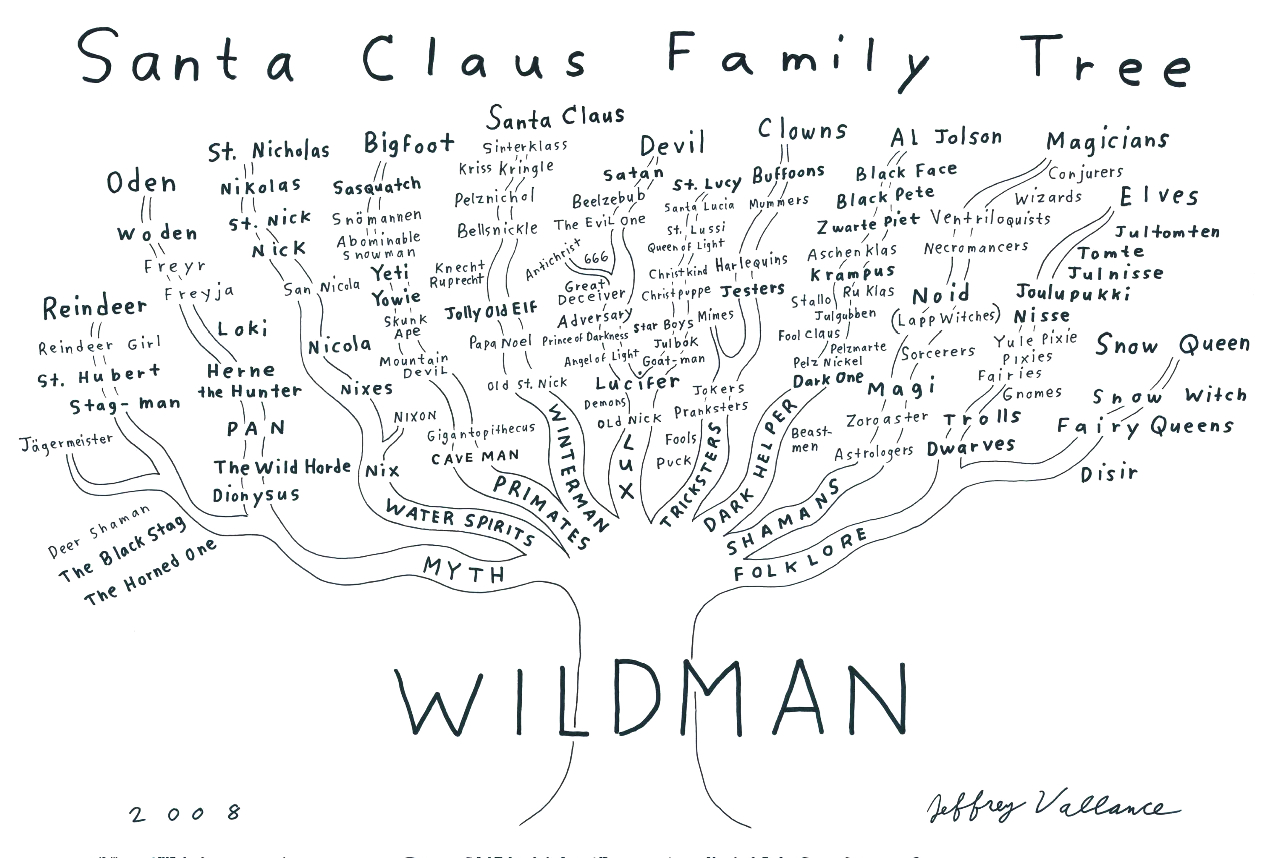
As such, more Americans believe in the Devil, Hell and Angels than in Darwin’s Theory of Evolution, church attendance is projected to fall by 90% by the year 2050, and researchers are still trying to find a neurophysiological model of spiritual experience.
This fall I took a physics course in which we discussed quantum mechanics, relativity, cosmology, and other weird aspects of modern science. Far from finding these ideas in conflict with my perspectives on spirituality I found that science paints a picture of reality that is mysterious, open-ended, and ultimately not very different than many early spiritual beliefs. If the fact that the universe is made almost entirely of dark matter and energy that we know nothing about doesn't move one to contemplate the meaning of life then I am completely confused as to what makes for a spiritual or religious experience. According to Rudolf Otto in The Idea of the Holy anything that brings up this feeling of utter mystery and incomprehensibility in the face of reality is spiritual, and the closer science looks at the Universe there is only more and more that we don't understand.
On the other hand, science and religion could find another sort of common ground as the Vatican embraces iTunes prayer books.
11.17.2008
The Unsayable
As a writer, or more generally an artist, something that has become increasingly more important to me is the ability, desire, or perhaps necessity to express the inexpressible, to represent in some form those situations, characters, feelings, or ideas that either defy representation, or are shades of experience that others have not found ways of representing before. Heidegger, I believe, discussed experience or perception as being similar to driving over the surface of the world, that is, one can only or most readily articulate the outermost (or perhaps innermost) layer of reality. I take it for certain that many deep and true things have been said in the past, that language has been used in innumerable ways, that any subject has been discussed, any combination has been to some degree tried out (one only has to turn to Joyce’s “Finnegan’s Wake” for illustration of that). But I also resent how much schlock and ironic, surface content is thrown around these days, how easy it is to not have the courage to face the unfathomable in one’s self and in the world. A fellow student in my fiction class told me that he once wrote a story putting in a lot of himself and his real feelings and decided that it was so intense that he’d rather not do it again. I fear it’s indicative of our age.
And yet, as far as one can or chooses to push words, music, and visions, it seems that there will always be something more that is left unexpressed; that any art is ultimately a medium, a mediation of a reality that is still immediate and sensorially complete, and more, carrying in every moment associations to memory and imagination, references to culture and history, and gods know what else besides. Emotions, thoughts, sensations, intentions. And even then, if one where able to accurately convey all these modes of perspective, there still remains some ineffable and overwhelming quality, the spirit or life-ness of reality that has not yet come across through any artifice. Though one can come closer, through pushing ones’ perspectives and means of expression. Freud and other psychologists have called this inexpressibleness the ‘uncanny,’ or, by the religious theorist Rudolf Otto, the ‘numinous’. It reveals itself in what is weird, non-rational, fascinating, and terrifying, in the unexpected, unprecedented, and juxtaposed. It is processed in dreams, prayed to in religious rituals, and approached tentatively through an artist’s imagination and vision. Some have called it God but I think that’s just a symbol and it’s something else entirely, something wholly other than the surfaces we say it is.
For a visceral example take the body. For many the body as material is the surface, what it looks like, what’s on it, or the mass, the weight. For those trained to see it otherwise, like doctors, the body is series of elaborate processes, organs, meat, hidden beneath the outward skin. But how often do we have a total lived sense of this (excepting of course moments of illness and malfunction), on an aesthetic or even spiritual level? Or apply it outwards to the rest of the world? One of the most intense and inexpressible moments for me of this sort was not religious or drug-induced, but was the result of seeing the Bodyworlds exhibit several years back: the plasticization of human bodies and organ systems and parts of bodies, all splayed open in exact form, some refracted or expanded to bizarre, inhuman proportions. And yet all still recognizably human, still recognizably my form. One was split down the middle and folded open so that he was standing in two place at once, and I felt my own body trying to physically know what that felt like. I left acutely aware of my every organ, of every living layer within me, and when I walked out into the city and looked around I was just as aware of the insides of every other thing: the trees, machines, animals, building, the air itself even. It was awe-inspiring in such a way that I still don’t know if I’ve gotten it across.
Or on the other hand there are the psychological approaches toward memory and emotion, therapy or artistic transmutation. You could spend a lifetime tracing out the symbols and associations of your individual psyche, and still there might be some part of what makes you tick that you can’t quite lay your finger on. Or perhaps you begin to recognize feelings that you’ve never felt before and can’t yet explain. I am currently working on a story which the character goes through a transformation of a wide spectrum of emotions, and in doing so I am forced to similarly process my own emotions towards an emotional perspective that I know I’ve never felt before and certainly don’t yet know how to express. Several of my friends and classmates have asked why I am writing this piece if it is such an intense and inexplicable process, to which my response has invariably been that this is why I am writing: to experience something that hasn’t been experienced or expressed before in order to offer it up to others and the world.
And yet, as far as one can or chooses to push words, music, and visions, it seems that there will always be something more that is left unexpressed; that any art is ultimately a medium, a mediation of a reality that is still immediate and sensorially complete, and more, carrying in every moment associations to memory and imagination, references to culture and history, and gods know what else besides. Emotions, thoughts, sensations, intentions. And even then, if one where able to accurately convey all these modes of perspective, there still remains some ineffable and overwhelming quality, the spirit or life-ness of reality that has not yet come across through any artifice. Though one can come closer, through pushing ones’ perspectives and means of expression. Freud and other psychologists have called this inexpressibleness the ‘uncanny,’ or, by the religious theorist Rudolf Otto, the ‘numinous’. It reveals itself in what is weird, non-rational, fascinating, and terrifying, in the unexpected, unprecedented, and juxtaposed. It is processed in dreams, prayed to in religious rituals, and approached tentatively through an artist’s imagination and vision. Some have called it God but I think that’s just a symbol and it’s something else entirely, something wholly other than the surfaces we say it is.
For a visceral example take the body. For many the body as material is the surface, what it looks like, what’s on it, or the mass, the weight. For those trained to see it otherwise, like doctors, the body is series of elaborate processes, organs, meat, hidden beneath the outward skin. But how often do we have a total lived sense of this (excepting of course moments of illness and malfunction), on an aesthetic or even spiritual level? Or apply it outwards to the rest of the world? One of the most intense and inexpressible moments for me of this sort was not religious or drug-induced, but was the result of seeing the Bodyworlds exhibit several years back: the plasticization of human bodies and organ systems and parts of bodies, all splayed open in exact form, some refracted or expanded to bizarre, inhuman proportions. And yet all still recognizably human, still recognizably my form. One was split down the middle and folded open so that he was standing in two place at once, and I felt my own body trying to physically know what that felt like. I left acutely aware of my every organ, of every living layer within me, and when I walked out into the city and looked around I was just as aware of the insides of every other thing: the trees, machines, animals, building, the air itself even. It was awe-inspiring in such a way that I still don’t know if I’ve gotten it across.
Or on the other hand there are the psychological approaches toward memory and emotion, therapy or artistic transmutation. You could spend a lifetime tracing out the symbols and associations of your individual psyche, and still there might be some part of what makes you tick that you can’t quite lay your finger on. Or perhaps you begin to recognize feelings that you’ve never felt before and can’t yet explain. I am currently working on a story which the character goes through a transformation of a wide spectrum of emotions, and in doing so I am forced to similarly process my own emotions towards an emotional perspective that I know I’ve never felt before and certainly don’t yet know how to express. Several of my friends and classmates have asked why I am writing this piece if it is such an intense and inexplicable process, to which my response has invariably been that this is why I am writing: to experience something that hasn’t been experienced or expressed before in order to offer it up to others and the world.
9.01.2008
Sufi Wisdom
"Fate continues. But on no account abandon your own intentions. For if your plans accord with the Supreme Will you will attain a plenitude of fulfillment for your heart."
-Anwar-iSuhaili, from Idries Shah's The Dermis Probe
-Anwar-iSuhaili, from Idries Shah's The Dermis Probe
Subscribe to:
Comments (Atom)

