
Post-Gazette review of the Unlimited Story Deck
Reviews and articles continue to come in, along with emails from teachers who want to purchase copies once the deck is eventually published!
This is a very exciting way to begin the new year, and I hope everyone has as blessed a 2010 as I plan on having.
Showing posts with label review. Show all posts
Showing posts with label review. Show all posts
1.01.2010


12.24.2009
LA Times Book Review of the Unlimited Story Deck
Carolyn Kellogg of the Los Angeles Times Book Review, has just posted a positive (and humorous) review of my Unlimited Story Deck!
I am deeply flattered, as the cards are still only in a beta version (though available under a Creative Commons license for download) and not yet actually published. Hopefully someone who can resolve that problem will see it and contact me, but this is a pretty good way to end the year.
Happy Holy Days and stay warm inside!
I am deeply flattered, as the cards are still only in a beta version (though available under a Creative Commons license for download) and not yet actually published. Hopefully someone who can resolve that problem will see it and contact me, but this is a pretty good way to end the year.
Happy Holy Days and stay warm inside!
12.23.2009
A Year in Reading 2009
The end of the year is often a time to look back and reflect on where we've come from, particularly through the easily-digestible form of the best of list, often reminiscing over music and movies and other popular media. Book reviewer The Millions is currently doing a series called A Year in Reading, in which various notable authors discuss what books they read and enjoyed during 2009. As an author and voracious reader, it's nice to see literature represented as a still living form, and thought I'd contribute my own words on some of the books I read this year and didn't get around to rambling about the first time!
The noted reads featured Bolano's 2666 and The Savage Detectives, Murakami's The Wind-up Bird Chronicle, Galeano's The Book of Embraces, Wallace's Infinite Jest, Tsutsui's Paprika, and Patchen's Memoirs of a Shy Pornographer (these links to my reviews). And these were pretty good too:
Death takes a holiday in Death with Interruptions by Jose Saramago. Imagines all the socio-political implications of death stopping in only one country, with all the emotional intensity, compassion, and whimsy available to the Portuguese master-storyteller as he passes through his eighties. I read it on the plane. Also of note is Blindness, which imagines the horror of if everyone except one old lady goes blind.
Midnight's Children by Salman Rushdie tells the nighttime story of India, following the life of one of the fifty magically-gifted children born on the eve of Indian independence. Hailed as eastern magical realism, Rushdie's almost apocryphal tone of storytelling soon descends into the horror of real politics while never once stopping that cloying wink at the reader. While it wasn't a favorite due to Rushdie's over-pretentious use of language, this book holds a significant place in post-colonial literatures, as Rushdie's life took on the quality of his writings when a fatwa was issued for his depiction of Islam in The Satanic Verses, which I'll hopefully get a chance to read over the holidays.
I read One Man's Meat for an autobiography class and was highly impressed. This book is the accounts of the daily life of E.B. White, of both Charlotte's Web and Strunk and White Style Manual fame. White shows a masterful grasp of relating the minutiae of every day life to both complex themes and global/historical changes. Poignant and thought-provoking, this collection of non-fiction essays is highly recommended as a masterpiece of the form.
The Empire of Dreams by Giannina Braschi is a wild surreal prose-poetic ode to living in New York City as if it was caught between the urban and a land of mythic dreams. An incredible sense of language and the immediacy of the process of writing as a saving grace. Honestly I need to reread it, many many times, and you should too.
The Master and Margarita by Mikhail Bulgakov... is just brilliant. The Devil, his shapeshifting cat, and an improbable character in a hideous checked suit and pince-nez wreck havoc in 1930's literary Moscow. At once politically intelligent, fast-paced, and absurdly comic, Bulgakov flat out nails the way literature should be written: with enough of an edge to get banned in his home country for over 40 years.
Hidden Faces is not the novel one imagines Salvador Dali could have written. Penned in a madcap week, it is mainly a story of the dissolution of the bourgeoisie way of life through WWII and the unquenchability of people's obsessive desires. Actually pretty tragic, Dali's language is often dense and abstract, while at the same time being absorbingly visual. Perhaps the most interesting is his technique of telescoping between objects and metaphors, so that the words in a description in one sentence become an emotional state in the next, a real fluidity of meaning that harks more from the interplay of dreams than the figurativeness of poetry.
I've tried reading Thomas Pynchon's Gravity's Rainbow about four or five times in the last ten years, and finally finished the whole thing this summer. While I read his latest, Inherent Vice, this summer too, it doesn't even hold a match-flame to the sprawling global epic that assured Pynchon as the master American novelist of the 20th century. All I can say is don't give up, it really is worth it. Next time around I'll read it along side Zak Smith's Pictures Showing What Happens on Each Page of Thomas Pynchon's Novel Gravity's Rainbow... but before then I should probably tackle Ulysses.
Pedro Páramo by Juan Rulfo and Warlock by Oakley Hall paint the double edged face of the mythic western. The first is a surreal tale of a haunted Indian ghost town, hailed as one of the most important pieces of Latin American literature by both Marquez and Borges, and features one of the most beautiful descriptions of a meteor shower. The second narrates the hard-edged failure of the cowboy to live up to his heroic image, and was Pynchon's favorite novel as a youth (and was most likely the main source inspiration for the show Deadwood). Reading these back to back was highly illuminating of why the "wild west" maintains an integral place in the American cultural imagination.
It took me a long time to get to reading Cloud Atlas by David Mitchell, namely as I'm skeptical of reading books that consistently top best of lists. But there is a very good reason why this one does, because it is awesome! The frame story is essentially a set of nesting doll tales taking place through various genres and historical periods from the 1600s to the far future, intertwining a sense of urgency about why and how we are able to narrate our lives, and the effect these narrations can have generations hence. Though a little heavy-handed at the end, this book points to a new direction for the importance of storytelling in the future.
[Edit: For the sake of symmetry here's one absolute reading failure for the year: The Fox from Up Above and the Fox from Down Below by Jose Maria Arguedas was recommended by my Literature of the Americas teacher as an example of the function of magical realism in the Boom and took half a year to track down an affordable copy of. This book is both a portrait of a small fishing town crumbling under the approach of modernity and the journals of the author crumbling under the weight of the untenability of writing this portrait. While at first glance it looks like an interesting juxtaposition between the process of writing as intertwined with the object of writing, this book has no plot, turgid and horrifying descriptions of life, and an undercurrent of despair that at once is directly critical of the other Boom authors while driving them to reject Arguedas from literary circles. I picked up and put down this book multiple times but was unable at any point to make headway, and finally had to admit that as fraught as this book is it is no wonder the author killed himself before he finished writing it. At the same time I wouldn't be surprised if twenty years down the road I return to and decide it is a masterpiece.]
The noted reads featured Bolano's 2666 and The Savage Detectives, Murakami's The Wind-up Bird Chronicle, Galeano's The Book of Embraces, Wallace's Infinite Jest, Tsutsui's Paprika, and Patchen's Memoirs of a Shy Pornographer (these links to my reviews). And these were pretty good too:
Death takes a holiday in Death with Interruptions by Jose Saramago. Imagines all the socio-political implications of death stopping in only one country, with all the emotional intensity, compassion, and whimsy available to the Portuguese master-storyteller as he passes through his eighties. I read it on the plane. Also of note is Blindness, which imagines the horror of if everyone except one old lady goes blind.
Midnight's Children by Salman Rushdie tells the nighttime story of India, following the life of one of the fifty magically-gifted children born on the eve of Indian independence. Hailed as eastern magical realism, Rushdie's almost apocryphal tone of storytelling soon descends into the horror of real politics while never once stopping that cloying wink at the reader. While it wasn't a favorite due to Rushdie's over-pretentious use of language, this book holds a significant place in post-colonial literatures, as Rushdie's life took on the quality of his writings when a fatwa was issued for his depiction of Islam in The Satanic Verses, which I'll hopefully get a chance to read over the holidays.
I read One Man's Meat for an autobiography class and was highly impressed. This book is the accounts of the daily life of E.B. White, of both Charlotte's Web and Strunk and White Style Manual fame. White shows a masterful grasp of relating the minutiae of every day life to both complex themes and global/historical changes. Poignant and thought-provoking, this collection of non-fiction essays is highly recommended as a masterpiece of the form.
The Empire of Dreams by Giannina Braschi is a wild surreal prose-poetic ode to living in New York City as if it was caught between the urban and a land of mythic dreams. An incredible sense of language and the immediacy of the process of writing as a saving grace. Honestly I need to reread it, many many times, and you should too.
The Master and Margarita by Mikhail Bulgakov... is just brilliant. The Devil, his shapeshifting cat, and an improbable character in a hideous checked suit and pince-nez wreck havoc in 1930's literary Moscow. At once politically intelligent, fast-paced, and absurdly comic, Bulgakov flat out nails the way literature should be written: with enough of an edge to get banned in his home country for over 40 years.
Hidden Faces is not the novel one imagines Salvador Dali could have written. Penned in a madcap week, it is mainly a story of the dissolution of the bourgeoisie way of life through WWII and the unquenchability of people's obsessive desires. Actually pretty tragic, Dali's language is often dense and abstract, while at the same time being absorbingly visual. Perhaps the most interesting is his technique of telescoping between objects and metaphors, so that the words in a description in one sentence become an emotional state in the next, a real fluidity of meaning that harks more from the interplay of dreams than the figurativeness of poetry.
I've tried reading Thomas Pynchon's Gravity's Rainbow about four or five times in the last ten years, and finally finished the whole thing this summer. While I read his latest, Inherent Vice, this summer too, it doesn't even hold a match-flame to the sprawling global epic that assured Pynchon as the master American novelist of the 20th century. All I can say is don't give up, it really is worth it. Next time around I'll read it along side Zak Smith's Pictures Showing What Happens on Each Page of Thomas Pynchon's Novel Gravity's Rainbow... but before then I should probably tackle Ulysses.
Pedro Páramo by Juan Rulfo and Warlock by Oakley Hall paint the double edged face of the mythic western. The first is a surreal tale of a haunted Indian ghost town, hailed as one of the most important pieces of Latin American literature by both Marquez and Borges, and features one of the most beautiful descriptions of a meteor shower. The second narrates the hard-edged failure of the cowboy to live up to his heroic image, and was Pynchon's favorite novel as a youth (and was most likely the main source inspiration for the show Deadwood). Reading these back to back was highly illuminating of why the "wild west" maintains an integral place in the American cultural imagination.
It took me a long time to get to reading Cloud Atlas by David Mitchell, namely as I'm skeptical of reading books that consistently top best of lists. But there is a very good reason why this one does, because it is awesome! The frame story is essentially a set of nesting doll tales taking place through various genres and historical periods from the 1600s to the far future, intertwining a sense of urgency about why and how we are able to narrate our lives, and the effect these narrations can have generations hence. Though a little heavy-handed at the end, this book points to a new direction for the importance of storytelling in the future.
[Edit: For the sake of symmetry here's one absolute reading failure for the year: The Fox from Up Above and the Fox from Down Below by Jose Maria Arguedas was recommended by my Literature of the Americas teacher as an example of the function of magical realism in the Boom and took half a year to track down an affordable copy of. This book is both a portrait of a small fishing town crumbling under the approach of modernity and the journals of the author crumbling under the weight of the untenability of writing this portrait. While at first glance it looks like an interesting juxtaposition between the process of writing as intertwined with the object of writing, this book has no plot, turgid and horrifying descriptions of life, and an undercurrent of despair that at once is directly critical of the other Boom authors while driving them to reject Arguedas from literary circles. I picked up and put down this book multiple times but was unable at any point to make headway, and finally had to admit that as fraught as this book is it is no wonder the author killed himself before he finished writing it. At the same time I wouldn't be surprised if twenty years down the road I return to and decide it is a masterpiece.]
12.01.2009
Liber Novus: first impression of Jung's Red Book
I couldn't sleep last night, as inspired as I was having begun to read Carl Jung's Liber Novus, his "Red Book." My first impression is that this is a massive tome; at 16x12x2'' it is easily the largest book I've ever laid hand on, and just turning the pages takes a substantial effort. But it's well worth it.

The Liber Novus is Jung's account of his decades long process of psychological and subconscious self experimentation, through a technique called "active imagination;" a process that he claimed was the seeds to all his work. Written first in a series of Black Books, this masterpiece was later painstakingly copied into a red leather-bound book, though never finished. And by copy I mean create an entire illuminated manuscript, complete with exquisite calligraphy and full color mandala and dream illustrations, that Jung worked on till his fascination with alchemy took hold, and then sat in a box until long after he died.
This first edition presents not just a translation of the text (by Jung scholar Sonu Shamdasani), but a full facsimile of the original folio plates, which have been kept in a safe deposit box unlooked at for the last 80 years and so are in excellent condition. The edition also includes critical apparatuses; a historical essay to contextualize the significance of the Liber Novus in Jung's life and work (and was the main thrust to convince the Society for the Heirs of Jung to finally let the book be published), as well as paratextual citations to highlight the variety of references in the manuscript itself, which should make the read that much more insightful.
Flipping through the folio I was struck by the richness of the illustrations, some of which I would consider masterpieces in themselves, filled with fractals, swirling colors, archetypal situations, and a surreal dream-sense that was apparently under-appreciated by the Surrealists. The calligraphy is in German, which I unfortunately don't speak, and can only comment on the precise appearance of.
As for the text itself, that will be my next attempt. I will say that it begins with the title: "The way of what is to come," along with some prophetic quotations from Isaiah, and much of it is in dialogue form between Jung and his spirit guide (in the tradition of Mephistopheles), placing the work as a modern take of the tradition of revelatory literature, which isn't so far off considering the inclusion of Jung's dreams prophesying the World Wars.
On the whole, the book seems to be Jung's attempt to reconcile the scientific with the mythic and spiritual, the personal with collective, and as such could not be more timely than to finally see the light of people's eyes. As a writer interested in the use of dreams and personal narratives, as well as having taken this process to my own experimental, revelatory, self-mythology and understand the danger of attempting vs. the incredibly potent imagery that can come out of such a process, I suspect the Liber Novus may have far reaching cultural effects that we could only begin to imagine.
The Liber Novus is Jung's account of his decades long process of psychological and subconscious self experimentation, through a technique called "active imagination;" a process that he claimed was the seeds to all his work. Written first in a series of Black Books, this masterpiece was later painstakingly copied into a red leather-bound book, though never finished. And by copy I mean create an entire illuminated manuscript, complete with exquisite calligraphy and full color mandala and dream illustrations, that Jung worked on till his fascination with alchemy took hold, and then sat in a box until long after he died.
This first edition presents not just a translation of the text (by Jung scholar Sonu Shamdasani), but a full facsimile of the original folio plates, which have been kept in a safe deposit box unlooked at for the last 80 years and so are in excellent condition. The edition also includes critical apparatuses; a historical essay to contextualize the significance of the Liber Novus in Jung's life and work (and was the main thrust to convince the Society for the Heirs of Jung to finally let the book be published), as well as paratextual citations to highlight the variety of references in the manuscript itself, which should make the read that much more insightful.
Flipping through the folio I was struck by the richness of the illustrations, some of which I would consider masterpieces in themselves, filled with fractals, swirling colors, archetypal situations, and a surreal dream-sense that was apparently under-appreciated by the Surrealists. The calligraphy is in German, which I unfortunately don't speak, and can only comment on the precise appearance of.
As for the text itself, that will be my next attempt. I will say that it begins with the title: "The way of what is to come," along with some prophetic quotations from Isaiah, and much of it is in dialogue form between Jung and his spirit guide (in the tradition of Mephistopheles), placing the work as a modern take of the tradition of revelatory literature, which isn't so far off considering the inclusion of Jung's dreams prophesying the World Wars.
On the whole, the book seems to be Jung's attempt to reconcile the scientific with the mythic and spiritual, the personal with collective, and as such could not be more timely than to finally see the light of people's eyes. As a writer interested in the use of dreams and personal narratives, as well as having taken this process to my own experimental, revelatory, self-mythology and understand the danger of attempting vs. the incredibly potent imagery that can come out of such a process, I suspect the Liber Novus may have far reaching cultural effects that we could only begin to imagine.
11.20.2009
Review: Kenneth Patchen's Memoirs of a Shy Pornographer
I was already a big fan of Kenneth Patchen after reading his terrifyingly beautiful anti-war novel, The Journal of Albion Moonlight, but he really nailed it with his surreal Memoirs of a Shy Pornographer. The loose plot follows the comedic adventures of a shy man who accidentally writes a work of pornography and ends up in a variety of absurd social situations. Like the scathing poetic rants against war in Albion Moonlight, Patchen turns his raging eye here on society, cultural production, and genres, satirizing the failure of culture to produce meaning. What really makes this novel work though is the protagonist Alfred Budd, an innocent and honest man who has the ability of manifesting anything he imagines into reality. Unlike contemporary fictions that would ridicule such a figure, Budd is presented as the sole source of sanity and possibility in a world falling into surreal meaninglessness, especially in his attempts to heal a crippled girl by imagining hard enough that she can walk again, and convincing her to believe that this is possible. What really sealed my love of this hilarious and moving book was a scene where Budd tries to convince the girl that she can walk by saying that god doesn't need to exist, as belief is only about things that we don't understand or aren't real, except that everything we can imagine is real:
I think that this idea that everything we can imagine is real is very important and entirely missing today, an age where we are all too aware of the falsity of the Spectacle that confronts us in every direction, that despite their unreality, the productions of culture do effect us in very real ways, that the imagination does (and has always been the only human means to) make reality real. As such, Patchen offers a way out or beyond this, suggesting that the kinds of stories we are used to telling are not the only kinds of stories, and that the frail aesthetic irreality we give these stories might be replaced by a belief in the possibility of anything we can imagine.
"And what would you say the God who stands before you is?"
"Everything."
"That's certainly narrowing it down."
"Everything which man can imagine, dream, or conceivably want to exist-"
"Will exist?"
"Does exist. How else could we conceive of them? It amazes me to think that there are people who suppose they believe in God, and yet won't believe that there are butterflies bigger than the earth, that there are fires raging at the bottom of the sea, that there are leopards made of golden wire circling the sun-"
"And these things prove there is a God?"
"Prove there isn't - because there's no need for one."
I think that this idea that everything we can imagine is real is very important and entirely missing today, an age where we are all too aware of the falsity of the Spectacle that confronts us in every direction, that despite their unreality, the productions of culture do effect us in very real ways, that the imagination does (and has always been the only human means to) make reality real. As such, Patchen offers a way out or beyond this, suggesting that the kinds of stories we are used to telling are not the only kinds of stories, and that the frail aesthetic irreality we give these stories might be replaced by a belief in the possibility of anything we can imagine.
8.29.2009
Review of Tsutsui's Paprika
 It's always interesting reading a book after watching (and being a big fan of) its movie version, especially in this case where the book's translation was only finished after the movie came out. Perhaps the main difference in this story about dreams taking over reality through stolen psychotherapy devices is that, unlike in Satoshi Kon's anime, where the more surreal imagery leaps from the screen within the first ten minutes, Tsutsui takes more than half the book for the content of dreams to become manifest. In fact, a quarter of the book passes before the dream detective Paprika enters someone's dream at all. Despite the potential for this to seem really slow, and less interesting than the more frantically paced movie, Paprika the novel actually works best by holding off the potential for surreality to manifest itself, because that allows the author to create a familiar and logical real world first, which is necessary in order to make the weirder elements read as believable. Another interesting twist is that many of the inter-character plot elements held till the end of the movie are given at the novel's beginning, making the story less about finding out how the characters interact but seeing how these interactions change in the face of embodied subconscious impulses.
As someone who has spent a lot of time working with my own dreams in a narrative context, it was interesting seeing some of the ideas that Tsutsui uses for his dream detective's dream interpretation methods, such as having dream characters really represent other people from our memories, which I find a little too simplifying with how dreams actually seem to work, but was necessary for the novel's cohesion. One unique concept is that of "dreason," which opposed to the reason in dreams that allows us to control our subconscious imagery (the translator should have called this lucidity, but for some reason didn't), dreason is the awareness of where logic falls apart in dreams, which keeps us from accomplishing even the most simple task and eventually wakes us up through being startled by frustration, guilt, etc, an idea that I've come up against in my own dreamwork and have called thwartedness, though I think the term dreason captures the scope of it better, and Tsutsui does a good job of displaying this in action, letting dream scenes and characters morph into each other, startling the dreamers who aren't always quite aware when they are dreaming.
One of the deeper themes of the novel, and a necessary one in talking about dreams vs. reality, is unfortunately not introduced (either directly or indirectly) until near the end of the novel, and I would have liked to see be played out from the beginning, more as it is in the Kon's movie: that goodness and evil (or god and the devil in religious terms), are imaginal constructs that are not opposed to each other but are opposed to the banality of everyday life/ human waking existence, the idea being that such extreme aspects of psyche necessitate each other, and the wilder, surreal parts of life, whether desired or feared, are at odds with life as it is lived on a daily basis. Unfortunately this idea just seems tossed off or unfinished, as the setting of a cutting-edge psychiatric institute is not exactly everyday enough to see the range/ struggle between reality and the dreams. Similarly, there is no resolve: good triumphs over evil as if it was reality triumphing over the dreams, which is certainly a common ending, but it perhaps would have been more interesting, and more in line with some of the Jungian psychology that the book draws on, to have the characters find a balance, a place where both good and evil, dreams and the everyday, could coexist as equally real and important, since humans after all are the ones who created these ideas of psychic extremes in the first place and still must learn what to do with them through our imaginations.
Those critiques aside, this book is fantastic, mesmerizing, and full of so many novel ideas and writing techniques that it is a must read for anyone interested in dreams, science fiction, psychology, and plain human behavior.
4.30.2009
Review: "The Savage Detectives" by Roberto Bolaño
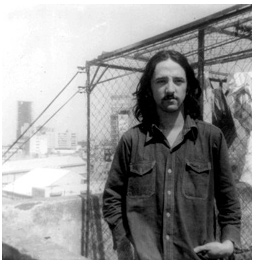
Having read Bolaño's 2666 prior to this, I am perhaps more apt to "get" the Savage Detectives. One of the biggest complaints is that this novel does not have a plot (or one that gets tied together). Following the journal of a young poet through the sex and literary references of his friendship with two anti-hero poets, the visceral realists, the individual narrative suddenly comes to a screeching halt as the characters escape into the Sonoro desert in search of an older poet, and to escape the murderous revenge of a pimp. Then twenty years pass, told only in monologues from people around the world who met the poets afterward, and their decline into the entropic nothingness of modernity (though personally I was expecting at least a hundred more narrators for the story to really get interesting). Eventually one realizes that the poets are fleeing some horrible crime, and that all the narratives are essentially interviews with someone looking for them. The beauty of this narrative move is that the point is not "what happens," but the effect of time and desire/desperation on our sense of reality, particularly through the use of choral narratives that everyone's got their own (flawed and limited) perspective. This is a move similar to in 2666, where no one character is the story's central protagonist, but we have an end date hundreds of years in the future that acts as a sort of existential crossroads for the present, casting the long shadow called history back onto events that, for the characters living them, are relatively important but soon fade into the otherworldly insignificance of the desert. As Bolaño himself suggests, this is a threnody, a death song for those still living. On the other hand, this story can be read as a comment on the discourse of the "other," that two Mexicans lost in the rest of the world is a parallel of the "noble savage" myths that accompanied the colonization of the new world. The visceral realist poets are so foreign that everyone whom they encounter become alien to themselves, and through the lack of closure, we the reader become equally as displaced from our own lives and sense of history. Despite all the literature and culture we acquire, Bolaño seems to suggest that on the most visceral level of reality we are all still savages, unsure what we are looking for and just as likely to kill the object of our desire when we find it.
3.04.2009
Galeano's Political Fables
Eduardo Galeano’s The Book of Embraces reads like a collection of politically charged fairy tales. He does this by drawing on the form, style, and tone of Aesop’s Fables (which was essentially the first collection of short short prose fiction) and inserting in moments of magic or myth at pivotal moments in his short narratives, such as the line, “he scoured heaven and earth in vain” (16) in the section The Origin of the World, the title of which also partakes and sets up this mythic scope. But what really makes these fables is the use of historical peoples, times, places, and events as the backdrop for whatever magical event or effect Galeano is trying to get at. Often these historical events detail the terrible political realities of South America, but the horror is tempered through the magical moment, such as José Carrasco becoming a miracle worker after he is shot fourteen times in the head in Celebration of the Human Voice/ 3. These magic moments serve as indications of each vignette’s moral (as every fable has to have a moral), and for Galeano, the points that he is trying to make are about the intersection of language, art, reality, and politics. In short, Galeano’s lessons are about the power of language to create the world and keep it free. The story in The Function of the Reader/ 2, in which an army captain resigns after reading the oppressed poet César Vallejo, perhaps best highlights this theme of the power of language.
The use of historical events to ground the magical and moralizing elements allows these metaphors to become more real for us the reader (as is the function of magical realism), but there is also perhaps a reverse effect too which works against Galeano. By blending into an imaginative, magical sense of reality, these historical events also become less real, more figurative. Part of this might have to do with the 21st Century’s apathy towards images of violence, we are so attenuated to them in movies that the subtlety with which they are portrayed here looses a good deal of their intended horror. What we are left with, the most striking parts of the text, are the miraculous and whimsical non-real moments, though this might also be Galeano’s point, that the horrors of political reality are only real because they have been given power through language previously, power that can be likewise used to create beauty in the world.
Another reason however that I felt the vignettes were less powerful than they could be was that they were vignettes. Only in a few places, like the dream sequences, do we have larger narratives building from the separate and disparate historical events. But otherwise these events are isolated, and as such, can’t seem to add up to more than facets on Galeano’s ideas. They are too readily digested, where a longer narrative, or one with a more continuous structure might build up to a larger and more significant effect. If, as Galenao suggests, we can create reality through language, a fully crafted literary world, as one might find in a novel, might convey that idea on a much deeper level. Of course, if I had already written a poetic trilogy of books on the history of the Americas, as Galeano did in Memory of Fire, I would probably want to move towards shorter disconnected forms as well!
The use of historical events to ground the magical and moralizing elements allows these metaphors to become more real for us the reader (as is the function of magical realism), but there is also perhaps a reverse effect too which works against Galeano. By blending into an imaginative, magical sense of reality, these historical events also become less real, more figurative. Part of this might have to do with the 21st Century’s apathy towards images of violence, we are so attenuated to them in movies that the subtlety with which they are portrayed here looses a good deal of their intended horror. What we are left with, the most striking parts of the text, are the miraculous and whimsical non-real moments, though this might also be Galeano’s point, that the horrors of political reality are only real because they have been given power through language previously, power that can be likewise used to create beauty in the world.
Another reason however that I felt the vignettes were less powerful than they could be was that they were vignettes. Only in a few places, like the dream sequences, do we have larger narratives building from the separate and disparate historical events. But otherwise these events are isolated, and as such, can’t seem to add up to more than facets on Galeano’s ideas. They are too readily digested, where a longer narrative, or one with a more continuous structure might build up to a larger and more significant effect. If, as Galenao suggests, we can create reality through language, a fully crafted literary world, as one might find in a novel, might convey that idea on a much deeper level. Of course, if I had already written a poetic trilogy of books on the history of the Americas, as Galeano did in Memory of Fire, I would probably want to move towards shorter disconnected forms as well!
12.25.2008
Murakami's "The Wind-up Bird Chronicle"

In this beautifully strange book Murakami tries to present a reality that is eventually broken open into an increasing irreality, and the narrator's struggle to get back to the "real" life he once led. Along the way we are presented with a colorful cast of characters, intense and vivid sensory/ consciousness details, a stunning use of dream sequences and imagery, a series of intriguing stories within the main story, and synchronistic interconnections between all the events, details, and characters that left me quite curious to keep turning each page to see just where it was all leading.
While being rather brilliantly written in these terms, enough that I highly enjoyed it, I was left slightly unsatisfied at the end for several technical reasons. The reality which the narrator originally inhabits is never clearly fleshed out so it is difficult to tell how far from it he moves (most likely due to cultural assumptions). The intense use of details and consciousness sometimes seem overwritten and don't add to the flow of the story's already tenuous plot. And for a story that relies on the interconnectedness of events and small details, many of the characters and events seem to randomly vanish as if they were threads that the author either never figured out what to do with or just forgot about when another more exciting detail suggested itself. This last point really irked me because it seemed as if the story could never quite figure out whether randomness or interconnectedness was more important to the total effect, and consequently the total effect seemed much more haphazard then I imagine it was meant to be. Add on top of that passages that accidentally change tense and case, which I would like to blame on the translation rather than the writing style. On the whole I felt that I was only getting half of what was supposed to be on the page.
Nonetheless this was a really wonderful read and points to all sorts of interesting directions for the use of fractured narratives, alternative histories, and perceptual irrealities that harken to the best of magical realist and post-modern literatures. I highly recommend this book and look forward to reading more of Murakami's work in the future.
12.14.2008
2666: Bolaño's Oasis of Horror
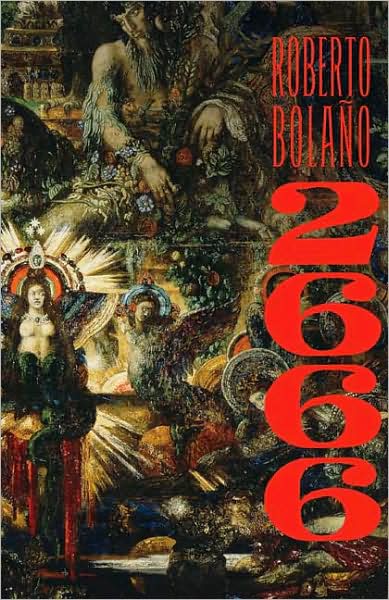
In the beginning of Roberto Bolaño's posthuomous masterpiece is a quote from Baudelaire, "An oasis of horror in a desert of boredom." That about sums up the aesthetic approach of the tome, the first section of which begins with the seemingly irrelevant story of an international group of academics chasing as elusive German author to the small Mexican border town of Santa Teresa. Sure, the academics give conferences, fall in love, and learn just briefly of a series of crimes in which hundreds of women have been killed in Santa Teresa over the past decade, but ultimately nothing happens, the academics do not find their author, and the story continues without them.
But this desert of boredom is the genius of the work, for in each section we get closer and closer to what is happening in Santa Teresa, reaching through the boredom to an unmistakable and spine-chilling horror that seems to lurk just below the surface of the page. Even the section about the crimes, essentially 200 pages worth of crime reports on every single raped and murdered woman in Santa Teresa (the crimes based off the still unsolved murders of women in the real Ciudad Juárez) told with the "false neutrality of a police report." These page are brutal, graphic, and yet, still part of the desert of boredom surrounding the horror that has not yet been revealed. As such it is interesting to note that Bolaño has turned Baudelaire's quote into a kind of architectonic structure for the plot of his novel. Instead of moving forward in time, or with building events, we have a microscope that starts off on the boring international level and gradually circles closer and closer to the terrifying circumstances of one small town.
8.20.2008
Review: "Youth Without Youth" by Mircea Eliade
When I saw the Coppola adaptation of this book I somewhat understood why the movie had received so many negative reviews: it was not the action-packed, World War II movie that it's setting might have lent itself towards. Instead, and in true fashion to Eliade's work, the movie dealt primarily with the metaphysical, spiritual, and even paranormal possibilities lurking behind every age, when the aging Romanian professor Dominic Matei is struck by lightning and suddenly rejuvenated, not just physically but with an hypermnesia that allows him to know anything he desires. However, I was somewhat displeased, as much of this came off as slightly removed from the action of the story itself, as if the plot was but an ill-fitting coat hanger for the ideas presented.
 As far as Eliade's novella, there is perhaps even less action and drama, and more focus on the possibility of ideas, including a random side adventure into Ireland to witness the Committee to Celebrate the Centennial of the Commemoration of the Death of Irish Poet, Magus, and Irredentist Sean Bran, a scene that seems entirely unrelated to the rest of the book, was dropped from the movie, and yet is one of the more enjoyable sections. "Youth Without Youth" reads more like a synopsis than a fleshed out work of fiction; one could easily imagine it expanded into a tome much like his masterful "Forbidden Forest." However, it also seems possible (the notorious "death of the author" aside) that as this was written at the end of Eliade's life he may have been slightly more concerned with getting the ideas down rather than developing them. If anything it could be a dying scholar and storyteller's wish to have one more chance at life to complete his work, while at the same time realizing the futility of that desire, here cast in terms of Chaungtzu's butterfly parable. Dominic Matei, perhaps Eliade himself, is an old man dreaming that he is a young man dreaming that he is every man, eventually falling into Eliade's spiritual catch-22 of the Eternal Return, bringing the still youthful Matei full circle to die where he had originally desired to commit suicide, having still not completed his life's work but learned to love life in the process.
As far as Eliade's novella, there is perhaps even less action and drama, and more focus on the possibility of ideas, including a random side adventure into Ireland to witness the Committee to Celebrate the Centennial of the Commemoration of the Death of Irish Poet, Magus, and Irredentist Sean Bran, a scene that seems entirely unrelated to the rest of the book, was dropped from the movie, and yet is one of the more enjoyable sections. "Youth Without Youth" reads more like a synopsis than a fleshed out work of fiction; one could easily imagine it expanded into a tome much like his masterful "Forbidden Forest." However, it also seems possible (the notorious "death of the author" aside) that as this was written at the end of Eliade's life he may have been slightly more concerned with getting the ideas down rather than developing them. If anything it could be a dying scholar and storyteller's wish to have one more chance at life to complete his work, while at the same time realizing the futility of that desire, here cast in terms of Chaungtzu's butterfly parable. Dominic Matei, perhaps Eliade himself, is an old man dreaming that he is a young man dreaming that he is every man, eventually falling into Eliade's spiritual catch-22 of the Eternal Return, bringing the still youthful Matei full circle to die where he had originally desired to commit suicide, having still not completed his life's work but learned to love life in the process.
7.10.2008
Review: "Blindness" by José Saramago
By writing a book where all but one character has suddenly been struck blind, Saramago presents himself with several challenges of technique. It is impressive to see a story written where visual descriptions have so little meaning and the best way of explaining events is to refer to tangible objects, sounds, feelings. Also an interesting literary choice is that up till more than half way through the book the characters are all passively acted upon, generally in increasingly negative ways as they are locked in an insane asylum and subject to the worst instincts of humanity in distress. While both these techniques challenge more conventional ways of storytelling, the second in particular made it difficult for me to really give myself to the story. We are generally given characters who have some realm of action that we can root for, and the choice to limit the protagonists to cowering in their blindness seems to suggest a moral stance on modern life and human ability that I personally don't agree with. Added to this is Saramago's slow and considered voice, page long paragraphs, punctuated regularly with commas, which read almost more like poetry than prose. While it is a unique and masterful narrative voice it was also somewhat distracting from reading the story itself- the language never quite disappeared (a problem I've had with all the Saramago I've read so far). Nonetheless, Saramago knows how to write a brilliant and gripping tale, and once the inmates finally escaped I was bound, curious to find out if they would survive and if everyone would regain their sight...

Here's also Walter Benjamin's 1940 Survey of French Literature and the discovery of some of Kafka's missing papers [via].
In further literary news, Salmon Rushdie wins the all-time best of Booker prize.
Here's also Walter Benjamin's 1940 Survey of French Literature and the discovery of some of Kafka's missing papers [via].
In further literary news, Salmon Rushdie wins the all-time best of Booker prize.
9.22.2006
researching the subconscious

(from akira kurosawa's "dreams")
as i get my scattered notes and dreams together in some semblance of order (or several semblances), i've started researching cultural and artistic depictions of dreams in order to more fully capture the specific dream aesthetic i am going for. as my alchemical friend Alberto Almarza put it yesterday before we watched kurosawa's masterpiece, "dreams are of light and water, but hidden in vases and lamps, in oceans and lighthouses. full of cliffs and deserts and forests, wind-up birds, compasses and clocks, doors and doors and strange ghostly figures."
while watching "dreams" i was struck, as i was the first time i saw it, how his themes and images could have sprung from my own mind, or any mind, certainly winsor mccay's mind portrayed in his "little nemo" comics; archetypal situations playing out the crux of humanity in a wealth of colors and melancholia. lost in a blizzard, walking through a dark tunnel, watching foxes dance in the rain, running from an erupting volcano. i've been there before. so perhaps have you.
5.11.2006
velvetine radicals
up late researching the history of Chezk literature and poetry I stumbled across a fascinating bit of rock and roll history: The Plastic People of the Universe.
Influenced heavily by early Velvet Underground and Frank Zappa, and sounding like a precursor to such modern groups like Guts Pie Earshot, !!!, and most industrial music, the PPU were the driving force of the Chezk underground in the late 60's-80's when the communist regime was pushing their campaign of normalization. Though they didn't have a specifically political agenda, they refused to fit in to the standards for performers and ended up playing underground barn shows for thousands until they were all arrested for disturbing the peace in '76. This is where things get interesting: these arrests are said to have led playwrite Vaclav Havel to pen the Charter 77, the main opposition to communist rule that eventually led to the Velvet Revolution in 89 and the overthrowing of communist power in the Chezk Republic.
Despite not being activists, here is an incredible example of music becoming a force for social change, the name of the revolution itself harking back to the Velvet Underground, who represented to the members of the Plastic People all that was right and unique in rock and roll. Despite the fact that the "underground" in New York in the 70's had nothing to do with political oppression, that spirit of rejecting normalcy and pushing the arts to new edges carried through to the Chezk people and gave them the courage to reject the stifling influence of the communist regime. Of course, once the Iron Curtain was dropped, and the emigre' writer's books were finally sold in their native country again, the anger and intensity that had fueled the arts scene almost completely died out, and in some articles I've read from recent Chezk musicians they almost wished they were living back under communist rule so there would be something to inspire them to create art against.
I also went to see the Dada exhibit at the National Gallery yesterday (odd to see such art up on gallery walls), and was struck that what fueled these artists, besides a desire to be doing their own thing, was the horror and absurdity of World War I. That their art was the only way for them to express their outrage and fear at what was going on in the world around them. The collage, scrap art and military aesthetic of their art later went on to shape the aesthetics of punk, the feminist collages of Hannah Höch being the almost direct precursor of the work of Crass artist Gee Vaucher, Crass being another rock band that had a vast political impact, during their time singing out against the Falklands War and Margaret Thatcher's regime in 80's England, but also (in my opinion) as the main reason anarchism and hard politics got integrated into rock music as a youth movement, making them responsible for the current anti-globalization movement.
The irony being that despite the continuation of the Iraq war and the tightening civil rights at home, most modern american musicians and artists don't seem all that oppressed or horrified by what's going on in the world enough to make a really clear statement against it, or if they do, such messages have been heard so many times before that they don't stand apart from the spectacle to make any sort of real impact on it, and even punk is distancing itself from an explicit political message, as if that was so last century. it's not like anyone's telling them that if they don't confirm they will not be allowed to continue playing.
Influenced heavily by early Velvet Underground and Frank Zappa, and sounding like a precursor to such modern groups like Guts Pie Earshot, !!!, and most industrial music, the PPU were the driving force of the Chezk underground in the late 60's-80's when the communist regime was pushing their campaign of normalization. Though they didn't have a specifically political agenda, they refused to fit in to the standards for performers and ended up playing underground barn shows for thousands until they were all arrested for disturbing the peace in '76. This is where things get interesting: these arrests are said to have led playwrite Vaclav Havel to pen the Charter 77, the main opposition to communist rule that eventually led to the Velvet Revolution in 89 and the overthrowing of communist power in the Chezk Republic.
Despite not being activists, here is an incredible example of music becoming a force for social change, the name of the revolution itself harking back to the Velvet Underground, who represented to the members of the Plastic People all that was right and unique in rock and roll. Despite the fact that the "underground" in New York in the 70's had nothing to do with political oppression, that spirit of rejecting normalcy and pushing the arts to new edges carried through to the Chezk people and gave them the courage to reject the stifling influence of the communist regime. Of course, once the Iron Curtain was dropped, and the emigre' writer's books were finally sold in their native country again, the anger and intensity that had fueled the arts scene almost completely died out, and in some articles I've read from recent Chezk musicians they almost wished they were living back under communist rule so there would be something to inspire them to create art against.
I also went to see the Dada exhibit at the National Gallery yesterday (odd to see such art up on gallery walls), and was struck that what fueled these artists, besides a desire to be doing their own thing, was the horror and absurdity of World War I. That their art was the only way for them to express their outrage and fear at what was going on in the world around them. The collage, scrap art and military aesthetic of their art later went on to shape the aesthetics of punk, the feminist collages of Hannah Höch being the almost direct precursor of the work of Crass artist Gee Vaucher, Crass being another rock band that had a vast political impact, during their time singing out against the Falklands War and Margaret Thatcher's regime in 80's England, but also (in my opinion) as the main reason anarchism and hard politics got integrated into rock music as a youth movement, making them responsible for the current anti-globalization movement.
The irony being that despite the continuation of the Iraq war and the tightening civil rights at home, most modern american musicians and artists don't seem all that oppressed or horrified by what's going on in the world enough to make a really clear statement against it, or if they do, such messages have been heard so many times before that they don't stand apart from the spectacle to make any sort of real impact on it, and even punk is distancing itself from an explicit political message, as if that was so last century. it's not like anyone's telling them that if they don't confirm they will not be allowed to continue playing.
10.23.2005
puppets tell tall tales: social ambiguity and the role of the individual to address it
Went to one of those wild events last night, the kind where I get to see all my friends working on a project that is far beyond my chosen capabilities and leaves me in tears of joy and rage, the 7th annual Black Sheep Puppet Festival. For several hours we sat in the back of the dark Brewhouse auditorium as several acts told incredible and absurd stories of the state of the world through the use of handheld puppets and elaborate box sets.
First up was the Coalition of Humans Invested in the Future, who presented a series of panel experts addressing some of the big questions of our times: is the past important, what's wrong with today, where is the future going, and where does stuff belong? The experts included strange animals and plants, a unitarian anteater, dayglow flounders, and the possibility of missiles falling form the sky and being mistaken for obnoxious viruses. Extremely postmodern when they began dissecting social divisions through the dream analysis of a dog dreaming he was a human fetching sticks and living out the endless cycle of going to work and to home watching screen after screen... or was it eating from the bowl and pissing in the litter? As always, it strikes me right here how perceptive art can be when taken to extremes.
Next was Clare Dolan's "When Little Pieces of Very Big Things Break Off and Fall," a script ripped from testimonies related to coal mining disasters bearing on he destruction of the environment and crumbling of the arctic shelf. Brief surreality ensues when the performer finds herself in an artists' coop with several dead philosophers and eventually has to run from death, all while talking about the nature of art to lead us to more meaningful ways of addressing ourselves in the modern world.
After this, a short sweet play by Stranger Theatre called the "Counterfeit Marquise" adapted from an old Mother Goose fairytale about a man who grew up as a woman and suddenly finds herself confronted with falling in love and learning who "she" really is.
The fourth act, by Drama of Works out of NY, impressed me greatly, as it touched on one of the greatest artists of our time, who I've formed a bit of an obsession with recently, Andy Warhol. Telling the story of his life through a series of phone interviews, movie ads, and memorabilia of his days growing up with his mother in Pittsburgh, this show really captured the essence of Warhol's artistic vision, pop art as the easily reproducible and easily recognizable, the assembly line creative process where output and fame are greater than individual creativity. Perhaps most poignant was the portrayal of Warhol, his family, his schoolmates, and coworkers all as Campbell's soup cans. Which of course raises the question for me I think was posed by Warhol's work, are we really all alike?
After another brief intermission smoking down cigarettes in the cold rain, we went in for the act most of us were there to see, the Indicator Species. Comprised of the infamous Etta Cettera and members of the Hollow Sisters, a life size prison cell was erected made entirely of letters from prisoners sent to the local books to prisoners project, Book 'Em, and a heart rending tale was told addressing murder and the age old societal problem of what to do with offenders. Unlike the other pieces presented in the evening, this one was not told through the use of humor or absurdity but was a brutal attack on the hearts and consciences of the audience presenting four separate cases based off real life incidents portraying the moral ambiguity of how to deal with this issue.
Now this piece would have been immensely touching in its own right, if I hadn't known any of the people involved, but hit too close to home as I watched Etta have an actual conversation with a prisoner and then they presented the story of Frank's murder. They didn't mention Frank by name, but it was obviously about him, the kid with a mysterious smile who wandered around town everywhere and into the hearts of everyone he crossed paths with. Last summer Frank was brutally and randomly shot by several kids who had stolen a police woman's gun and car and he is still tragically missed by everyone in this community. As soon as I saw what they were doing I broke into tears, unable to attach emotional reality from the art and uncertain if they were abusing Frank's memory to get their point across. If anything though it only honored his memory and answered the question, no we are not replaceable, we are all individual beings with our own unique lives. And even when we do something that paints us at being at fault to ourselves and our neighbors and society, even when we murder, we are still worthwhile human beings who deserve a chance to exist and express ourselves in our own ways. And despite the stigmas and laws of society, that is something no one should be allowed to take away from us.
First up was the Coalition of Humans Invested in the Future, who presented a series of panel experts addressing some of the big questions of our times: is the past important, what's wrong with today, where is the future going, and where does stuff belong? The experts included strange animals and plants, a unitarian anteater, dayglow flounders, and the possibility of missiles falling form the sky and being mistaken for obnoxious viruses. Extremely postmodern when they began dissecting social divisions through the dream analysis of a dog dreaming he was a human fetching sticks and living out the endless cycle of going to work and to home watching screen after screen... or was it eating from the bowl and pissing in the litter? As always, it strikes me right here how perceptive art can be when taken to extremes.
Next was Clare Dolan's "When Little Pieces of Very Big Things Break Off and Fall," a script ripped from testimonies related to coal mining disasters bearing on he destruction of the environment and crumbling of the arctic shelf. Brief surreality ensues when the performer finds herself in an artists' coop with several dead philosophers and eventually has to run from death, all while talking about the nature of art to lead us to more meaningful ways of addressing ourselves in the modern world.
After this, a short sweet play by Stranger Theatre called the "Counterfeit Marquise" adapted from an old Mother Goose fairytale about a man who grew up as a woman and suddenly finds herself confronted with falling in love and learning who "she" really is.
The fourth act, by Drama of Works out of NY, impressed me greatly, as it touched on one of the greatest artists of our time, who I've formed a bit of an obsession with recently, Andy Warhol. Telling the story of his life through a series of phone interviews, movie ads, and memorabilia of his days growing up with his mother in Pittsburgh, this show really captured the essence of Warhol's artistic vision, pop art as the easily reproducible and easily recognizable, the assembly line creative process where output and fame are greater than individual creativity. Perhaps most poignant was the portrayal of Warhol, his family, his schoolmates, and coworkers all as Campbell's soup cans. Which of course raises the question for me I think was posed by Warhol's work, are we really all alike?
After another brief intermission smoking down cigarettes in the cold rain, we went in for the act most of us were there to see, the Indicator Species. Comprised of the infamous Etta Cettera and members of the Hollow Sisters, a life size prison cell was erected made entirely of letters from prisoners sent to the local books to prisoners project, Book 'Em, and a heart rending tale was told addressing murder and the age old societal problem of what to do with offenders. Unlike the other pieces presented in the evening, this one was not told through the use of humor or absurdity but was a brutal attack on the hearts and consciences of the audience presenting four separate cases based off real life incidents portraying the moral ambiguity of how to deal with this issue.
Now this piece would have been immensely touching in its own right, if I hadn't known any of the people involved, but hit too close to home as I watched Etta have an actual conversation with a prisoner and then they presented the story of Frank's murder. They didn't mention Frank by name, but it was obviously about him, the kid with a mysterious smile who wandered around town everywhere and into the hearts of everyone he crossed paths with. Last summer Frank was brutally and randomly shot by several kids who had stolen a police woman's gun and car and he is still tragically missed by everyone in this community. As soon as I saw what they were doing I broke into tears, unable to attach emotional reality from the art and uncertain if they were abusing Frank's memory to get their point across. If anything though it only honored his memory and answered the question, no we are not replaceable, we are all individual beings with our own unique lives. And even when we do something that paints us at being at fault to ourselves and our neighbors and society, even when we murder, we are still worthwhile human beings who deserve a chance to exist and express ourselves in our own ways. And despite the stigmas and laws of society, that is something no one should be allowed to take away from us.
9.16.2005
taste what I've seen
[review of the plasticine injected humans of Gunther Von Hagens' bodyworlds II exhibit.]
Every morning when the first burst of light hits our eyes, the top layer of retinal cells is scorched off and we literally see the world with new eyes. Today set my senses on fire.
Driving across country side in a beat up car, blasting bouncy music and counting hawks till we hit the stench of a dirtier post-industrial city, flat and stuck somewhere between the decline and the future. We parked next to the birthplace of rock and roll and spilled downhill to the science center like a sore anachronistic robot thumb on the decaying gull covered lakeside dock. Inside got us even higher on omnimax x-ray specs of infinitesimal daily life body processes. Birth to breathing to bloodcell decay, strangely no shit or sickness though just as much part of being human. But there was more to come. Further, the mannequin lover's dream turned flesh from plastic; bodies peeled back muscles bone, whole nervous systems and arteries standing naked alone, bodies cut up and posed like Burroughs' lunchbox juxtapositions. Skateboard yoga and babybearing bodies fencing, faces spliced and facing themselves, chests doored out holding intestines aloft. Bodies without organs next to organs without bodies, exploded 20 ft across spaced out layers to give the impression of being a body at all.
Walking around with eyes far out we couldn't help but feel our own cell systems want to seperate. Signs say now accepting donors for plastinication. What a way to go. To a taste for beauty and a grotesque mind. Stepping back into the clouds, everything wanted to drift away with us, car engines tree rings office buildings similarly expanded and explained, intimate gearworks and growth cycles blown up to metasystemic proportions and chalklined onto the city streets. Now I usually find myself behind the far edge of appearances and try not to take anything at surface value, but this was priceless and hard to take for real. There's a story Alan Watts tells his kids about god, saying he's in this grape, cut it open. Now he's in two, cut, four, cut, to infinity, cut. In fact he doesn't seem to be there at all. Cut far enough and you just make atom bombs and maybe learn a little how it all fits together. Our analytical prostheses.
Anyway, it was all rather exciting, then went out for margaritas and enchiladas with some city wrecked friends and drove off into the smog lit night for home.
I wonder what tomorrow will look like.
Every morning when the first burst of light hits our eyes, the top layer of retinal cells is scorched off and we literally see the world with new eyes. Today set my senses on fire.
Driving across country side in a beat up car, blasting bouncy music and counting hawks till we hit the stench of a dirtier post-industrial city, flat and stuck somewhere between the decline and the future. We parked next to the birthplace of rock and roll and spilled downhill to the science center like a sore anachronistic robot thumb on the decaying gull covered lakeside dock. Inside got us even higher on omnimax x-ray specs of infinitesimal daily life body processes. Birth to breathing to bloodcell decay, strangely no shit or sickness though just as much part of being human. But there was more to come. Further, the mannequin lover's dream turned flesh from plastic; bodies peeled back muscles bone, whole nervous systems and arteries standing naked alone, bodies cut up and posed like Burroughs' lunchbox juxtapositions. Skateboard yoga and babybearing bodies fencing, faces spliced and facing themselves, chests doored out holding intestines aloft. Bodies without organs next to organs without bodies, exploded 20 ft across spaced out layers to give the impression of being a body at all.
Walking around with eyes far out we couldn't help but feel our own cell systems want to seperate. Signs say now accepting donors for plastinication. What a way to go. To a taste for beauty and a grotesque mind. Stepping back into the clouds, everything wanted to drift away with us, car engines tree rings office buildings similarly expanded and explained, intimate gearworks and growth cycles blown up to metasystemic proportions and chalklined onto the city streets. Now I usually find myself behind the far edge of appearances and try not to take anything at surface value, but this was priceless and hard to take for real. There's a story Alan Watts tells his kids about god, saying he's in this grape, cut it open. Now he's in two, cut, four, cut, to infinity, cut. In fact he doesn't seem to be there at all. Cut far enough and you just make atom bombs and maybe learn a little how it all fits together. Our analytical prostheses.
Anyway, it was all rather exciting, then went out for margaritas and enchiladas with some city wrecked friends and drove off into the smog lit night for home.
I wonder what tomorrow will look like.
3.27.2005
In the Realms of the Real

Last night I saw In the Realms of the Unreal, and it was incredibly inspiring. The story of outsider artist, Henry Darger, who lived as a recluse for most of his life and after his death his landlords found he had produced a 15,000 page novel fully illustrated about the world that he lived in in his head, filled with whimsical creatures and an eternal world war over child slavery, constructed from newspaper images collected through his lifetime. What a fascinating look at how the sometimes small experiences in a person's life can build up into an epic internal story. And at how the need to express that becomes all-consuming.
Fucking intense. Makes me feel like the work I've been doing is nothing. Of course I don't live in complete isolation from the rest of humanity, but still, it makes me want to throw out all the ideas I have for my next five novels and just start from scratch, clean and honest and fully intimate about the life I live where no one else sees. Already I hint at it, but that is nothing compared to what it could be. And even that is just hints. 15,000 pages, damn. As inspiring as this is, I am still more concerned with uniting my waking life with the world of my dreams than opting out of living all together to pursue some all-consuming internal vision. I still maintain that my life is my art, even if I am still coming into a full realization of just what that means. It takes a lifetime of practice, and I'm still young, but I fully belive that anything is possible.
Perhaps my favorite quote from the movie was when one of his neighbors was saying that they called poor artists like this crazy, and rich ones eccentric, and since Henry was poor they called him crazy. At least I have some close friends to support me in my own aesthetic madness.
3.20.2005
dangerous crossings
I started reading lvx23's "Walking Between Worlds" yesterday, and must say, it's good. As a scattered collection of web writings it still manages to be quite cohesive and thought-provoking, and admittedly a lot of the pieces remind me of stuff I would have written (but no longer need to as they've already been done!). It reminds me of that old cybernetic saying about standing on the shoulders of giants, all the work of the future builds off of the work of the past, paying homage to it and taking it another step forward. I find it interesting though that we are reaching a point with the interconnection of the Net were we are all giants, and we are all working off each other's shoulders at the same time, bootstrapping ourselves towards some higher understanding.
Lvx23 tells an allegory of a goat who was meant to be in an xmas pageant but choose instead to be free and run away from the whole ridiculous scene. Except that he had spent his whole life around this town, and couldn't wander far. "Perhaps freedom was more than he bargained for." Lvx23 argues that this is representative of our own human condition and inability to escape the pens of our social conditioning and comfort zones. Recently there has been a lot of talk on Key23 about consensus reality tunnels, and how to break out of them into realities that are just a little bit freer or more condusive to the magical and fractal world view. But even these too are reality tunnels of a sort, even if there attractor basins are strange and swing wide from the norm. Is it possible to be truly free? Is it possible, as Castaneda puts it, to stop the world and experience life outside of any preconditioned tunnel of perception? I want to say yes, there's something in my heart that tells me this is true and possible, but fraught with danger too. There is comfort and safety in an established world-view, even a non-standard one. And inertia. It takes a lot of energy to get out of the old grooves and spin into a new one, like particles escaping their atomic core. And this upsets everything we previously held to be true. As T. S. Eliot said, "Do I dare disturb the Universe?"
I think the only way (or safest way) to do so is not to throw ourselves headlong into the chaotic abyss between worlds, but to gradually push our boundaries until the worlds collide and become one. The limits of freedom that surround our comfort zones act as an event horizon for that domain, the space we can act within that can be expanded to give more freedom. Take for example any activity that one needs to practice to get better at, yoga perhaps, or music. There is the safe zone in which you know the activity well and find it not a challenge to do. Practice maintains that zone and pushes at its edges. Trying new poses or riffs that are not quite so easy or possible yet, but over time they too will be comfortable and the boundaries will be expanded, to the point of breaking into whole new realms of movement. The point when your circle interlaps with another, and reality multiplies in all directions.
Lvx23 tells an allegory of a goat who was meant to be in an xmas pageant but choose instead to be free and run away from the whole ridiculous scene. Except that he had spent his whole life around this town, and couldn't wander far. "Perhaps freedom was more than he bargained for." Lvx23 argues that this is representative of our own human condition and inability to escape the pens of our social conditioning and comfort zones. Recently there has been a lot of talk on Key23 about consensus reality tunnels, and how to break out of them into realities that are just a little bit freer or more condusive to the magical and fractal world view. But even these too are reality tunnels of a sort, even if there attractor basins are strange and swing wide from the norm. Is it possible to be truly free? Is it possible, as Castaneda puts it, to stop the world and experience life outside of any preconditioned tunnel of perception? I want to say yes, there's something in my heart that tells me this is true and possible, but fraught with danger too. There is comfort and safety in an established world-view, even a non-standard one. And inertia. It takes a lot of energy to get out of the old grooves and spin into a new one, like particles escaping their atomic core. And this upsets everything we previously held to be true. As T. S. Eliot said, "Do I dare disturb the Universe?"
I think the only way (or safest way) to do so is not to throw ourselves headlong into the chaotic abyss between worlds, but to gradually push our boundaries until the worlds collide and become one. The limits of freedom that surround our comfort zones act as an event horizon for that domain, the space we can act within that can be expanded to give more freedom. Take for example any activity that one needs to practice to get better at, yoga perhaps, or music. There is the safe zone in which you know the activity well and find it not a challenge to do. Practice maintains that zone and pushes at its edges. Trying new poses or riffs that are not quite so easy or possible yet, but over time they too will be comfortable and the boundaries will be expanded, to the point of breaking into whole new realms of movement. The point when your circle interlaps with another, and reality multiplies in all directions.
1.17.2005
the alchemist's language
"The Alchemist," by Paulo Coelho, is the story of a young Andalusian sheppard who sets out on a journey to interpret his dreams of finding a treasure beneath the pyramids of Egypt. On the way to fulfilling this Personal Legend he is guided across the Sahara Desert by mystical characters and persistant omens that point out that the treasure may not be material at all. Reading like a fable from the Arabian NIghts, this somewhat simple tale is a brilliantly written carrier for several alchemical themes of self-transformation through reality's interpretations. Most of the characters operate under the assumption that all things are one thing and are thus expression and representations of it. Through intuition and a keen attention one is able to learn the Language of the World, which is an intimate knowlege of and communication with all things as aspects of the Soul of the World. I imagine it as a language of magical 'true names,' but also a recognition that all names are essentialy reflections of one name which is god or existence (or not. the tao that can be named is not the tao...) The alchemist's task then is to learn to recognize themselves as avatars of this metaconsciouss interpretation, and capable of whatever they want (assuming of course that's what existence wants too since everything is one thing). I'm fond of this interpretation of alchemy myself, and was glad Coelho suggested that its symbols and metalurgic processes are really just metchorical for the transmogrification of self into everything (though not in these words). I also found this passage discussing the emerald tablet particularly suggestive:
"Perhaps if you were in a laboratory of alchemy, this would be the right time to study the best way to understand the Emerald Tablet. But you are in the desert. So immerse yourself in it. The dessert will give you an understanding of the world; in fact, anything on the face of the earth will do that. You don't even have to understand the desert: all you have to do is contemplate a simple grain of sand, and you will see in it all the marvels of creation."
"How do I immerse myself in the desert?"
"Listen to your heart. It knows all things, because it came from the Soul of the World, and it will one day return there."
"Perhaps if you were in a laboratory of alchemy, this would be the right time to study the best way to understand the Emerald Tablet. But you are in the desert. So immerse yourself in it. The dessert will give you an understanding of the world; in fact, anything on the face of the earth will do that. You don't even have to understand the desert: all you have to do is contemplate a simple grain of sand, and you will see in it all the marvels of creation."
"How do I immerse myself in the desert?"
"Listen to your heart. It knows all things, because it came from the Soul of the World, and it will one day return there."
1.13.2005
true names and the opening of the collective conscious
Yesterday I read Vernor Vinge's "True Names," and was inspired into finally using this blog account. This short story is perhaps one of the the key science fiction tales in shaping the vision and direction technology has taken over the last several decades as the first accredited depiction of cyberspace. Though that term didn't come about until later, from another sci-fi author, William Gibson, Vinge's "the Other Plane" essentially sets the foundation for the technological interface of humanity's information flows that we know of as the internet. It was a pretty good prophecy, as far as that goes. The interesting thing though was Vinge's choice to encode the story in terms of magick, the technological processes spelled out in terms of interpreting symbols and its most knowledgable users as warlocks. Which in a sense they are, the times not yet gone when working the complex code capable to craft a program, or even use a computer, seems to some a magical act. I personally know next to nothing about programming languages, but then again, I've been known to believe in magick.
The term 'true name' comes from magical traditions where it is believed that knowledge is power, and one of the surest ways to get knowledge of something was to have a name for it. A name being not only a definition but a contagious and associative link with the thing. The common words we use to refer to things are nothing more than a rudimentary label, whereas the true name of that thing is akin to a complete understanding of its entire being. If such a thing were possible. In Vinge's story this amounted to knowing the users real name and thus where their body was jacked in; you could do anything in the Other Plane just as long as no one could actually kill you. Though you could say that about the real world too.
There is an oft-quoted zen saying that claims a finger pointing at the moon is not the moon itself, as words are not the things they name but only reference pointers to them. All the concepts we have for objects, processess, and beings are nothing more than pointers, convenient fictions created to allow us to be able to make reference of discrete parts of the vast and oftentimes incomprehesible world around us. And as language is a function of communication, these symbolic tags are used mainly to represent our own disjointed experiences of the world in terms that others might understand. Which is in its essence the heart of story telling, creating symbol-complexes in which others can recognize experiences in their own lives and of life in general. In this light, one could say that any belief, any understanding of the world based on words, is just a story and contains no more truth than the teller (and listener) is willing to interpret into it; meaning belonging solely in the mind of the beholder and being not so much truth as comprhension in the pattern of one's own story. That being said, the truths of every great religion, culture and science are not truths at all but really convincing fictions. Even the belief that we have individual bodies interacting with other discrete beings is only a story for the flow of subatomic wavicles, the current quantum tale on the subject.
We have been telling ourselves stories since the dawn of history, in an attempt to give explanation and meaning to a world that proffered neither. And now we have reached a point where we are so wrapped up in the stories that we have forgotten they are just that, and go about in our beliefs as if they are the worlds they represent. Which, as language based creatures, for most intents and purposes they are. Our realities are fostered by our descriptions of it, the magical act being to change your description changes your reality. Now more than ever though, we can see that our stories, like the lower level words, are not static things; and it is through the interaction of different stories inside the larger discoursive flow of information that has allowed for all the breakthroughs of understanding that gave rise to the technologies we have today. Call them memes, themes, or belief constructs, but when ideas cross they either agree or conflict. And if they conflict either a synthesis occurs and both stories are broadened, or one steam rolls the other into oblivion and becomes the predominant belief structure; such is the case with the major religions, whose stories seems hopelessly out of date yet retain some amount of staying power by virtue of being really big. Regardless, the really groundbreaking changes have occured in our society when the stories have been allowed to influence each other and adapt accordingly, thus broadening our collective understanding of existence. Which is where the internet comes back in as a continually evolving matrix of humanity's stories, and thus the roots of all knowledge. A virtual Indra's Net or Tower of Babel, if you will, comparable to current stories of the Noosphere or global brain in which each person is a neuron or symbol processor. Another fitting metaphor is Borges's Aleph, a point which contains all other points, delightfully illustrated in "True Names" when Erythrina and Mr. Slippery become privy to the total flow of information on the Other Plane and essentially learn humanity's true name by experiencing it all at once.
One of the more magical properties of storytelling, as is expemplified by Vinge's "True Names," is that of prophecy. Stories are not only metaphors for life as we experience it, but projections of what life might be like, as we have the ablity to project our patterns ahead of us to understand what is likely to happen. Such subjunctive imagination is responsible for everything from the flight of airplanes to moment to moment survival, and at best allows anything we can think of to become real. In the realm of stories the most portentious visions of the future open up whole realms of possibility not previously imagined, allowing the future of today to become the past of tomorrow. Once we have a description of what a desired world might look like it is that much easier to find the steps necessary to bring it into being.
Which is precisely the intention of this blog, the collection and connection of stories that point towards a broader understanding of our experience in and manipulation of the world on a collective level.
The use of the term 'true names' is meant to be somewhat ironic, for as the Hashhashin sage Hasan-I-Sabbah reputedly said, "Nothing is true, everything is permissable," though a perhaps more fitting quote is the magical axiom "Everything is true in one sense, false in one sense, and meaningless in a third." I do not claim that any of the stories here-after told, or any of the connections I'll draw between them contain any explicit element of truth outside the meaning I and the rest of humanity have given them. As this is the case I do not expect people to believe what I say, since I don't myself, and would rather encourage them to comment with their own interpretations as that will only further the collective understanding of these stories and hence ourselves.
All that being said, welcome to True Names.
The term 'true name' comes from magical traditions where it is believed that knowledge is power, and one of the surest ways to get knowledge of something was to have a name for it. A name being not only a definition but a contagious and associative link with the thing. The common words we use to refer to things are nothing more than a rudimentary label, whereas the true name of that thing is akin to a complete understanding of its entire being. If such a thing were possible. In Vinge's story this amounted to knowing the users real name and thus where their body was jacked in; you could do anything in the Other Plane just as long as no one could actually kill you. Though you could say that about the real world too.
There is an oft-quoted zen saying that claims a finger pointing at the moon is not the moon itself, as words are not the things they name but only reference pointers to them. All the concepts we have for objects, processess, and beings are nothing more than pointers, convenient fictions created to allow us to be able to make reference of discrete parts of the vast and oftentimes incomprehesible world around us. And as language is a function of communication, these symbolic tags are used mainly to represent our own disjointed experiences of the world in terms that others might understand. Which is in its essence the heart of story telling, creating symbol-complexes in which others can recognize experiences in their own lives and of life in general. In this light, one could say that any belief, any understanding of the world based on words, is just a story and contains no more truth than the teller (and listener) is willing to interpret into it; meaning belonging solely in the mind of the beholder and being not so much truth as comprhension in the pattern of one's own story. That being said, the truths of every great religion, culture and science are not truths at all but really convincing fictions. Even the belief that we have individual bodies interacting with other discrete beings is only a story for the flow of subatomic wavicles, the current quantum tale on the subject.
We have been telling ourselves stories since the dawn of history, in an attempt to give explanation and meaning to a world that proffered neither. And now we have reached a point where we are so wrapped up in the stories that we have forgotten they are just that, and go about in our beliefs as if they are the worlds they represent. Which, as language based creatures, for most intents and purposes they are. Our realities are fostered by our descriptions of it, the magical act being to change your description changes your reality. Now more than ever though, we can see that our stories, like the lower level words, are not static things; and it is through the interaction of different stories inside the larger discoursive flow of information that has allowed for all the breakthroughs of understanding that gave rise to the technologies we have today. Call them memes, themes, or belief constructs, but when ideas cross they either agree or conflict. And if they conflict either a synthesis occurs and both stories are broadened, or one steam rolls the other into oblivion and becomes the predominant belief structure; such is the case with the major religions, whose stories seems hopelessly out of date yet retain some amount of staying power by virtue of being really big. Regardless, the really groundbreaking changes have occured in our society when the stories have been allowed to influence each other and adapt accordingly, thus broadening our collective understanding of existence. Which is where the internet comes back in as a continually evolving matrix of humanity's stories, and thus the roots of all knowledge. A virtual Indra's Net or Tower of Babel, if you will, comparable to current stories of the Noosphere or global brain in which each person is a neuron or symbol processor. Another fitting metaphor is Borges's Aleph, a point which contains all other points, delightfully illustrated in "True Names" when Erythrina and Mr. Slippery become privy to the total flow of information on the Other Plane and essentially learn humanity's true name by experiencing it all at once.
One of the more magical properties of storytelling, as is expemplified by Vinge's "True Names," is that of prophecy. Stories are not only metaphors for life as we experience it, but projections of what life might be like, as we have the ablity to project our patterns ahead of us to understand what is likely to happen. Such subjunctive imagination is responsible for everything from the flight of airplanes to moment to moment survival, and at best allows anything we can think of to become real. In the realm of stories the most portentious visions of the future open up whole realms of possibility not previously imagined, allowing the future of today to become the past of tomorrow. Once we have a description of what a desired world might look like it is that much easier to find the steps necessary to bring it into being.
Which is precisely the intention of this blog, the collection and connection of stories that point towards a broader understanding of our experience in and manipulation of the world on a collective level.
The use of the term 'true names' is meant to be somewhat ironic, for as the Hashhashin sage Hasan-I-Sabbah reputedly said, "Nothing is true, everything is permissable," though a perhaps more fitting quote is the magical axiom "Everything is true in one sense, false in one sense, and meaningless in a third." I do not claim that any of the stories here-after told, or any of the connections I'll draw between them contain any explicit element of truth outside the meaning I and the rest of humanity have given them. As this is the case I do not expect people to believe what I say, since I don't myself, and would rather encourage them to comment with their own interpretations as that will only further the collective understanding of these stories and hence ourselves.
All that being said, welcome to True Names.
Subscribe to:
Comments (Atom)

