
[This one's inspired by a bunch of puns from work today, and the ridiculousness of the anxiety that manifests itself in Pittsburgh this time of year. Enjoy!]
Bananarchy in the Bowl of Winds
It was third down in the final minutes of the third quarter, and Jerry was on the edge of his seat. C’mon, he screamed, just catch the ball! I can’t believe that call, he was clearly across the line… I couldn’t tell how Jerry knew; it was almost impossible to see the field from as high up as we were in the stands. But the seats were cheap, even if in this terrible weather the wind just whipped down into the bowl of the arena and froze our faces off, even though the group of fans in bright yellow suits right below us seemed jovially unconcerned.
Touchdown! No it’s not, Jerry howled, wringing his towel and jumping up and down. One of the fans cast an odd glance up our way, but his friends were occupied, huddled around something I couldn’t see, probably watching a replay on the Net as the JumboTron screen was having a hard time staying focused. The fan’s face was inexplicably painted like a clown’s, in a yellow as garish as his suit. Jerry had warned me the fans often dressed quite strange to show their team spirit. I’ve never understood football myself, being more of a story man. What’s the entertainment value of watching large men you can’t even see tumbling all over each other? But Jerry’s enthusiasm was contagious, so when he begged me to come along with him to the game I agreed, not realizing how miserably wretched the weather would be, even in the chintzy team windbreaker Jerry leant me that did nothing to keep out the wind. Those thick yellow suits were starting to look appealing right now.
The game wore on, Pittsburgh falling behind as Dallas caught a second wind, and then a third. Unable to make out the ant-like players below, my attention kept wandering, returning to the yellow-suited fans who seemed to be having a lot more fun. It looked like they were busy constructing some apparatus, what after a moment my brain told me was a catapult. A catapult? I wanted to ask Jerry if this was for some post-game ritual, but he was too busy chewing his mittens to shreds over the last foul to listen, so I sat back again to watch, finally a little curious.
Third down in the final minutes of the last quarter, and the Steelers had just used their last timeout, hopefully planning how to turn their game around before poor Jerry threw himself from the bleachers in despair. The whole crowd was on the edge of their seats, except for me, unable to see why this was so important, and the yellow suits, who’d finished building their contraption and all leaned back, opening their jackets despite the chill. Suddenly, just as one of the Cowboys was about to claim another first down (I think that’s what it’s called), a small flapping object went whirling out of the stands, landing right in front of the runner, whose feet flew out from under him in an inglorious pratfall.
The crowd went wild as the cameras zoomed in to reveal a banana peel on the jittery JumboTron screen. The announcers all mumbled, uncertain where it had come from. The crowd was actually aghast, but they couldn’t keep from laughing at the absurdity of it, the yellow-suited fans most of all. Finally the field calmed down again so the Cowboy could redo his play without interruptions. But no! This time with an audible thwang another yellow whirl went sailing, and another. Suddenly the arena’s cold air was filled with banana peels, all landing whichever way the winds blew them! Looking around I realized that the top rows of the stands were dotted with yellow-suited individuals, each group of them busy at their own little catapult. They must have planned this whole caper in case the Steelers began to loose, unless it was a political statement, hiding the bananas in their jackets to keep them from freezing.
No one else seemed to notice the characters depart, all eyes intent on the field, where the game carried on now despite the rain of peels, the players slipping and tumbling all over the place, the ball slick with juice and a fruity reek wafting up to the stands. It was chaos, sheer bananarchy! Jerry could only shake his head as his cherished pastime was reduced to the buffoonery I’d always told him it looked like, while I laughed and laughed, entirely forgetting about the cold. Eventually the game was called on account of the mushy sabotage, and as we were walking to the lot I turned to Jerry and said, you know what, that was a lot more fun then I expected, you wanna go get a smoothie? For some reason he only grumbled and kept walking.
Showing posts with label ritual. Show all posts
Showing posts with label ritual. Show all posts


11.25.2009
Academicia
As part of the current process of integrating my various creative works onto the Internet, I've decided to post some of the more interesting academic papers I've written over the last several years for school (backdated to when they were written, including a couple pieces of fiction, not including any work from the current semester):
Manifesting Power: Indra’s Slaying of Vṛtra as Kratophany of the Vedic Kings, 10.6.07
Vivid Wanderings: The Gunwinggu Rainbow Serpent as Symbol for Indigenous Australian Life, 11.3.07
Speaking the World: Pico della Mirandola’s Cabalism and the Languages of Science, 11.20.07
Dreams of Identity in Everett's Erasure, 11.28.07
Haunting Tradition: Ritual Failure in the Lakota Ghost Dance, 12.10.07
The Incoherence of the Sentence in Kafka’s “In the Penal Colony”, 1.30.08
Analyzing the Mystery of Poe's The Murders in the Rue Morgue, 2.15.08
Distorted Reflections of Reality in Borges' “Tlön, Uqbar, Orbis Tertius”, 4.16.08
The Mythic Narrative of Beckett's “The Calmative”, 4.24.08
The Legend of the Forbidden Treasure in Conrad’s “Nostromo”, 9.11.08
Simultaneity of Tradition in Eliot’s “The Wasteland", 10.2.08
Dystopian Symbols and Counter-Symbols in V for Vendetta and Alphaville, 11.2.08
Place Names as Reality Effect in Joyce's “Portrait of the Artist as a Young Man”, 11.18.08
Saving Middle-Earth: The Power of Recording Reality in Tolkien's The Lord of the Rings, 2.20.09
The Anthropological Perspective in LeGuin's The Left Hand of Darkness, 2.22.09
Apocryphal Narratives in Pynchon's Slow Learner, 4.13.09
Believing in the Fantastic of Gaiman's Neverwhere, 4.8.09
Cyberpunk and the Magical Power of Language, 4.21.09
Please feel free to cite these papers and ideas if of interest and use. I would prefer not to be plagiarized. Thanks!
A Personal Myth (fiction), 10.1.07
The Death of the Author as a Young Man (autobiographical fiction), 2.27.09
I've also gone back and updated tags for all entries on this blog and transferred the posts from my old blog True Names to here (but haven't gotten to their tags yet).
Manifesting Power: Indra’s Slaying of Vṛtra as Kratophany of the Vedic Kings, 10.6.07
Vivid Wanderings: The Gunwinggu Rainbow Serpent as Symbol for Indigenous Australian Life, 11.3.07
Speaking the World: Pico della Mirandola’s Cabalism and the Languages of Science, 11.20.07
Dreams of Identity in Everett's Erasure, 11.28.07
Haunting Tradition: Ritual Failure in the Lakota Ghost Dance, 12.10.07
The Incoherence of the Sentence in Kafka’s “In the Penal Colony”, 1.30.08
Analyzing the Mystery of Poe's The Murders in the Rue Morgue, 2.15.08
Distorted Reflections of Reality in Borges' “Tlön, Uqbar, Orbis Tertius”, 4.16.08
The Mythic Narrative of Beckett's “The Calmative”, 4.24.08
The Legend of the Forbidden Treasure in Conrad’s “Nostromo”, 9.11.08
Simultaneity of Tradition in Eliot’s “The Wasteland", 10.2.08
Dystopian Symbols and Counter-Symbols in V for Vendetta and Alphaville, 11.2.08
Place Names as Reality Effect in Joyce's “Portrait of the Artist as a Young Man”, 11.18.08
Saving Middle-Earth: The Power of Recording Reality in Tolkien's The Lord of the Rings, 2.20.09
The Anthropological Perspective in LeGuin's The Left Hand of Darkness, 2.22.09
Apocryphal Narratives in Pynchon's Slow Learner, 4.13.09
Believing in the Fantastic of Gaiman's Neverwhere, 4.8.09
Cyberpunk and the Magical Power of Language, 4.21.09
Please feel free to cite these papers and ideas if of interest and use. I would prefer not to be plagiarized. Thanks!
A Personal Myth (fiction), 10.1.07
The Death of the Author as a Young Man (autobiographical fiction), 2.27.09
I've also gone back and updated tags for all entries on this blog and transferred the posts from my old blog True Names to here (but haven't gotten to their tags yet).
9.02.2009
Magic Shoes
Contemporary Americans generally do not wear magical amulets, or other specially-endowed articles of clothing, as in other times or cultures, such as the ghost shirts of the Lakota Indians. Certainly there are superstitions, lucky sports caps or underwear for the winning game or date, but clothing as a statement and symbolically intentional affect has declined somewhat in the last several decades. We may still wear suits to work or funerals, jerseys to games, jewelry to dinner, the usual ritual uniforms, but it is just as likely to see someone on the street in merely jeans and a t-shirt (what up till recently was considered underwear), or worse, kids in classrooms wearing sweatpants, what are essentially pajamas, or hats on their heads which at any other time would have signified either a lack of respect or a desire to not be indoors. This isn't to say that clothes no longer signify anything, one only has to look at the inordinate amount of money and attention that is put into the tennis-shoe industry, people buying brand new expensive designer brand sneakers instead of food to live on, people robbing other people for said same sneakers. Also the resurgence of boots, as a casual footwear encountered on a daily basis, but also an aesthetic and symbolic one, laden with connotations of toughness, travel, endurance (often sexualized), etc. The desire once filled by the role of the high heel in the cultural imagination, idealized in the Ruby Slippers Dorothy wore to escape from the childhood fantasy of Oz into sexual adulthood, has been replaced it seems with a new desire for distance-durability or strength, groundedness, or a thick solid place to stand and move from.
I have worn boots for the last 15 years, my first pair being black army boots (of the kind favored in the punk/outcast subculture of the late '90s, though I never owned a pair of Docs), that carried that significance of toughness, integrity (of a military persuasion), etc. For the last four years however I have owned a pair of hand-made, custom-fitted moccasin-style boots from Catskill Mountain Moccasins, of a dark blue-green leather with laced up sides that as long as I take care of will last probably the most of my life. While an expensive purchase, these boots were actually a gift from some friends who had come into some money, and were gifted as something to "help me on my journey/ adventure," which is the spirit I have always tried to wear them in, somewhat like the legendary Seven League Boots, or perhaps more exactly as if they were magic boots from some role-playing game, not quite boots of speed as much as boots of doubled experience, as I have worn them through many situations of extreme, unique, self-changing experience. The significance being that because the boots were a gift and are already unique looking (people call them my elf boots), wearing them is a reminder that when I am in the world it is not just the casual going about the day, but that every day is an adventure, a quest in the sense of a search after deeper questions and significance.
After a couple years and wearing them on a cross-country road trip, my boots were pretty worn down at the heel and needed to be resoled, which I was thankfully able to find someone to do, and then a year later they needed to be resoled again. This was last fall, a time of great personal inner turmoil and questioning, and I took that the soles of the boots were worn through to be indicative of a deeper spiritual uncertainty, as in that my soul was worn through (a not inappropriate homophone, as the ancient Egyptian symbol for the person's steps through life, the ankh, was represented by a sandal-strap). In preparation for this fall semester, in which I am taking a number of philosophy courses and will need, not answers, but a renewed sense of my quest/ions, I thought it made sense to get the boots fixed, with thicker heels, which I did this week and finally picked up today, biking out to Edgewood to get them. Since I was already out and coming through East Liberty, I decided to stop by the Cathedral of Hope, which on Wednesdays sets up their labyrinth for people to walk, which in other years has been an extraordinarily centering and spiritual practice for me and I already felt the need of recently. Labyrinth's the symbol of life's journey, the winding of questions in the neural pathways, long ruminative walks mapped onto the backstreets of the city, and I thought this labyrinth walk was a good time to reconsecrate my boots for the future, putting them on afterward and remembering that, as they are custom-fit, they are more comfortable than anything else I've worn on my feet, and almost begging to walk out into the world again.
I have worn boots for the last 15 years, my first pair being black army boots (of the kind favored in the punk/outcast subculture of the late '90s, though I never owned a pair of Docs), that carried that significance of toughness, integrity (of a military persuasion), etc. For the last four years however I have owned a pair of hand-made, custom-fitted moccasin-style boots from Catskill Mountain Moccasins, of a dark blue-green leather with laced up sides that as long as I take care of will last probably the most of my life. While an expensive purchase, these boots were actually a gift from some friends who had come into some money, and were gifted as something to "help me on my journey/ adventure," which is the spirit I have always tried to wear them in, somewhat like the legendary Seven League Boots, or perhaps more exactly as if they were magic boots from some role-playing game, not quite boots of speed as much as boots of doubled experience, as I have worn them through many situations of extreme, unique, self-changing experience. The significance being that because the boots were a gift and are already unique looking (people call them my elf boots), wearing them is a reminder that when I am in the world it is not just the casual going about the day, but that every day is an adventure, a quest in the sense of a search after deeper questions and significance.
After a couple years and wearing them on a cross-country road trip, my boots were pretty worn down at the heel and needed to be resoled, which I was thankfully able to find someone to do, and then a year later they needed to be resoled again. This was last fall, a time of great personal inner turmoil and questioning, and I took that the soles of the boots were worn through to be indicative of a deeper spiritual uncertainty, as in that my soul was worn through (a not inappropriate homophone, as the ancient Egyptian symbol for the person's steps through life, the ankh, was represented by a sandal-strap). In preparation for this fall semester, in which I am taking a number of philosophy courses and will need, not answers, but a renewed sense of my quest/ions, I thought it made sense to get the boots fixed, with thicker heels, which I did this week and finally picked up today, biking out to Edgewood to get them. Since I was already out and coming through East Liberty, I decided to stop by the Cathedral of Hope, which on Wednesdays sets up their labyrinth for people to walk, which in other years has been an extraordinarily centering and spiritual practice for me and I already felt the need of recently. Labyrinth's the symbol of life's journey, the winding of questions in the neural pathways, long ruminative walks mapped onto the backstreets of the city, and I thought this labyrinth walk was a good time to reconsecrate my boots for the future, putting them on afterward and remembering that, as they are custom-fit, they are more comfortable than anything else I've worn on my feet, and almost begging to walk out into the world again.
7.21.2009
The Pursuit of
"Most of the mistakes [in the War on Drugs] have roots in an elementary error, the inability to accept that "altering one's consciousness is a fundamental human desire." The craving to be more relaxed or more alert, more outgoing or more reflective, happier or deeper or even just sillier and less bored -- in one form other another, this drive has always been and always will be with us, though many of us refuse to admit it. As a result, our political response to drug problems tends to be blinkered."
from Why we say yes to drugs, a Salon review of a new book on the futility of anti-drug laws.
I would agree that "altering one's consciousness is a fundamental human desire," as humans have been seeking out in their rituals new ways of perceiving themselves and the world since we've had a consciousness to alter. This is also a pertinent theme in Infinite Jest, whether people given the choice to pursue some form of happiness regardless if they know it's bad for them will still choose to do so. Of course I don't think the issue is as simple as the pursuit of novelty and entertainment vs. conservative policies. On one hand is the issue of addiction, that some people are perhaps more prone to continually harmfully altering themselves, and on the other is the double standard with which America has presented drug policy: Not only that programs like DARE actually encourage drug experimentation, as the article claims, but even more so that media and entertainment options are generally passive and consumptive by nature (ie TV), and other active forms of enjoyment such as creating art require some skill and drive, neither of which are encouraged or actively taught in contemporary culture. Which, for our country's bored youth left drugs as one of the few choices of how to spend one's time. Of course nowadays there's the internet, which seems to give that kind of choice, though is perhaps as equally addictive.
from Why we say yes to drugs, a Salon review of a new book on the futility of anti-drug laws.
I would agree that "altering one's consciousness is a fundamental human desire," as humans have been seeking out in their rituals new ways of perceiving themselves and the world since we've had a consciousness to alter. This is also a pertinent theme in Infinite Jest, whether people given the choice to pursue some form of happiness regardless if they know it's bad for them will still choose to do so. Of course I don't think the issue is as simple as the pursuit of novelty and entertainment vs. conservative policies. On one hand is the issue of addiction, that some people are perhaps more prone to continually harmfully altering themselves, and on the other is the double standard with which America has presented drug policy: Not only that programs like DARE actually encourage drug experimentation, as the article claims, but even more so that media and entertainment options are generally passive and consumptive by nature (ie TV), and other active forms of enjoyment such as creating art require some skill and drive, neither of which are encouraged or actively taught in contemporary culture. Which, for our country's bored youth left drugs as one of the few choices of how to spend one's time. Of course nowadays there's the internet, which seems to give that kind of choice, though is perhaps as equally addictive.
6.12.2009
Religious news: OS Religion and the Dali Lama's woes
"Open-source religion is an amalgamation of two ways of thinking about the world. The first is religion, a common set of practices, rituals, and beliefs. It’s as old as the hills, one of the most enduring traits of humankind. The “open source” component is new, an unforeseen consequence of the Internet revolution of the 1990s. It’s a reference to open-source computer code, code that anyone is allowed to rewrite, add to, or delete. Adherents of open-source religion note that tradition can calcify into dogma, and if there’s one common trait to people who practice open-source religion, it’s distaste for dogma. Some open-source believers want to found entirely new religions, and some merely want to reinvigorate a mainstream faith. All want to change people’s perceptions of religion from something that’s handed down to them, something they receive, and make religion something people do. All religions evolve, of course, but the tinkering inherent to open-source religions can benefit founders and followers alike, Webster says. “When you share what you learn, you learn better,” he notes, “and the content evolves that much more efficiently.”
...
This is contrasted to the Dali Lama, whose Buddhist Foes claim he is violating the basic tenets of Buddhism. And if that wasn't bad enough, the boy chosen as the next Dali Lama turns his back on the order, now sporting "baggy trousers and long hair, and more likely to quote Jimi Hendrix than Buddha." Which I suppose shows some of the challenges when one's ancient practices fail to keep up with the times.
...
This is contrasted to the Dali Lama, whose Buddhist Foes claim he is violating the basic tenets of Buddhism. And if that wasn't bad enough, the boy chosen as the next Dali Lama turns his back on the order, now sporting "baggy trousers and long hair, and more likely to quote Jimi Hendrix than Buddha." Which I suppose shows some of the challenges when one's ancient practices fail to keep up with the times.
11.24.2008
Dali Lama Unleashes Revolutionary New Reincarnation Techniques
[via]
"Deciding that they should be the ones to appoint all future Lamas, in an attempt to gain the upper hand in the mindspace of the people of Tibet in their struggle against them for independence, the Chinese government recently enacted a law giving themselves full authority over all reincarnations.
Well played China. Well played.
But the Dalai Lama knows how to play the game as well.
In response, at the end of 2007, the Dalai Lama proposed to hold a referendum among his millions of followers on whether he should be reincarnated at all, and, if the vote was in favor, to determine his reincarnation while he was still alive. He cited the example of one of his teachers as a precedent for a lama being reincarnated while still alive. But he also indicated that he would not be reborn in China or any other country which is “not free.”
In turn, the Dalai Lama has raised the possibility to forgo his rebirth, or to be reborn while still alive so that he, not China, can choose his successor.
The Dalai Lama has even suggested reincarnating as a woman.
I find it incredibly interesting that the Dalai Lama, a being who’s existence spans at least fourteen lifetimes, is now reincarnating only in free countries in order to stay free of the grasp of the ancient empire which seeks to trap and control him within it’s borders. That is, of course, unless he chooses not to reincarnate at all and instead transcends to a higher dimension.
I certainly hope they aren’t using Dielbolds to count the votes in that referendum, it would be an easy way for the Chinese to finally remove the Dalai Lama from this level of reality (at least for a while).
What’s especially interesting about this strange game of espionage and rebirth is how important it actually is to the future of Tibet, China, and the rest of the world, as well as to the lives of the individuals involved."
8.25.2008
On koans and rotting dogs
Erik Davis of Techgnosis on Jodorowsky's Spiritual Memoir:
"A friend recently asked me if I though Alejandro Jodorowsky’s Holy Mountain was a “good” movie, and I had to answer that, in the case of this surreal mythopoetic masterwork, the usual good/bad categorization does not apply. The film is truly beyond category; or rather, it is “terribly good.” While the first half of the movie—which was definitively released on DVD within the last year—is perhaps the greatest sustained expression of visionary psychedelic filmmaking ever, I can understand why people also find the exploding frogs repulsive and the mystagoguery redolent with all the erratic indulgence and hierophantic pretension that mark the more wayward domains of Seventies spiritual counterculture. But even that’s as much a plus as a minus, especially if, like me, you believe that the peculiar genius of this era provided mystical and hedonic conundrums that are still worthy of study and exploration.

"So it was with great excitement that I read the recent translation of Jodorowsky’s spiritual autobiography, entitled—hold onto your hats—The Spiritual Journey of Alejandro Jodorowsky. Like his films, it is a puzzling, wonderous, grotesque, and sometimes tedious book, but it does confirm the sense I get from his films that he is not fucking around with the mysteries. In the Sixties and Seventies, Jodorowsky was a serious practitioner of Zen, studying and meditating with a Japanese priest in Mexico City named Ejo Takata. Their koan combat is the most steady thread of this book, a male-buddy-cognitive conversation that forms a counterpoint with the other figures in the book, all of whom are women who offer Jodo various modes of initiation—artistic, sexual, magical, energetic. These women include the surrealist painter Leonora Carrington, who sounds as wacky brilliant as Dali, and a goat-killing silicone-implanted Mexican actress known as La Tigress."
"A friend recently asked me if I though Alejandro Jodorowsky’s Holy Mountain was a “good” movie, and I had to answer that, in the case of this surreal mythopoetic masterwork, the usual good/bad categorization does not apply. The film is truly beyond category; or rather, it is “terribly good.” While the first half of the movie—which was definitively released on DVD within the last year—is perhaps the greatest sustained expression of visionary psychedelic filmmaking ever, I can understand why people also find the exploding frogs repulsive and the mystagoguery redolent with all the erratic indulgence and hierophantic pretension that mark the more wayward domains of Seventies spiritual counterculture. But even that’s as much a plus as a minus, especially if, like me, you believe that the peculiar genius of this era provided mystical and hedonic conundrums that are still worthy of study and exploration.
"So it was with great excitement that I read the recent translation of Jodorowsky’s spiritual autobiography, entitled—hold onto your hats—The Spiritual Journey of Alejandro Jodorowsky. Like his films, it is a puzzling, wonderous, grotesque, and sometimes tedious book, but it does confirm the sense I get from his films that he is not fucking around with the mysteries. In the Sixties and Seventies, Jodorowsky was a serious practitioner of Zen, studying and meditating with a Japanese priest in Mexico City named Ejo Takata. Their koan combat is the most steady thread of this book, a male-buddy-cognitive conversation that forms a counterpoint with the other figures in the book, all of whom are women who offer Jodo various modes of initiation—artistic, sexual, magical, energetic. These women include the surrealist painter Leonora Carrington, who sounds as wacky brilliant as Dali, and a goat-killing silicone-implanted Mexican actress known as La Tigress."
8.07.2008
mapping soul
"Some were looking for spiritual happiness or for some form of unknown power, but I had a practical object. I wished for a system of thought that would leave my imagination free to create as it chose and yet make all that it created, or could create, part of the one history and that the soul’s."
-Yeats, on why he got involved with the occult
-Yeats, on why he got involved with the occult
7.23.2008
The Comic Book of the Dead
The Tibetan Book of the Dead,or Bardo Thodol, a funerary text intended to guide one through the experiences that the consciousness has after death, during the interval between death and the next rebirth, is now presented in easy to read comic book form!

There are two things I find highly interesting about this text. One is that the traditional western depictions of the afterlife, heaven hell, or the layered cake of Dante's "Inferno," are merely distractions from the state of either rebirth or liberation from the entire process, and they are fairly early distractions at that. Of course religions like Catholicism have been known to be fairly self-punishing.

Second, is that this journey through the afterlife, and all its wild "retinal circus" of visions, is highly reminiscent of the dreaming state, particularly when one is asked to realize in the afterlife that all the gods and demons are not only aspects of each other but aspects of one's own projections. In fact this recognition that after-world experiences are similar to the visions of sleep is but an aspect of tibetan dream yoga, where through practices of lucid dreaming and recognizing that all reality is a dream one can learn to wake up and achieve liberation in the "clear light."
There are two things I find highly interesting about this text. One is that the traditional western depictions of the afterlife, heaven hell, or the layered cake of Dante's "Inferno," are merely distractions from the state of either rebirth or liberation from the entire process, and they are fairly early distractions at that. Of course religions like Catholicism have been known to be fairly self-punishing.
Second, is that this journey through the afterlife, and all its wild "retinal circus" of visions, is highly reminiscent of the dreaming state, particularly when one is asked to realize in the afterlife that all the gods and demons are not only aspects of each other but aspects of one's own projections. In fact this recognition that after-world experiences are similar to the visions of sleep is but an aspect of tibetan dream yoga, where through practices of lucid dreaming and recognizing that all reality is a dream one can learn to wake up and achieve liberation in the "clear light."
5.27.2008
A Picture is Worth A Thousand Words
And now imagine a story told with thousands of pictures.

Photographer Jamie Livingston took a polaroid photo every day until the day he died. [via Mentalfloss] This journey documents the ups and downs of life, changing fashions and important events through the decades, and finally the photographer's battle against cancer.

Photographer Jamie Livingston took a polaroid photo every day until the day he died. [via Mentalfloss] This journey documents the ups and downs of life, changing fashions and important events through the decades, and finally the photographer's battle against cancer.
5.22.2008
Swing that Censer Again
I recall that when I was young my mother forced me to attend midnight mass for Easter at our church, always an exasperating and nightmarish situation due to the late and long hour, the lack of food, the ghoulish candlelight and chanting, and such copious amounts of frankincense that I felt nauseous and distorted, like under the effects of some heavy narcotic, and had to go sit out in the hall to recover. To this day I can't smell incense without being taken back to that dark, ritualistic place (which is not really such a bad thing, as long as I have a full stomach first).

New research suggests that what I felt was not just the effect of sensory-overload generally accompanying the elaborate ritual paraphernalia of Catholicism, though there was plenty of that too, but the effect of Bosweilla, the psychoactive chemical in incense, which, like other religious uses of entheogens, really does make religion the opiate of the masses.
[via Technoccult]
New research suggests that what I felt was not just the effect of sensory-overload generally accompanying the elaborate ritual paraphernalia of Catholicism, though there was plenty of that too, but the effect of Bosweilla, the psychoactive chemical in incense, which, like other religious uses of entheogens, really does make religion the opiate of the masses.
[via Technoccult]
5.06.2008
Living in the City
“Men can see nothing around them that is not their own image; everything speaks to them of themselves. Their very landscape is alive.”-Karl Marx
Italo Calvino's Invisible Cities says that what makes up a city is not so much its physical structure but the impression it imparts upon its visitors, the way its inhabitants move within it.

Descending from psychogeographical techniques that started with the Situationist dérive, one now even finds artists measuring the Chi of their cities with giant acupuncture needles. Such attempts at urban holism however go back to ancient China, where feng shui was used not just to make sure one's room is copacetic, but to determine that the proper building place for every house, shrine, and tomb in the city was aligned to the entirety of the cosmos. Thanks to modern technologies we can now also map the psychology of locations.
Italo Calvino's Invisible Cities says that what makes up a city is not so much its physical structure but the impression it imparts upon its visitors, the way its inhabitants move within it.
Descending from psychogeographical techniques that started with the Situationist dérive, one now even finds artists measuring the Chi of their cities with giant acupuncture needles. Such attempts at urban holism however go back to ancient China, where feng shui was used not just to make sure one's room is copacetic, but to determine that the proper building place for every house, shrine, and tomb in the city was aligned to the entirety of the cosmos. Thanks to modern technologies we can now also map the psychology of locations.
4.30.2008
Trip through the Mind's Gate
While I generally veer away from the topic of drugs these days it is interesting to note the pace with which the news of Albert Hoffman's death has been flying around the internet since yesterday afternoon. The inventor of LSD died at the ripe old age of 102, which if anything is some proof that hallucinations aren't necessarily bad for your physical health. What I am most struck by is not the stellar portrait of the late Hoffman by visionary artist Alex Grey, but the realization of the sheer amount of people whose lives have been intimately and psychologically influenced by this man's first accidental trip through the door's of perception.

Personally I stopped experimenting with psychedelics several years ago, focusing instead on subtler, less chemical, and less potentially harmful modes of altering perception (such as yoga, dreaming, literature, etc). I recall that my last several trips, and in all reality the majority of my LSD trips, were fraught with social anxiety, a pressing need to drink water (and then use the bathroom), and an astoundingly exasperating lack of visions. The last time I did acid I ended up wandering in progressively larger circles through the city, went into the graveyard where I passed a herd of thirty deer, sat at the foot of an oak tree, got accosted by the searchlights of police helicopters, and then at the peak saw a spot of brilliant white light hanging in the sky which I thought was like a hole poked through the veil of existence. It turned out to just be another helicopter, and somewhat afraid that there might be a serial killer lurking about I got up from my meditation to run away (unfortunately unlike Buddha) and found within arms length from me a baby deer who led me back out of the cemetery past the strange glowing red lights coming from the tombs. While it was a somewhat wild and almost mythic experience, as most of my hallucinations were, it is worth noting that what these kinds of trips gave me was an increased sense of the interconnectedness of experience, the realization that mind and all its demons has some influence over matter, and at the very least some pretty wild experiences that may never have been able to happen under my everyday modes of perception. Certainly there have been many people who have abused these drugs and found themselves in the dark side of Alice's Wonderland, but what LSD did for me was show me that the world is a much bigger, more awesome place, and that once you've "cleansed the doors of perception" (to take Blake at his word) it is difficult to see things the small way again.
Personally I stopped experimenting with psychedelics several years ago, focusing instead on subtler, less chemical, and less potentially harmful modes of altering perception (such as yoga, dreaming, literature, etc). I recall that my last several trips, and in all reality the majority of my LSD trips, were fraught with social anxiety, a pressing need to drink water (and then use the bathroom), and an astoundingly exasperating lack of visions. The last time I did acid I ended up wandering in progressively larger circles through the city, went into the graveyard where I passed a herd of thirty deer, sat at the foot of an oak tree, got accosted by the searchlights of police helicopters, and then at the peak saw a spot of brilliant white light hanging in the sky which I thought was like a hole poked through the veil of existence. It turned out to just be another helicopter, and somewhat afraid that there might be a serial killer lurking about I got up from my meditation to run away (unfortunately unlike Buddha) and found within arms length from me a baby deer who led me back out of the cemetery past the strange glowing red lights coming from the tombs. While it was a somewhat wild and almost mythic experience, as most of my hallucinations were, it is worth noting that what these kinds of trips gave me was an increased sense of the interconnectedness of experience, the realization that mind and all its demons has some influence over matter, and at the very least some pretty wild experiences that may never have been able to happen under my everyday modes of perception. Certainly there have been many people who have abused these drugs and found themselves in the dark side of Alice's Wonderland, but what LSD did for me was show me that the world is a much bigger, more awesome place, and that once you've "cleansed the doors of perception" (to take Blake at his word) it is difficult to see things the small way again.
4.09.2008
Contemplating Circles
In my Religion in Asia class today we watched a film called "The Land of the Disappearing Buddha," in which the narrator, who looks like an older businessman, wanders around Japan to different temples asking almost childlike, yet extremely pertinent questions of the religions he encounters. gazing at the lavish gardens of a Zen monastery, he asks that for being a form of Buddhism, where is the Buddha in Zen, and how does meditation, as a form of personal enlightenment, fit in with the Buddhist concept of saving all beings. After laughing, the Zen monk says that in Zen, everything is the Buddha, by doing zazen you recognize that there is no distinction between you and all the other things in reality. Consequently one can go about your day helping others with this enlightened perspective.
(As an aside, the psychological benefits of meditation are now being charted by science: "Over time, brains develop what is known as a ‘set point’. If a person's set point is tilted to the left then the tendency is for lots of activity in the left frontal cortex, making for a happy person. If it is tilted to the right the opposite occurs. But the set point can change: volunteers who undertook a short course of Buddhist-style meditation moved their set point to the left." [Times Online via Digg])

This identification with the whole is best illustrated by the Zen calligraphic practice of drawing a circle. You may think you are an individual point, but really you are part of a continuum that contains everything, and furthermore that circle of everything is really just an illusion, containing nothing. I recalled that my most intense and true spiritual experiences have centered around that recognition of being part of everything, and that the reality of which I am a part is often little but a flimsy mask, like a soap bubble. I left the class and wandered through the rain, feeling joyous, at ease, smiling at everyone with that secret that there is no distinction between us, and it was all a pleasant, fleeting, dream.
(As an aside, the psychological benefits of meditation are now being charted by science: "Over time, brains develop what is known as a ‘set point’. If a person's set point is tilted to the left then the tendency is for lots of activity in the left frontal cortex, making for a happy person. If it is tilted to the right the opposite occurs. But the set point can change: volunteers who undertook a short course of Buddhist-style meditation moved their set point to the left." [Times Online via Digg])
This identification with the whole is best illustrated by the Zen calligraphic practice of drawing a circle. You may think you are an individual point, but really you are part of a continuum that contains everything, and furthermore that circle of everything is really just an illusion, containing nothing. I recalled that my most intense and true spiritual experiences have centered around that recognition of being part of everything, and that the reality of which I am a part is often little but a flimsy mask, like a soap bubble. I left the class and wandered through the rain, feeling joyous, at ease, smiling at everyone with that secret that there is no distinction between us, and it was all a pleasant, fleeting, dream.
3.26.2008
Spring Cleaning
I generally dislike posting only links, but right now all my original content is wrapped up in school and in other creative pursuits. Thankfully the end of the semester is soon, and I'll have more time to write some of the curious pieces that have been floating around my head this last month or so. But until then...
Army's New PTSD Treatments: Yoga, Reiki, 'Bioenergy' [via Boingboing]
Where angels no longer fear to tread: science's search for God [via The Daily Grail]
An upcoming lecture at the University of Pittsburgh on ritual and the spectator
The continued battle between atheism and magic and between science and religion
The mythology of eucatastrophe (that sudden turn of events at the end of a story which result in the protagonist’s well-being )
Living Monsters and dead ones from the deep
D&D Character Alignment as a child's introduction to moral philosophy [via Technoccult]
The Fantastic in art and fiction[via Technoccult]
The Art of mazes
R Crumb's 'The Religious Experience of Philip K. Dick'
Myth and Science Fiction [via Technoccult]
Art made from Books

And lastly, this video of Korean Shamans from youtube, in order to encourage me to finish writing my paper on the subject for class :
Army's New PTSD Treatments: Yoga, Reiki, 'Bioenergy' [via Boingboing]
Where angels no longer fear to tread: science's search for God [via The Daily Grail]
An upcoming lecture at the University of Pittsburgh on ritual and the spectator
The continued battle between atheism and magic and between science and religion
The mythology of eucatastrophe (that sudden turn of events at the end of a story which result in the protagonist’s well-being )
Living Monsters and dead ones from the deep
D&D Character Alignment as a child's introduction to moral philosophy [via Technoccult]
The Fantastic in art and fiction[via Technoccult]
The Art of mazes
R Crumb's 'The Religious Experience of Philip K. Dick'
Myth and Science Fiction [via Technoccult]
Art made from Books

And lastly, this video of Korean Shamans from youtube, in order to encourage me to finish writing my paper on the subject for class :
3.17.2008
On Being Green: St. Paddy's Day and the Degradation of Irish Culture
One year ago I found myself in one of the city's most active bar districts on Saint Patrick's Day, and was quite disgusted to see so many drunk college kids wandering around in large green lucky charms hats and shamrock beaded necklaces like it was Mardi Gras in the Emerald City. It is somewhat disheartening to think of how commercialized modern holidays have become, what I call the trinketization of celebration; there isn't one major American holiday where you can't find enormous amounts of junk decorations for sale, as if that was the only way to show one's enthusiasm for whatever given time of year, and Saint Patrick's Day certainly falls under that kitschy subset. Of course, and especially in an alcoholic town like Pittsburgh, that might be rephrased as drinketization, for Saint Patrick's Day is perhaps even more infamous for its green food-colored toll on people's livers. Certainly there is the notion that drinking is a national pastime for the Irish, but this may be due to the extreme cultural deprivations that Ireland has suffered throughout its history.
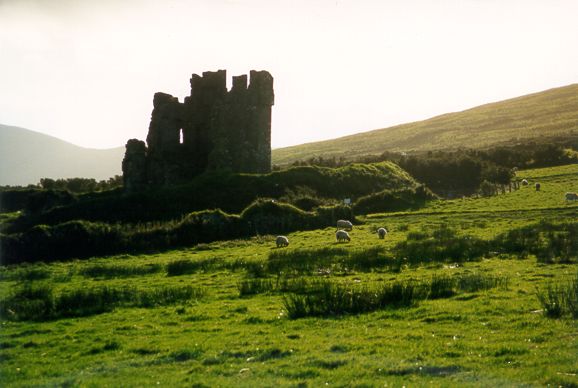
As this Cracked.com article points out, the fabled luck of the Irish may indeed be only a fable. The Irish have been routinely trounced by the vikings, British, and famine, and they have a running tally of all the political saviors who have unfortuitously died before liberating the country. Perhaps the greatest irony is Saint Patrick's Day itself. A British Roman Catholic missionary, Saint Patrick was kidnapped by Irish pirates at a young age and later returned to convert the Irish to Catholicism, perhaps as an effort at revenge. Those snakes he drove out of Ireland in legend? Those were the celtic druids and the traditional Irish culture and religion. There seems to be something highly dubious in celebrating Irish culture by those who are not Irish themselves worshipping the first person to prominently suppress it, through an excess of hangovers. If one wants to actually pay homage to Irish culture, they should probably read James Joyce's "Dubliners," which paints a fairly depressing portrait of the cultural decline suffered in Ireland at the turn of the last century. Or better yet, go visit Ireland itself and actively support their culture. When I was over there several years ago many people were bitterly complaining about how the switch to the new EU monetary system had all but wrecked their economy. I'm sure that buying a shamrock necklace that was probably made in China helps.
As someone who is actually proud of my Irish heritage, I want nothing to do with this holiday, and the closest I've come to celebrating Irish culture is in immersing myself in Beckett's fiction. Like Joyce, Beckett was an Irish native by birth who expatriated in order to help the older writer edit "Finnegan's Wake." Forsaking what Joyce has mainly described as the provincial perspective of their homeland, Beckett lived in Paris, writing his stories first in French and then translating them into English in order to avoid any Irish or English colloquialisms. Of course, unlike Joyce who still wanted to describe his native land, Beckett seems much more content to avoid describing any reality altogether, which itself is not an un-Irish pastime, as much of the Irish mythology collected by Lady Gregory and Yeats describe heroes who almost always want to get off of the island or out of their everyday lives.
As this Cracked.com article points out, the fabled luck of the Irish may indeed be only a fable. The Irish have been routinely trounced by the vikings, British, and famine, and they have a running tally of all the political saviors who have unfortuitously died before liberating the country. Perhaps the greatest irony is Saint Patrick's Day itself. A British Roman Catholic missionary, Saint Patrick was kidnapped by Irish pirates at a young age and later returned to convert the Irish to Catholicism, perhaps as an effort at revenge. Those snakes he drove out of Ireland in legend? Those were the celtic druids and the traditional Irish culture and religion. There seems to be something highly dubious in celebrating Irish culture by those who are not Irish themselves worshipping the first person to prominently suppress it, through an excess of hangovers. If one wants to actually pay homage to Irish culture, they should probably read James Joyce's "Dubliners," which paints a fairly depressing portrait of the cultural decline suffered in Ireland at the turn of the last century. Or better yet, go visit Ireland itself and actively support their culture. When I was over there several years ago many people were bitterly complaining about how the switch to the new EU monetary system had all but wrecked their economy. I'm sure that buying a shamrock necklace that was probably made in China helps.
As someone who is actually proud of my Irish heritage, I want nothing to do with this holiday, and the closest I've come to celebrating Irish culture is in immersing myself in Beckett's fiction. Like Joyce, Beckett was an Irish native by birth who expatriated in order to help the older writer edit "Finnegan's Wake." Forsaking what Joyce has mainly described as the provincial perspective of their homeland, Beckett lived in Paris, writing his stories first in French and then translating them into English in order to avoid any Irish or English colloquialisms. Of course, unlike Joyce who still wanted to describe his native land, Beckett seems much more content to avoid describing any reality altogether, which itself is not an un-Irish pastime, as much of the Irish mythology collected by Lady Gregory and Yeats describe heroes who almost always want to get off of the island or out of their everyday lives.
1.01.2008
Happy Zeitgeist
"Things fall apart; the centre cannot hold;
Mere anarchy is loosed upon the world,
The blood-dimmed tide is loosed, and everywhere
The ceremony of innocence is drowned;
The best lack all conviction, while the worst
Are full of passionate intensity..."
-Yates, from The Second Coming
It's kind of incredible to see how far world civilization has progressed, and yet how mundane modern celebrations have become. In ancient Mesopotamia, the new year was not just celebrated, but had to be ritually brought about by returning the city-state to a point of chaos; mass orgies, feasting, the dethroning of the king, and then the world is re-created by two teams acting out the mythological slaying of Tiamat by Marduk. While I am still not quite convinced that modern America isn't Babylon (our worship of towers and law, and our war-like and demonizing social rhetoric), our new years celebrations only seem to return to chaos on a surface level: screaming in the streets, drinking and fireworks and singing. While these actions certainly don't re-create the cosmos in any paradigmatic image, they do suggest that the spirit of the times is one of a general and undirected anarchy.
I, on the other hand, had a quiet evening with Sophie. We finished setting up and cleaning our new house, had a lovely dinner, watched a silly movie and played scrabble, watched the fireworks from our window view of downtown, reminisced about how positive last year was and how we planned on reaffirming our practices for 2008, called our families and friends, and curled up in bed, where I dreamt of attending a conference held in all the languages of the world.
Mere anarchy is loosed upon the world,
The blood-dimmed tide is loosed, and everywhere
The ceremony of innocence is drowned;
The best lack all conviction, while the worst
Are full of passionate intensity..."
-Yates, from The Second Coming
It's kind of incredible to see how far world civilization has progressed, and yet how mundane modern celebrations have become. In ancient Mesopotamia, the new year was not just celebrated, but had to be ritually brought about by returning the city-state to a point of chaos; mass orgies, feasting, the dethroning of the king, and then the world is re-created by two teams acting out the mythological slaying of Tiamat by Marduk. While I am still not quite convinced that modern America isn't Babylon (our worship of towers and law, and our war-like and demonizing social rhetoric), our new years celebrations only seem to return to chaos on a surface level: screaming in the streets, drinking and fireworks and singing. While these actions certainly don't re-create the cosmos in any paradigmatic image, they do suggest that the spirit of the times is one of a general and undirected anarchy.
I, on the other hand, had a quiet evening with Sophie. We finished setting up and cleaning our new house, had a lovely dinner, watched a silly movie and played scrabble, watched the fireworks from our window view of downtown, reminisced about how positive last year was and how we planned on reaffirming our practices for 2008, called our families and friends, and curled up in bed, where I dreamt of attending a conference held in all the languages of the world.
12.23.2007
Active Dreaming
Among other fantastic images like last night's flying fish, I have been dreaming for the past week about climbing up the endless stairwells of an enormous tower, traveling to space, and trying to find a way to unlock a solitary window at the end of a long hallway. Certainly these symbols, and the often comic ways they are framed, have some relation to things I have been paying attention to in my waking life recently, and if not, could be considered dream signs akin to attempting to turn on a light. However, I am not trying to psychoanalyze myself, or have a lucid dream, but to have an active dream (or as I might jokingly put it, to go on a dream quest), dreaming of symbols and narratives of ascension in order to dream myself to the heaven of my mythological dream world, much the way that last year I used descension narratives to dream myself "to hell and back." This original idea had come after years of studying techniques of dreaming and symbolizing, Campbell's hero's journey monomyth, Géza Róheim's "The Gates of the Dream," James Hillman's "Dream and the Underworld," and some of the classics of epic and mythology wherein a character journey's to the underworld in order to bring back some family member, lost idea, etc... Having dreamt myself to my own personal hell, to face my deepest unconscious fears head on before getting back into school and moving on with my life, I figured it was time to continue the journey in the other direction, especially since the question of gods and spirituality has been a much larger, imminent unknown for so much of my life.
In order to do this, I have been giving my focus to symbolisms that surround such mystical or shamanic ascents (cf. Eliade's writings on the topic in Myths, Dreams, and Mysteries and Images and Symbols): climbing ropes, stairs, towers, the cosmic tree, birds (and angels), the spheres of the heavens, rainbows, etc... visualizing these kinds of scenes each night before going to bed, and attending to such images as they might turn up in my waking life. So far I have had a rather stunning success finding myself working my way up through the tower of sleep (always a potent symbol in my dreaming), but I also know that I could get stuck here, that some other image is needed, like a puzzle that needs its key in order to move on. During the early stages of my descension dreaming I found myself similarly confronted with and stuck in scenes reminiscent of the accompanying narrative symbols I was trying to evoke until I finally realized that one of the dream characters was asking me for three coins, much like those given to the ferryman by the dead. Consequently I took three coins with me into the next dream (under my pillow, with other similar dream tools), and was finally able to descend to the depths I had sought. Of course, I'm not quite sure what sort of similar symbol or tool accompanies ascension narratives, perhaps being much less familiar with the literature, but my dreams keep suggesting that music might unlock the window so that I can leap out and fly.
In order to do this, I have been giving my focus to symbolisms that surround such mystical or shamanic ascents (cf. Eliade's writings on the topic in Myths, Dreams, and Mysteries and Images and Symbols): climbing ropes, stairs, towers, the cosmic tree, birds (and angels), the spheres of the heavens, rainbows, etc... visualizing these kinds of scenes each night before going to bed, and attending to such images as they might turn up in my waking life. So far I have had a rather stunning success finding myself working my way up through the tower of sleep (always a potent symbol in my dreaming), but I also know that I could get stuck here, that some other image is needed, like a puzzle that needs its key in order to move on. During the early stages of my descension dreaming I found myself similarly confronted with and stuck in scenes reminiscent of the accompanying narrative symbols I was trying to evoke until I finally realized that one of the dream characters was asking me for three coins, much like those given to the ferryman by the dead. Consequently I took three coins with me into the next dream (under my pillow, with other similar dream tools), and was finally able to descend to the depths I had sought. Of course, I'm not quite sure what sort of similar symbol or tool accompanies ascension narratives, perhaps being much less familiar with the literature, but my dreams keep suggesting that music might unlock the window so that I can leap out and fly.
12.18.2007
Magic Chords
Taking a break from working on my dream novel, I was trying to catch up on the internet, and decided that I haven't written much under the topics of magic, music, and ritual. These three modalities often go hand in hand, and Dr. Clothey even suggested that it would be interesting for someone to look closer at the intersection of music and religion.
Music and performance in the modern world often take on highly ritual aspects, a charged atmosphere, the priestly musicians encanting powerful rhythms that effect the audience on a deep physiological level. From the reunion of Led Zeppelin a band charged with magical iconography and Crowleyan flair, to a description of watching someone play Guitar Hero as a spiritual experience, people are often caught up in what seems to be the sheer mysticism of music. Certainly rhythms have pervaded ritualizing throughout history, and the act of playing music can seem to transcend time, but it is the effect on the listener that holds the most magic and mystery, whether as a cue for emotional catharsis, ecstatic dancing, social communitas or revolution. Woodstock and the Beatles, punk rock as a determining factor in culture, spilling far beyond the edge of the stage. No one knows quite how the tension caused by the dissonance and resolution of vibrating air molecules can have such profound effects, even to the point of certain chord patterns like the tritone being cast as unholy, and countless stories arising of songs being taught by the devil (from Tartini to Robert Johnson). In my dreams the devil plays the violin, and I am a priest in a rock and roll cathedral.
From my years of experience playing music to packed crowds, I can say that it was always somewhat breathtaking to be able to cast such swaying spells over so many people with just the movement of fingers on a guitar, to see everyone break into song on the chorus and afterwards spill into the streets still singing into the night. Even the act of playing with other people, regardless of an audience, is ritualistic in itself, the way that musicians jamming together will stumble upon a song, and suddenly find themselves transported, carried on waves of sound that seem to come from a much deeper place, where it is not the musicians writing the song, but riding it, the music a great beast writhing to its own rhythm for all eternity that we can just tap into sometimes, like the ancient alchemists debating the harmonic song of the spheres. Talk about a reaffirmation and transcendence of the self, or better yet, sing.
As music guru David Byrne suggests in a discussion of the future of music with Radiohead frontman Thom Yorke, "You create a community with music, not just at concerts but by talking about it with your friends," and in his survival guide for emerging artists, "in the past, music was something you heard and experienced — it was as much a social event as a purely musical one. Before recording technology existed, you could not separate music from its social context. Epic songs and ballads, troubadours, courtly entertainments, church music, shamanic chants, pub sing-alongs, ceremonial music, military music, dance music — it was pretty much all tied to specific social functions. It was communal and often utilitarian. You couldn't take it home, copy it, sell it as a commodity (except as sheet music, but that's not music), or even hear it again. Music was an experience, intimately married to your life. You could pay to hear music, but after you did, it was over, gone — a memory."
Music and performance in the modern world often take on highly ritual aspects, a charged atmosphere, the priestly musicians encanting powerful rhythms that effect the audience on a deep physiological level. From the reunion of Led Zeppelin a band charged with magical iconography and Crowleyan flair, to a description of watching someone play Guitar Hero as a spiritual experience, people are often caught up in what seems to be the sheer mysticism of music. Certainly rhythms have pervaded ritualizing throughout history, and the act of playing music can seem to transcend time, but it is the effect on the listener that holds the most magic and mystery, whether as a cue for emotional catharsis, ecstatic dancing, social communitas or revolution. Woodstock and the Beatles, punk rock as a determining factor in culture, spilling far beyond the edge of the stage. No one knows quite how the tension caused by the dissonance and resolution of vibrating air molecules can have such profound effects, even to the point of certain chord patterns like the tritone being cast as unholy, and countless stories arising of songs being taught by the devil (from Tartini to Robert Johnson). In my dreams the devil plays the violin, and I am a priest in a rock and roll cathedral.
From my years of experience playing music to packed crowds, I can say that it was always somewhat breathtaking to be able to cast such swaying spells over so many people with just the movement of fingers on a guitar, to see everyone break into song on the chorus and afterwards spill into the streets still singing into the night. Even the act of playing with other people, regardless of an audience, is ritualistic in itself, the way that musicians jamming together will stumble upon a song, and suddenly find themselves transported, carried on waves of sound that seem to come from a much deeper place, where it is not the musicians writing the song, but riding it, the music a great beast writhing to its own rhythm for all eternity that we can just tap into sometimes, like the ancient alchemists debating the harmonic song of the spheres. Talk about a reaffirmation and transcendence of the self, or better yet, sing.
As music guru David Byrne suggests in a discussion of the future of music with Radiohead frontman Thom Yorke, "You create a community with music, not just at concerts but by talking about it with your friends," and in his survival guide for emerging artists, "in the past, music was something you heard and experienced — it was as much a social event as a purely musical one. Before recording technology existed, you could not separate music from its social context. Epic songs and ballads, troubadours, courtly entertainments, church music, shamanic chants, pub sing-alongs, ceremonial music, military music, dance music — it was pretty much all tied to specific social functions. It was communal and often utilitarian. You couldn't take it home, copy it, sell it as a commodity (except as sheet music, but that's not music), or even hear it again. Music was an experience, intimately married to your life. You could pay to hear music, but after you did, it was over, gone — a memory."
12.10.2007
Haunting Tradition: Ritual Failure in the Lakota Ghost Dance
Haunting Tradition: Ritual Failure in the Lakota Ghost Dance
On December 29, 1890, U.S. soldiers massacred over three hundred and fifty Lakota Sioux at Wounded Knee Creek in South Dakota, in response to a supposed “Indian Outbreak” (Mooney 119). Both the agents in charge of the Lakota reservations and the Bureau of American Ethnology believed that a ritual form, known as the Ghost Dance, might have been responsible for the hostility of the Lakota tribe that led to the Wounded Knee massacre (Wallace vii). The Ghost Dance doctrine, as it was preached by the prophet Wovoka of the Paiute tribe in Nevada, may have originally contained a message of interracial peace, but the Lakota, who adopted the ritual in early 1890, believed that this dance would bring about an “Indian millennium,” both destroying their white oppressors and restoring all aspects of their traditional way of life (Mooney 14, 19). Extreme socio-economic deprivations may have led the Lakota to practice this version of the Ghost Dance (Mooney 73), and though some scholars, such as Alice Kehoe, argue that the Ghost Dance revitalized Lakota life prior to, and after, the Wounded Knee massacre (Kehoe 143), this ritual may also have failed to achieve its hoped for millenarian purpose. By looking at specific ways in which the ritual form of the Lakota Ghost Dance was derived, and deviated, from both Wovoka’s original doctrine and traditional Lakota ritualizing, and by applying Ronald Grimes’ classifications of ritual sensibilities and infelicitous performances, it may be possible to offer an interpretation of if and how the Lakota Ghost Dance failed.
Prior to European-American settlement in North America, the Sioux held an immense territory across the Great Plains, on which an unlimited food supply of buffalo and the acquisition of horses in the 1600s made them the largest and strongest Native American tribe until the middle of the 19th Century (Mooney 69). Though Sioux is the common name for these tribes, it is derived from a derogatory term given to them by the Ojibwa tribe, the Sioux’s traditional enemies; the Sioux called themselves Lakota, Dakota, or Nakota, which in their own dialect mean “allies” or “friends” (Mooney 293). Historically, the Sioux organized their tribe from a large number of smaller hunting bands (DeMallie and Parks 6), and were divided into three distinct linguistic divisions, depending on geographic location across the plains: the eastern Santee, middle Yankton, and western Teton (Mooney 293). Lakota is the self-designation from the Teton dialect, the tribal division living in what are now the states of North and South Dakota, who constituted more than two-thirds of all the Sioux (DeMallie and Parks 6-7, and Mooney 294). The Lakota were the wildest of the Sioux branches, pursuing extreme warlike behavior against neighboring tribes, and displaying an “air of proud superiority” that the ethnohistorian James Mooney found unusual among the Native Americans he had visited (Mooney 295-6). Of the 20,000 Sioux who took up the Ghost Dance, 16,000 were from this Lakota or Teton division (Mooney 61).
Written records of Christian missionaries show that the Lakota had contact with European-Americans as early as 1665 (DeMallie and Parks 7). However, in the decades following the Civil War in 1865, the United States government waged an increasing war on Native American tribes, who were seen as a hindrance to the doctrine of Manifest Destiny (Mooney 28), the expansion of European-American settlement across the entire continent. In 1868, the government negotiated a treaty with the Lakota to cut back their land into reservations; the coming of railroads, the discovery of gold in the Black Hills, the Custer War in 1876, a host of epidemics, and the surrendering of more territory over the next thirteen years further reduced their hunting grounds, until the Lakota subsisted solely on government rations and the farming of arid land (Mooney 69-72). By the time the first rumors of Wovoka and his new Ghost Dance religion reached the Lakota in the winter of 1888-9, they were suffering from starvation (Mooney 29), and had become increasingly enculturated by European-American churches, farming, schools, businesses, the railroad, and the postal service (Wallace vii). In the last two decades of the 19th Century, the Lakota had been transformed from a traditionally prosperous hunting and warring lifestyle into poor farmers wearing the clothes of European-American civilization (DeMallie and Parks 12). Though scholars have generally focused on the socio-economic factors leading to the Lakota adoption of the Ghost Dance, the Sioux may still have been in a better economic position than other tribes that did not take up the Ghost Dance (Wallace ix). It is also worth noting that in the 1880s, the U.S. government had prohibited the primary Lakota ritual of the Sun Dance, due to a perception of the ritual cutting and hanging from hooks as a form of self-torture (Amiotte 75, 88), and the Lakota may have embraced and modified the new ritual in order to fill this void. These social, economic, and religious crises my have led the Lakota to perceive the rumors of a new messiah as a hope that would lead them out of their cultural deprivation (Kehoe 39).
After the Wounded Knee massacre, James Mooney was dispatched from the Smithsonian Institute in Washington D. C. to investigate the Ghost Dance religion, and its messiah Wovoka, of the Paiute tribe in Nevada, who was blamed for riling up the Sioux (Kehoe 3). Mooney talked with Wovoka in person about the Ghost Dance doctrine, and was shown the ‘Messiah Letter,’ a document copied by an earlier Arapaho delegate that Mooney describes as the “genuine official statement” of the Ghost Dance religion (Mooney 22). Wovoka told Mooney that he had experienced a vision during a solar eclipse in which he had seen God living with all the Native Americans who had died, and was instructed to tell his people to be honest and to live in peace with the European-Americans (Mooney 13-4). If these instructions were followed, and the Ghost Dance performed at intervals for four consecutive nights, along with ritual bathing and feasting, the Native Americans would soon be reunited with their dead friends and families and the whole earth would be renewed (Mooney 19-20, 23). This doctrine may have drawn from Christian and Mormon theology that framed Wovoka’s upbringing in Mason Valley, Nevada, as well as from the traditional Paiute Round Dance and an earlier, failed version of the Ghost Dance in 1870 (Mooney 6, Hittman 84, 93, and 96), but it was surely a powerful promise for a people suffering from epidemics, the loss of resources, malnourishment, and cultural genocide (Kehoe 8). Despite the Ghost Dance’s origins, the Native Americans revered Wovoka as a direct messenger from the “Other World” (Mooney 7), and delegations were sent on pilgrimage to Mason Valley from around the country to seek guidance and healing for their tribes (Kehoe 6).
Wovoka’s message spread through a process of Native Americans visiting neighboring tribes, observing the ritual, becoming inspired, and returning to their own tribes with the new faith (Kehoe 8). The ritual had been communicated to the Lakota by the northern Arapaho and Shoshoni tribes of Wyoming, and a delegation was sent West by the Lakota in order to confirm the rumors (Mooney 61-3). When they returned in the spring of 1890, the Ghost Dance ritual was immediately accepted and inaugurated by the majority of the tribe (Mooney 29). According to James McLaughlin, the agent at the Pine Ridge reservation in South Dakota, the Lakota were excited about the prospect of an “Indian millennium:” if they believed in and practiced the Ghost Dance their dead families and buffalo herds would return, they would be impervious to bullets, and the European-Americans would be annihilated that coming spring (Mooney 29). However, this idea of an “Indian millennium” does not seem to have been part of the original Ghost Dance doctrine; it was only among the warlike Lakota Sioux that the Ghost Dance assumed this hostile expression (Mooney 19).
Part of the reason for the broad acceptance and distortion of Wovoka’s Ghost Dance message was that the doctrine was abstract enough to allow for a variety of local interpretations (Wallace viii). Each tribe reconstructed the central Ghost Dance beliefs in a return of the dead and the regeneration of the earth from their own mythology, and each believer filled in the details from their own life and trance experiences (Mooney 19). The idea that the earth must be renewed was common to a number of Native American tribes (Mooney 27). The Lakota believed that this renewal of life would occur in the early spring, when the earth’s natural regeneration takes place, and was the time of year when their annual Sun Dance ceremony was formerly held (Mooney 19-20), in which a sacrifice is performed in order to recreate the world and reactivate the wakan, or sacred power of the Universe (Amiotte 76). Similarly, the Lakota strongly believed that the spirits of the dead still exist in the world and can be reached for support (DeMallie and Parks 21). Wovoka’s message, “when your friends die, do not cry,” was interpreted by the plains tribes as forbidding their customary funerary practice of killing horses, burning property, and gashing the mourner’s body, and instead trances were performed during the dance in which they could communicate directly with their dead (Mooney 24, 186). More importantly, Wovoka’s suggestion of living in peace was interpreted as a call to put down the war dances, scalp dances, and the self-inflicted violence of the Sun Dance, that had been an integral part of life for warring plains tribes like the Lakota (Mooney 25).
However, there may have been some discrepancy in Wovoka’s original message that allowed the Lakota Sioux to interpret it in such a millenarian way. It is possible that Wovoka had different revelations that he offered to his different visitors, reflecting doctrinal shifts before and after the perceived involvement of his Ghost Dance in the Wounded Knee massacre (Hittman 98). Black Elk, a Lakota wicaša wakan, or holy man, recounts that Wovoka told the Sioux delegation that a “cloud was coming like a whirlwind” that would crush the old world and restore the buffalo (Neihardt 233). This prediction may have spoken to the central Lakota myth of the White Buffalo Woman, wherein two men hunting buffalo come across a mysterious woman and one of them is filled with evil thoughts towards her. The woman destroys this man with a cloud, reveals herself as Wakan Tanka, a manifestation of the “Great Mystery,” and gives the other man a sacred pipe, the tribal rituals, and the sanction of the buffalo as an everlasting food source (Looking Horse, 68 and DeMallie 28, 31). The offering of the pipe was the primary means of prayer for the Lakota Sioux, and was ritually accompanied by the physical and spiritual cleansing of the sweat lodge, and the communal sacrifice of the Sun Dance, which had been practiced without interruption throughout the previous century (DeMallie and Parks 14). When the Lakota adopted the Ghost Dance in 1890, they included in their adopted version several aspects from these rituals, as well as their mythic desire to see the “evil man,” now embodied by the European-Americans, destroyed in a similar supernatural cloud, altering both the original Ghost Dance doctrine and their own traditional religious practices.
Lakota religion was not separate from everyday life, and due to man’s ability to share in the wakan power, no distinction was seen between man and nature, or between nature and the supernatural; the world was characterized by a sense of unity or oneness (DeMallie 27-8). This relationship to the sacred, established in the myth of the White Buffalo Woman, was symbolized as a fixed and unending circle, and characterized Lakota ritualizing until the advent of European-American settlement and the decline of the buffalo (DeMallie 31). The traditional rituals, whether public or private, taught through myths or personal revelation, were all patterned in accordance to this circular relationship with the Wakan Tanka (DeMallie 33). The Lakota had no standardized theological beliefs; though the tribe shared basic spiritual concepts, individuals formulated specific knowledge of the wakan, whereas the rituals eventually reached an accepted public structure through continual repetition (DeMallie 34). Lakota rituals were often spoken of in terms of “pleasing” the all-powerful wakan beings, and it was believed that if they were left unsatisfied, the Wakan Tanka would do great harm to mankind (DeMallie 33, 29). Consequently, the power of the rituals made their performance dangerous, and if executed incorrectly the rituals would fail to produce their desired results, bringing on the wrath of the wakan beings, which led to an importance of proper instructions for novices and a greater uniformity of rituals (DeMallie 34). Despite pre-established ceremonial forms, Lakota ritualizing was not static, and could be changed through the influence of each individual’s visionary experience (DeMallie 42-3, and Kehoe 71). Mooney felt that such innovative visionary states were the primary feature of the Ghost Dance, and that Native Americans have an implicit faith in the content of such dreams and visions (Mooney 186, 16). Lakota participants would strive to imitate whatever they had seen while entranced, creating new songs, objects, games, and articles of clothing to be used in the next dance (Mooney 186). This mutability of Lakota ritualizing possibly accounts for what may have been a rapid, and spiritually dangerous, accruement of ritual innovations in their Ghost Dance over against Wovoka’s original doctrine.
The Lakota Ghost Dance had many features in common with Wovoka’s Ghost Dance, and with the traditional Paiute Round Dance: the ritual leaders sat in the middle of the dance circle, fires were kept on the outside, no instruments accompanied the ritual songs, and both men and women danced with joined hands, moving from right to left in the direction of the sun (Hittman 93-4, Mooney 179, 185-6, and Neihardt 237). The Lakota also participated in the communal feast that was part of every large Native American ceremony, and in the continuation of the Ghost Dance over four nights, as four was considered a sacred number in most Native American belief systems (Mooney 24), presumably indicating the four cardinal directions. Like in Wovoka’s original Ghost Dance, the Lakota ritual began with the wicaša wakan painting the dancers faces with a red-ochre paint given to the Lakota delegates by Wovoka, which the Paiute collected from their sacred mountain, Mount Grant, and was supposed to ward off illness and assist in the mental vision of the trance (Mooney 20-1). The Lakota however used other colors of paint determined by individual trance visions, and a variety of specific tribal designs that were painted on the dancer’s cheek or forehead (Mooney 68, 184).
Other differences arise between the two versions of the Ghost Dance, drawn from traditional Lakota ritual forms. While the Lakota followed Wovoka’s instruction to bathe in a stream, in order to wash away evil and dirt after the ritual, they also began the Ghost Dance with a large version of their traditional sweat lodge, in which a circular framework of willow branches is covered with blankets, and then filled with the steam from heated stones splashed with water in order to ritually purify those within (Mooney 186, 66-8). The Sweat Lodge was used to begin all Lakota ritualizing, representing the mother’s womb from which the ritual participants would be reborn (Mooney 29, and Looking Horse 72), in the same way they believed that they had been born from the womb of the earth in unity with the buffalo (DeMallie 27). A tree was also raised in the center of the Lakota Ghost Dance circle from which a sacred bow and arrows were hung, along with other ritual objects (Mooney 182, 30). The inclusion of the sweat lodge and a central tree were not found in the Paiute Ghost Dance, though a non-sacred pole was used in the traditional Piute Round Dance in order to orient the dancers in the circle (Mooney 46-7, Hittman 94). Due to Wovoka’s explicit message of peace, weapons like the bow and arrows were specifically disallowed in the Paiute Ghost Dance (Mooney 30). Finally, though trance visions became a dominant feature of the Ghost Dance for many tribes, including the Lakota, Wovoka claimed that there were no innovative trances in the Paiute Ghost Dance, a statement Mooney confirmed through eyewitness reports from neighboring ranchmen (Mooney 14). However, it does seem that Wovoka demonstrated visionary trance performances to the Lakota delegation as part of his preaching campaign, which may have helped lead the Lakota to adopt both the Ghost Dance and the use of trances in their ritual (Neihardt 231-2).
The Lakota use of a tree in the center of the Ghost Dance circle, and the opening ritual sequence associated with the tree are of particular significance as an example of individual innovation from the established ritual form of the Sun Dance. Mooney notes that at many Lakota camps, after the preparatory face painting, the Ghost Dance participants gathered in a circle around the tree, and a woman signaled the beginning of the dance by shooting four sacred arrows, made in the traditional fashion with bone heads dipped in the blood of a steer, towards each of the four cardinal directions. These arrows were then tied to the tree along with the bow, a gaming wheel and sticks, and a horned staff, while the woman remained standing throughout the performance holding a sacred redstone pipe stretched towards the west, from where the messiah was supposed to appear (Mooney 68). A wicaša wakan may also have taken the horned “ghost stick,” which was roughly six feet long and trimmed with red cloth and feathers, and waved it over the participants heads while they faced the sun in the east (Mooney 178-9). Short Bull, a Lakota from the Pine Ridge Reservation who had been part of the delegation to visit Wovoka, was said to have been responsible for the innovations of the woman holding the pipe and shooting arrows (Mooney 299, 31). Upon their return, the delegates proselytized for the Ghost Dance and acted as its ritual leaders, often changing it to fit their own cultural precepts (Mooney 65). In Short Bull’s version of Wovoka’s message, a tree should be raised in the middle of the dance circle, and objects representing the Lakota and surrounding tribes were to be placed in the four directions (Mooney 31).
However, Short Bull may have derived some of these innovations in the Lakota Ghost Dance from aspects of the Sun Dance. The focus in this traditional ritual was a tree placed in the center of the sacred circle to act as an axis mundi, connecting above and below into a place where the wakan powers could descend to communicate with mankind (Amiotte 79). Like in the Ghost Dance, the Sun Dance tree was painted with the sacred red paint, and hung with offerings, cloth, and sacred bundles, which represented all the things that mankind needed in order to construct and preserve life (Amiotte 83). Likewise, in the Sun Dance, a woman touched the tree with the sacred pipe as an offering to the wakan powers; she was supposed to represent the White Buffalo Woman, while the pipe symbolized the center of the world and the tobacco expressed all things in the universe being gathered in this one place (Amiotte 85). However, as this traditional earth renewal ritual had been recently prohibited, Short Bull seems to have taken the inward-looking Sun Dance symbolism and directed it beyond the boundaries of their established religious forms. Perhaps there was a hope that the Ghost Dance ritual would be able to renew their culture both from within the ritual tradition of the sacred tree and pipe, and from without, through the messiah in the west, the wakan power of the sun in the east, and the support of all the surrounding Native American tribes who were also participating in the Ghost Dance. It is possible that such innovations and adaptations are an integral part of the ritual process, serving to legitimate new religious forms in relation to traditional patterns of behavior (Clothey 5), and while the Lakota seem to have adapted their version of the Ghost Dance to their traditional rituals, there are still innovations that may not have been founded in their desire to ritually “please” the wakan powers.
The horned staffs that were hung on the tree and waved over the dancer’s heads may have originated in a trance vision Black Elk had during his first participation in the Ghost Dance. In the account of this trance that he gave to the poet John Neihardt, Black Elk claims that he saw these red-painted sticks being used by the dead in the spirit world, along with “ghost shirts” that he afterwards made for other members of the tribe (Neihardt 241-4). While the staffs seem to have been one of many other innocuous innovations envisioned into the Ghost Dance, the Ghost Shirts became an integral part of the Lakota ritual and constituted the most significant break from both their own traditions and Wovoka’s original doctrine.
The Ghost Shirts were made in a traditional fashion from white cloth and sinew, fringed and adorned with feathers, and painted with a variety of designs drawn from mythology and trances (Mooney 31-4). All adherents to the Ghost Dance religion, men, women, and children, wore the Ghost Shirts as an outside garment during the ritual and under their ordinary clothes at all other times (Mooney 31). Along with the rejection of European-American clothing in favor of the Ghost Shirts, the Lakota did not allow any metal in the Ghost Dance, especially the jewelry and belts of German silver that had become an important part of their tribal costume (Mooney 30, 186). What is most striking about this ritual garment is that the Ghost Shirts were believed to be impenetrable to weapons and bullets (Mooney 34), an idea that may have readily lent itself to the Lakota doctrine of an “Indian millennium,” or helped ferment their resistance to the European-Americans, but at the very least seemed to betray Wovoka’s message of peace (Kehoe 13). When reservation police tried to disband a Ghost Dance ceremony in June of 1890, possibly the first at which the Ghost Shirts were worn, the Lakota reportedly lowered their guns and said that they would defend their religion with their lives, though by this time they may already have been defiant due to starvation (Mooney 92). The neighboring Arapaho and Cheyenne tribes rejected the innovation of Ghost Shirts as being an example of “Sioux belligerency” that distorted Wovoka’s doctrine (Kehoe 14, and Mooney 35), and when Mooney asked the messiah about the Ghost Shirts in person, Wovoka disclaimed any responsibility for this war-like novelty, and said it was better for the Native Americans to peacefully “adopt the habits of civilization” (Mooney 14).
While Black Elk claims some credit for devising the Ghost Shirts in his trances, and introducing them to other Lakota reservations (Neihardt 249), Mooney suggests that Kicking Bear, another of the delegates sent to Wovoka, was actually the idea’s originator (Hittman 85), or at least its disseminator (Kehoe 13-4). It is worth noting that on first seeing the Ghost Dance performed, Black Elk told Neihardt that he was surprised at how much the ritual coincided with a vision he had experienced earlier in his life, but had not told anyone (Neihardt 249, 237). While this may say something about the efficacy of visionary experiences, or the interconnectedness of Native American symbolism as a whole, the belief in the invulnerability of the Ghost Shirts may have been equally inspired from outside of Lakota cultural practices. Lakota warriors were customarily protected by feathers, tiny bags of sacred powder, war paint, or animal claws twisted into their hair, and went into battle naked above the waist, as any covering would have hindered their movements (Mooney 34). It is instead possible that the Ghost Shirts were motivated by observations of Mormon “endowment robes,” a white and symbol-clad badge of office (Mooney 34), that the Mormons believed would protect them from disease, death, and even bullets (Kehoe 13, and Hittman 85). The Mormons living in the Nevada area had a long contact with and interest in the local Native Americans, and the concept of invulnerable articles of clothing may have spread to the Lakota through other tribes (Mooney 35). Furthermore, while Wovoka disclaimed credit for the Ghost Shirts in his talks with Mooney, independent reports suggest that Wovoka claimed to be invulnerable to bullets himself; among the various magical tricks and visions he used to demonstrate his powers as a prophet to the Native American delegates, Wovoka would apparently let himself be shot at and yet remain unharmed (Hittman 83-4). Perhaps the Lakota delegates saw the messiah’s act of invincibility, which along with reports of the Mormon “endowment robes,” and their own war-like nature, lent credibility to Black Elk’s vision of the Ghost Shirts as a central vestment of the Lakota Ghost Dance ritual.
While a belief in the invulnerability of the Ghost Shirts and the immanent destruction of the European-Americans may have added to the Lakota feelings of discontent and defiance, the official U.S. government statement on the causes of the Wounded Knee massacre suggests that these were only symptoms of and a defensive reaction to the already staggering cultural and economic deprivations suffered by the Sioux tribes (Mooney 74-6). The Lakota did not actively revolt until troops were called onto their lands in November 1890, in response to the fears of the reservation agents that they were losing control of the Native Americans (Mooney 73, 95). Even after the prohibition of the Ghost Dance on the reservations; the death of Sitting Bull, a conservative chief whose camp had become a center for plotting resistance to the government; and the panicked flight of Short Bull, Kicking Bull, and many Lakota from the Rosebud and Pine Ridge reservations into the Badlands of South Dakota after the arrival of troops, Mooney believes that there was still no premeditated “Indian Outbreak” leading to the massacre at Wounded Knee Creek (Mooney 99, 108, 119). However, on the morning of December 29, 1890, when the Lakota were being rounded up from the Badlands to be disarmed and returned to the reservations, a wicaša wakan named Yellow Bird continued to urge the Lakota warriors to resist by claiming that their Ghost Shirts would keep them safe (Mooney 115-8). This final incitement, along with what was most likely a rather tense situation, may have proved a tipping point; when Yellow Bird threw a handful of dust into the air, the Lakota took this as a signal to attack, precipitating the return fire of the government troops (Mooney 118), and the interment of the Lakota Ghost Dance as a historical anomaly. One wounded woman said after the massacre that she no longer wanted her Ghost Shirt, as it had failed to protect her from the bullets (Mooney 34), and though a few Lakota leaders continued to proselytize for the Ghost Dance afterwards (DeMallie and Parks 8), the majority of the tribe gave up the new religion, as they may have become convinced that their expectations of invulnerability, and of a coming supernatural assistance for their plights, were groundless (Mooney 200).
While ritual studies have generally ignored rites that do not work, participants may experience ritual failure as often as success, and to engage in ritual criticism may presuppose that rituals can “exploit, denigrate, or simply not do what people claim they do” (Grimes, Ritual 284, 282). It is, however, necessary to determine on what grounds the Lakota Ghost Dance ritual did not work. As the ritual theorist Ronald Grimes suggests, one difficulty in critiquing rituals is that there is often no separation between “failure in” and “failure of” the ritual; is the problem in the performance of the ritualists, in the ritual itself, or in the relation between the ritual and its surrounding “religiocultural processes” (Grimes, Ritual 290)? In the Lakota Ghost Dance we have the hostility and trance innovations of the Lakota, the inclusion of Ghost Shirts and weapons within the originally peaceful ritual, and a discrepancy between the stated desires of the Lakota Ghost Dance and both traditional Lakota ritualizing and their current socio-economic crises. Another difficulty Grimes raises in critiquing ritual is the point of view: do the ritual participants or observers determine if the ritual has actually failed (Grimes, Ritual 290)? It may be too simplistic to take a modern, rational perspective and argue that the Lakota Ghost Dance failed because Ghost Shirts cannot really protect someone from bullets, or because a supernatural cloud that will destroy the European-Americans could not really happen. Instead it is important to take the failure of the Lakota Ghost Dance on its own terms, as a ritual that could have brought about these changes if something had not gone wrong with its performance. As mentioned previously, the Lakota themselves believed that their ritualizing could fail and bring about the disastrous retribution of the wakan powers. That the Lakota stopped performing the Ghost Dance after the Wounded Knee massacre suggests that they may have believed that their ritual had failed.
In order to discuss just how this ritual may not have worked, it is first necessary to articulate what it intended to accomplish, by applying Grimes’ six modes of ritual sensibility, the “embodied attitudes, that may arise in the course of a ritual” (Grimes, Beginnings 35). The first mode, “ritualization,” establishes the relationship of the participants to their ecological and psychosomatic environments through stylized gestures (Grimes, Beginnings 36-7). In the Lakota Ghost Dance the participants would move in a circle following the direction of the sun, and all the songs were adapted to the measure of this dance step (Mooney 185), thus identifying themselves with their physical environment and spiritual powers in accordance with their traditional belief in the unity of man, nature, and the supernatural. The Lakota expressed the second mode of “decorum,” or their conventional interpersonal intentions (Grimes, Beginnings 40-1), by having the men and women dance together, and by intentionally not disturbing those who fell in trance (Mooney 181). While the Lakota placed a high value on such trance states, the spiritual powers of men and women were considered qualitatively different, reflecting a rigid distinction between their roles in everyday life (DeMallie 34). However, as women were much more likely to succumb to trances (Mooney 199), it may have been necessary to break this convention and encourage a new social unity in order to assure the success of the ritual. The third mode of ritual sensibility, “ceremony,” expresses the political or ideological power to conserve or create change (Grimes, Beginnings 41-2). Here we see the Lakota rejecting European-American clothing and tools in favor of the Ghost Shirts, and attempting to articulate their prohibited cultural heritage by offering the pipe and sacred arrows to the messiah and wakan powers. These actions, and the Lakota Ghost Dance songs that refer to the coming of the messiah and the establishment of their cultural practices in the myth of the White Buffalo Woman (Mooney 297-8), express a “liturgical” sentiment, a sense of cosmic necessity that waits on the coming of sacred powers and serves as a preparation for a coming transformation (Grimes, Beginnings 43, 49). The last mode, a “celebratory” expression of play and spontaneity (Grimes, Beginnings 48), may have only arisen in the Lakota trance innovations, and employment of new songs and sacred objects. It seems however that the Lakota were most concerned with rendering themselves invulnerable to and capable of destroying the European-Americans, as well as with restoring the buffalo and their traditional way of life. Anxiously seeking these transcendent and empirical results, the Lakota Ghost Dance ritual may be best expressed in Grimes’ terms as the sixth, “magical” mode of ritual sensibility (Grimes, Beginnings 45).
Desire is an essential factor in the efficacy of magic rituals (Grimes, Beginnings 46), but it seems unlikely that the Lakota “abused” the Ghost Dance ritual through a lack of sincerity, performing their dance without the feelings, thoughts, or intentions necessary in order to make it succeed (Grimes, Ritual 286). If anything they may have been too overzealous to revitalize their decaying religiocultural processes. Instead we must turn to other types of infelicitous performances, which Grimes adapted from J. L. Austin’s Speech-act theory. Austin makes a distinction between descriptive language, and “performative utterances:” words that do something, or fail to do what they intend, and Grimes suggests that while speech-acts only constitute one dimension of ritual action, rituals can be seen as a convergence of several performative genres that likewise have the possibility of doing something, or infelicitously failing to do something (Grimes, Ritual 283).
Beyond the “professed but hollow” abuse type of ritual infelicity, that does not seem present in the Lakota Ghost Dance, Grimes posits a typology of ritual “misfires,” based off of Austin’s own categorizations, where the ritual formula is not effective (Grimes, Ritual 284). Perhaps most directly relevant would be a “nonplay,” where the ritual procedures are either illegitimate or do not exist, among which Grimes includes rites that have been recently invented or borrowed, without being grounded in structures that might legitimate them (Grimes, Ritual 285). While some aspects of the Lakota Ghost Dance seem to be grounded in their traditional Sun Dance and sweat lodge rituals, the Lakota borrowed the main ritual form from Wovoka’s Ghost Dance teachings, itself adapted from the Paiute Round Dance, and invented several elements of their own, including the Ghost Shirts that do not seem to be supported by either religious tradition. While Wovoka’s Ghost Dance may have been a legitimate ritual for the Paiute Native Americans, for the Lakota it was possibly a “misapplication,” their desperate circumstances and warlike nature were inappropriate for the performance of a ritual originally designed to bring interracial peace (Grimes, Ritual 285). Grimes proposes that ritual participants will often blame themselves for a ritual’s failure rather than the rite itself, or blame part of the rite rather than the whole (Grimes, Ritul 291), but it seems that after the discontinuation of the Ghost Dance, the Lakota may have admitted that their ritual contained a “flaw” (Grimes, Ritual 285); their pronouncement that the Ghost Shirts would make them invulnerable proved to be incorrect, and this may have cast doubt on the efficacy of the Ghost Dance as a whole to bring about the desired millennium and earth-renewal. In this case the Ghost Dance may have produced one of Grimes’ own infelicitous types, the more serious “ineffectuality,” where a magical ritual fails to cause its intended changes (Grimes, Ritual 286). Finally, it might be worth noting that the Ghost Dance succeeded to some degree, in stirring up the Lakota to resist the European-Americans in favor of their own cultural traditions, but in doing so served as an example of ritual “contagion” (Grimes, Ritual 287); the Ghost Dance was unable to contain the Lakota’s desire for resistance and an apocalyptic destruction, and this will to violence contaminated their social relationship with the government to the point of precipitating the Wounded Knee massacre.
Grimes admits that this typology of infelicitous rituals needs more testing through application to specific rituals, but he also suggests that the right to criticize a ritual is bought with participation in it or through a richness of observations and interpretations (Grimes, Ritual 290-1). It is unfortunately too late to participate in the Lakota Ghost Dance of 1890, and even Mooney himself, who was in a better position to do so, was told by the Lakota he interviewed that, “The dance was our religion, but the government sent soldiers to kill us on account of it. We will not talk any more about it” (Mooney, 296). However, even relying on the interpretation of relevant texts alone presents challenges to fully examining the Lakota Ghost Dance. The complex multivalence of symbolism and action makes ritual one of the most difficult human behaviors to evaluate; it is complicated to show that a rite has completely failed; while it may not have achieved a particular stated goal, a ritual can still have other social repercussions (Grimes, Ritual 283).
While the Lakota Ghost Dance may have failed to bring about a magical “Indian millennium,” it possibly fulfilled another aspect of ritualizing: to affirm and transform the participants’ identities and social contexts (Clothey 1-2). Alice Kehoe suggests that prior to the Wounded Knee massacre, the Ghost Dance revitalized the Lakota Sioux by reformulating their cultural patterns to better suit their needs and preferences (Kehoe 142-3). The ritual may have offered them hope of communal identity and transformation during their cultural and economic deprivations at the end of the 1800s. Though the Lakota discontinued the Ghost Dance in early 1891, the ritual spread to the Yanktonai Sioux at the Standing Rock reservation and into Canada (DeMallie and Parks 8), where the Saskatchewan Sioux gave up the practice of trances and the invulnerability of the Ghost Shirts, and incorporated the Ghost Dance into their traditional Dakota Medicine Feast (Kehoe 46-8). For the Lakota, the discontinuation of the Ghost Dance allowed them to sign a new treaty in February 1891, for increased rations and an end of hostilities with the U.S. government (Mooney 145). Black Elk was also inspired by this new need for an effective ritual, and he reorganized the traditional Lakota religious practices, albeit within a Christian framework (Kehoe 40, 71), but including a revival of the Sun Dance in 1924 (Amiotte 75). In 1973, Leonard Crow Dog, a Lakota activist in the American Indian Movement, tried to revive the 1890 Ghost Dance, along with hostilities towards the European-American government, but the only result was a second Wounded Knee massacre (Kehoe 51, 86-7, and DeMallie and Parks 8), suggesting that a hostile version of the Ghost Dance truly was not an effective ritual for cultural transformation.
Little belief in the Ghost Dance ritual survives among the Lakota, besides the recollection of the more poignant Ghost Dance songs (DeMallie and Parks 8), but many of the basic spiritual concepts of the Lakota continue to develop in the context of modern life (DeMallie 27), and the Lakota reservations in South Dakota continue to serve as a locus for contemporary religious revitalization (DeMallie and Parks 7). In adopting Wovoka’s Ghost Dance over against their own cultural traditions, and altering the ritual by the inclusion of the violence-provoking Ghost Shirts, the Lakota were unable to bring about a destruction of the European-Americans through their participation in the Ghost Dance. Though this primary, magical intention failed, the performance of the Lakota Ghost Dance, during their critical period of cultural deprivation at the close of the 19th Century, may have succeeded in expressing something vital to the United States government. The Lakota desired to practice their traditional religious forms, and after the disgrace of the Wounded Knee massacre they were again allowed to do so, leading to an eventual rebirth of their cultural and spiritual beliefs that continues through the present day.
Bibliography
Amiotte, Arthur. “The Lakota Sun Dance: Historical and Contemporary Perspectives.” Sioux Indian Religion: Tradition and Innovation. Ed. Raymond J. DeMallie and Douglas R. Parks. Norman: University of Oklahoma Press, 1987. Pp. 75-89
Clothey, Fred. “Rhythm and Intent.” Madras: Blackie and Son, 1982
DeMallie, Raymond J. “Lakota Belief and Ritual in the Nineteenth Century.” Sioux Indian Religion: Tradition and Innovation. Ed. Raymond J. DeMallie and Douglas R. Parks. Norman: University of Oklahoma Press, 1987. Pp. 25-43
DeMallie, Raymond J., Parks, Douglas R. “Introduction.” Sioux Indian Religion: Tradition and Innovation. Ed. Raymond J. DeMallie and Douglas R. Parks. Norman: University of Oklahoma Press, 1987. Pp. 3-22
Grimes, Ronald. “Beginnings in Ritual Studies.” Lanham: University Press of America, 1982
- - - “Ritual Criticism and Infelicitous Performances.” Readings in Ritual Studies. Ed. Ronald Grimes. New Jersey: Prentice-Hall, Inc., 1996. Pp. 279-293
Hittman, Michael. “Wovoka and the Ghost Dance.” Expanded edition. Ed. Don Lynch. Lincoln: University of Nebraska Press, 1997
Kehoe, Alice Beck. “The Ghost Dance: Ethnohistory and Revitalization.” 2nd edition. Long Grove: Waveland Press, Inc., 2006
Looking Horse, Arval. “The Sacred Pipe in Modern Life.” Sioux Indian Religion: Tradition and Innovation. Ed. Raymond J. DeMallie and Douglas R. Parks. Norman: University of Oklahoma Press, 1987. Pp. 67-73
Mooney, James. “The Ghost-Dance Religion and the Sioux Outbreak of 1890.” Chicago: University of Chicago Press, 1965
Neihardt, John G. “Black Elk Speaks: Being the Life Story of a Holy Man of the Oglala Sioux.” Lincoln: University of Nebraska Press, 1988
Wallace, Anthony F. C. “Introduction.” The Ghost-Dance Religion and the Sioux Outbreak of 1890. Chicago: University of Chicago Press, 1965
On December 29, 1890, U.S. soldiers massacred over three hundred and fifty Lakota Sioux at Wounded Knee Creek in South Dakota, in response to a supposed “Indian Outbreak” (Mooney 119). Both the agents in charge of the Lakota reservations and the Bureau of American Ethnology believed that a ritual form, known as the Ghost Dance, might have been responsible for the hostility of the Lakota tribe that led to the Wounded Knee massacre (Wallace vii). The Ghost Dance doctrine, as it was preached by the prophet Wovoka of the Paiute tribe in Nevada, may have originally contained a message of interracial peace, but the Lakota, who adopted the ritual in early 1890, believed that this dance would bring about an “Indian millennium,” both destroying their white oppressors and restoring all aspects of their traditional way of life (Mooney 14, 19). Extreme socio-economic deprivations may have led the Lakota to practice this version of the Ghost Dance (Mooney 73), and though some scholars, such as Alice Kehoe, argue that the Ghost Dance revitalized Lakota life prior to, and after, the Wounded Knee massacre (Kehoe 143), this ritual may also have failed to achieve its hoped for millenarian purpose. By looking at specific ways in which the ritual form of the Lakota Ghost Dance was derived, and deviated, from both Wovoka’s original doctrine and traditional Lakota ritualizing, and by applying Ronald Grimes’ classifications of ritual sensibilities and infelicitous performances, it may be possible to offer an interpretation of if and how the Lakota Ghost Dance failed.
Prior to European-American settlement in North America, the Sioux held an immense territory across the Great Plains, on which an unlimited food supply of buffalo and the acquisition of horses in the 1600s made them the largest and strongest Native American tribe until the middle of the 19th Century (Mooney 69). Though Sioux is the common name for these tribes, it is derived from a derogatory term given to them by the Ojibwa tribe, the Sioux’s traditional enemies; the Sioux called themselves Lakota, Dakota, or Nakota, which in their own dialect mean “allies” or “friends” (Mooney 293). Historically, the Sioux organized their tribe from a large number of smaller hunting bands (DeMallie and Parks 6), and were divided into three distinct linguistic divisions, depending on geographic location across the plains: the eastern Santee, middle Yankton, and western Teton (Mooney 293). Lakota is the self-designation from the Teton dialect, the tribal division living in what are now the states of North and South Dakota, who constituted more than two-thirds of all the Sioux (DeMallie and Parks 6-7, and Mooney 294). The Lakota were the wildest of the Sioux branches, pursuing extreme warlike behavior against neighboring tribes, and displaying an “air of proud superiority” that the ethnohistorian James Mooney found unusual among the Native Americans he had visited (Mooney 295-6). Of the 20,000 Sioux who took up the Ghost Dance, 16,000 were from this Lakota or Teton division (Mooney 61).
Written records of Christian missionaries show that the Lakota had contact with European-Americans as early as 1665 (DeMallie and Parks 7). However, in the decades following the Civil War in 1865, the United States government waged an increasing war on Native American tribes, who were seen as a hindrance to the doctrine of Manifest Destiny (Mooney 28), the expansion of European-American settlement across the entire continent. In 1868, the government negotiated a treaty with the Lakota to cut back their land into reservations; the coming of railroads, the discovery of gold in the Black Hills, the Custer War in 1876, a host of epidemics, and the surrendering of more territory over the next thirteen years further reduced their hunting grounds, until the Lakota subsisted solely on government rations and the farming of arid land (Mooney 69-72). By the time the first rumors of Wovoka and his new Ghost Dance religion reached the Lakota in the winter of 1888-9, they were suffering from starvation (Mooney 29), and had become increasingly enculturated by European-American churches, farming, schools, businesses, the railroad, and the postal service (Wallace vii). In the last two decades of the 19th Century, the Lakota had been transformed from a traditionally prosperous hunting and warring lifestyle into poor farmers wearing the clothes of European-American civilization (DeMallie and Parks 12). Though scholars have generally focused on the socio-economic factors leading to the Lakota adoption of the Ghost Dance, the Sioux may still have been in a better economic position than other tribes that did not take up the Ghost Dance (Wallace ix). It is also worth noting that in the 1880s, the U.S. government had prohibited the primary Lakota ritual of the Sun Dance, due to a perception of the ritual cutting and hanging from hooks as a form of self-torture (Amiotte 75, 88), and the Lakota may have embraced and modified the new ritual in order to fill this void. These social, economic, and religious crises my have led the Lakota to perceive the rumors of a new messiah as a hope that would lead them out of their cultural deprivation (Kehoe 39).
After the Wounded Knee massacre, James Mooney was dispatched from the Smithsonian Institute in Washington D. C. to investigate the Ghost Dance religion, and its messiah Wovoka, of the Paiute tribe in Nevada, who was blamed for riling up the Sioux (Kehoe 3). Mooney talked with Wovoka in person about the Ghost Dance doctrine, and was shown the ‘Messiah Letter,’ a document copied by an earlier Arapaho delegate that Mooney describes as the “genuine official statement” of the Ghost Dance religion (Mooney 22). Wovoka told Mooney that he had experienced a vision during a solar eclipse in which he had seen God living with all the Native Americans who had died, and was instructed to tell his people to be honest and to live in peace with the European-Americans (Mooney 13-4). If these instructions were followed, and the Ghost Dance performed at intervals for four consecutive nights, along with ritual bathing and feasting, the Native Americans would soon be reunited with their dead friends and families and the whole earth would be renewed (Mooney 19-20, 23). This doctrine may have drawn from Christian and Mormon theology that framed Wovoka’s upbringing in Mason Valley, Nevada, as well as from the traditional Paiute Round Dance and an earlier, failed version of the Ghost Dance in 1870 (Mooney 6, Hittman 84, 93, and 96), but it was surely a powerful promise for a people suffering from epidemics, the loss of resources, malnourishment, and cultural genocide (Kehoe 8). Despite the Ghost Dance’s origins, the Native Americans revered Wovoka as a direct messenger from the “Other World” (Mooney 7), and delegations were sent on pilgrimage to Mason Valley from around the country to seek guidance and healing for their tribes (Kehoe 6).
Wovoka’s message spread through a process of Native Americans visiting neighboring tribes, observing the ritual, becoming inspired, and returning to their own tribes with the new faith (Kehoe 8). The ritual had been communicated to the Lakota by the northern Arapaho and Shoshoni tribes of Wyoming, and a delegation was sent West by the Lakota in order to confirm the rumors (Mooney 61-3). When they returned in the spring of 1890, the Ghost Dance ritual was immediately accepted and inaugurated by the majority of the tribe (Mooney 29). According to James McLaughlin, the agent at the Pine Ridge reservation in South Dakota, the Lakota were excited about the prospect of an “Indian millennium:” if they believed in and practiced the Ghost Dance their dead families and buffalo herds would return, they would be impervious to bullets, and the European-Americans would be annihilated that coming spring (Mooney 29). However, this idea of an “Indian millennium” does not seem to have been part of the original Ghost Dance doctrine; it was only among the warlike Lakota Sioux that the Ghost Dance assumed this hostile expression (Mooney 19).
Part of the reason for the broad acceptance and distortion of Wovoka’s Ghost Dance message was that the doctrine was abstract enough to allow for a variety of local interpretations (Wallace viii). Each tribe reconstructed the central Ghost Dance beliefs in a return of the dead and the regeneration of the earth from their own mythology, and each believer filled in the details from their own life and trance experiences (Mooney 19). The idea that the earth must be renewed was common to a number of Native American tribes (Mooney 27). The Lakota believed that this renewal of life would occur in the early spring, when the earth’s natural regeneration takes place, and was the time of year when their annual Sun Dance ceremony was formerly held (Mooney 19-20), in which a sacrifice is performed in order to recreate the world and reactivate the wakan, or sacred power of the Universe (Amiotte 76). Similarly, the Lakota strongly believed that the spirits of the dead still exist in the world and can be reached for support (DeMallie and Parks 21). Wovoka’s message, “when your friends die, do not cry,” was interpreted by the plains tribes as forbidding their customary funerary practice of killing horses, burning property, and gashing the mourner’s body, and instead trances were performed during the dance in which they could communicate directly with their dead (Mooney 24, 186). More importantly, Wovoka’s suggestion of living in peace was interpreted as a call to put down the war dances, scalp dances, and the self-inflicted violence of the Sun Dance, that had been an integral part of life for warring plains tribes like the Lakota (Mooney 25).
However, there may have been some discrepancy in Wovoka’s original message that allowed the Lakota Sioux to interpret it in such a millenarian way. It is possible that Wovoka had different revelations that he offered to his different visitors, reflecting doctrinal shifts before and after the perceived involvement of his Ghost Dance in the Wounded Knee massacre (Hittman 98). Black Elk, a Lakota wicaša wakan, or holy man, recounts that Wovoka told the Sioux delegation that a “cloud was coming like a whirlwind” that would crush the old world and restore the buffalo (Neihardt 233). This prediction may have spoken to the central Lakota myth of the White Buffalo Woman, wherein two men hunting buffalo come across a mysterious woman and one of them is filled with evil thoughts towards her. The woman destroys this man with a cloud, reveals herself as Wakan Tanka, a manifestation of the “Great Mystery,” and gives the other man a sacred pipe, the tribal rituals, and the sanction of the buffalo as an everlasting food source (Looking Horse, 68 and DeMallie 28, 31). The offering of the pipe was the primary means of prayer for the Lakota Sioux, and was ritually accompanied by the physical and spiritual cleansing of the sweat lodge, and the communal sacrifice of the Sun Dance, which had been practiced without interruption throughout the previous century (DeMallie and Parks 14). When the Lakota adopted the Ghost Dance in 1890, they included in their adopted version several aspects from these rituals, as well as their mythic desire to see the “evil man,” now embodied by the European-Americans, destroyed in a similar supernatural cloud, altering both the original Ghost Dance doctrine and their own traditional religious practices.
Lakota religion was not separate from everyday life, and due to man’s ability to share in the wakan power, no distinction was seen between man and nature, or between nature and the supernatural; the world was characterized by a sense of unity or oneness (DeMallie 27-8). This relationship to the sacred, established in the myth of the White Buffalo Woman, was symbolized as a fixed and unending circle, and characterized Lakota ritualizing until the advent of European-American settlement and the decline of the buffalo (DeMallie 31). The traditional rituals, whether public or private, taught through myths or personal revelation, were all patterned in accordance to this circular relationship with the Wakan Tanka (DeMallie 33). The Lakota had no standardized theological beliefs; though the tribe shared basic spiritual concepts, individuals formulated specific knowledge of the wakan, whereas the rituals eventually reached an accepted public structure through continual repetition (DeMallie 34). Lakota rituals were often spoken of in terms of “pleasing” the all-powerful wakan beings, and it was believed that if they were left unsatisfied, the Wakan Tanka would do great harm to mankind (DeMallie 33, 29). Consequently, the power of the rituals made their performance dangerous, and if executed incorrectly the rituals would fail to produce their desired results, bringing on the wrath of the wakan beings, which led to an importance of proper instructions for novices and a greater uniformity of rituals (DeMallie 34). Despite pre-established ceremonial forms, Lakota ritualizing was not static, and could be changed through the influence of each individual’s visionary experience (DeMallie 42-3, and Kehoe 71). Mooney felt that such innovative visionary states were the primary feature of the Ghost Dance, and that Native Americans have an implicit faith in the content of such dreams and visions (Mooney 186, 16). Lakota participants would strive to imitate whatever they had seen while entranced, creating new songs, objects, games, and articles of clothing to be used in the next dance (Mooney 186). This mutability of Lakota ritualizing possibly accounts for what may have been a rapid, and spiritually dangerous, accruement of ritual innovations in their Ghost Dance over against Wovoka’s original doctrine.
The Lakota Ghost Dance had many features in common with Wovoka’s Ghost Dance, and with the traditional Paiute Round Dance: the ritual leaders sat in the middle of the dance circle, fires were kept on the outside, no instruments accompanied the ritual songs, and both men and women danced with joined hands, moving from right to left in the direction of the sun (Hittman 93-4, Mooney 179, 185-6, and Neihardt 237). The Lakota also participated in the communal feast that was part of every large Native American ceremony, and in the continuation of the Ghost Dance over four nights, as four was considered a sacred number in most Native American belief systems (Mooney 24), presumably indicating the four cardinal directions. Like in Wovoka’s original Ghost Dance, the Lakota ritual began with the wicaša wakan painting the dancers faces with a red-ochre paint given to the Lakota delegates by Wovoka, which the Paiute collected from their sacred mountain, Mount Grant, and was supposed to ward off illness and assist in the mental vision of the trance (Mooney 20-1). The Lakota however used other colors of paint determined by individual trance visions, and a variety of specific tribal designs that were painted on the dancer’s cheek or forehead (Mooney 68, 184).
Other differences arise between the two versions of the Ghost Dance, drawn from traditional Lakota ritual forms. While the Lakota followed Wovoka’s instruction to bathe in a stream, in order to wash away evil and dirt after the ritual, they also began the Ghost Dance with a large version of their traditional sweat lodge, in which a circular framework of willow branches is covered with blankets, and then filled with the steam from heated stones splashed with water in order to ritually purify those within (Mooney 186, 66-8). The Sweat Lodge was used to begin all Lakota ritualizing, representing the mother’s womb from which the ritual participants would be reborn (Mooney 29, and Looking Horse 72), in the same way they believed that they had been born from the womb of the earth in unity with the buffalo (DeMallie 27). A tree was also raised in the center of the Lakota Ghost Dance circle from which a sacred bow and arrows were hung, along with other ritual objects (Mooney 182, 30). The inclusion of the sweat lodge and a central tree were not found in the Paiute Ghost Dance, though a non-sacred pole was used in the traditional Piute Round Dance in order to orient the dancers in the circle (Mooney 46-7, Hittman 94). Due to Wovoka’s explicit message of peace, weapons like the bow and arrows were specifically disallowed in the Paiute Ghost Dance (Mooney 30). Finally, though trance visions became a dominant feature of the Ghost Dance for many tribes, including the Lakota, Wovoka claimed that there were no innovative trances in the Paiute Ghost Dance, a statement Mooney confirmed through eyewitness reports from neighboring ranchmen (Mooney 14). However, it does seem that Wovoka demonstrated visionary trance performances to the Lakota delegation as part of his preaching campaign, which may have helped lead the Lakota to adopt both the Ghost Dance and the use of trances in their ritual (Neihardt 231-2).
The Lakota use of a tree in the center of the Ghost Dance circle, and the opening ritual sequence associated with the tree are of particular significance as an example of individual innovation from the established ritual form of the Sun Dance. Mooney notes that at many Lakota camps, after the preparatory face painting, the Ghost Dance participants gathered in a circle around the tree, and a woman signaled the beginning of the dance by shooting four sacred arrows, made in the traditional fashion with bone heads dipped in the blood of a steer, towards each of the four cardinal directions. These arrows were then tied to the tree along with the bow, a gaming wheel and sticks, and a horned staff, while the woman remained standing throughout the performance holding a sacred redstone pipe stretched towards the west, from where the messiah was supposed to appear (Mooney 68). A wicaša wakan may also have taken the horned “ghost stick,” which was roughly six feet long and trimmed with red cloth and feathers, and waved it over the participants heads while they faced the sun in the east (Mooney 178-9). Short Bull, a Lakota from the Pine Ridge Reservation who had been part of the delegation to visit Wovoka, was said to have been responsible for the innovations of the woman holding the pipe and shooting arrows (Mooney 299, 31). Upon their return, the delegates proselytized for the Ghost Dance and acted as its ritual leaders, often changing it to fit their own cultural precepts (Mooney 65). In Short Bull’s version of Wovoka’s message, a tree should be raised in the middle of the dance circle, and objects representing the Lakota and surrounding tribes were to be placed in the four directions (Mooney 31).
However, Short Bull may have derived some of these innovations in the Lakota Ghost Dance from aspects of the Sun Dance. The focus in this traditional ritual was a tree placed in the center of the sacred circle to act as an axis mundi, connecting above and below into a place where the wakan powers could descend to communicate with mankind (Amiotte 79). Like in the Ghost Dance, the Sun Dance tree was painted with the sacred red paint, and hung with offerings, cloth, and sacred bundles, which represented all the things that mankind needed in order to construct and preserve life (Amiotte 83). Likewise, in the Sun Dance, a woman touched the tree with the sacred pipe as an offering to the wakan powers; she was supposed to represent the White Buffalo Woman, while the pipe symbolized the center of the world and the tobacco expressed all things in the universe being gathered in this one place (Amiotte 85). However, as this traditional earth renewal ritual had been recently prohibited, Short Bull seems to have taken the inward-looking Sun Dance symbolism and directed it beyond the boundaries of their established religious forms. Perhaps there was a hope that the Ghost Dance ritual would be able to renew their culture both from within the ritual tradition of the sacred tree and pipe, and from without, through the messiah in the west, the wakan power of the sun in the east, and the support of all the surrounding Native American tribes who were also participating in the Ghost Dance. It is possible that such innovations and adaptations are an integral part of the ritual process, serving to legitimate new religious forms in relation to traditional patterns of behavior (Clothey 5), and while the Lakota seem to have adapted their version of the Ghost Dance to their traditional rituals, there are still innovations that may not have been founded in their desire to ritually “please” the wakan powers.
The horned staffs that were hung on the tree and waved over the dancer’s heads may have originated in a trance vision Black Elk had during his first participation in the Ghost Dance. In the account of this trance that he gave to the poet John Neihardt, Black Elk claims that he saw these red-painted sticks being used by the dead in the spirit world, along with “ghost shirts” that he afterwards made for other members of the tribe (Neihardt 241-4). While the staffs seem to have been one of many other innocuous innovations envisioned into the Ghost Dance, the Ghost Shirts became an integral part of the Lakota ritual and constituted the most significant break from both their own traditions and Wovoka’s original doctrine.
The Ghost Shirts were made in a traditional fashion from white cloth and sinew, fringed and adorned with feathers, and painted with a variety of designs drawn from mythology and trances (Mooney 31-4). All adherents to the Ghost Dance religion, men, women, and children, wore the Ghost Shirts as an outside garment during the ritual and under their ordinary clothes at all other times (Mooney 31). Along with the rejection of European-American clothing in favor of the Ghost Shirts, the Lakota did not allow any metal in the Ghost Dance, especially the jewelry and belts of German silver that had become an important part of their tribal costume (Mooney 30, 186). What is most striking about this ritual garment is that the Ghost Shirts were believed to be impenetrable to weapons and bullets (Mooney 34), an idea that may have readily lent itself to the Lakota doctrine of an “Indian millennium,” or helped ferment their resistance to the European-Americans, but at the very least seemed to betray Wovoka’s message of peace (Kehoe 13). When reservation police tried to disband a Ghost Dance ceremony in June of 1890, possibly the first at which the Ghost Shirts were worn, the Lakota reportedly lowered their guns and said that they would defend their religion with their lives, though by this time they may already have been defiant due to starvation (Mooney 92). The neighboring Arapaho and Cheyenne tribes rejected the innovation of Ghost Shirts as being an example of “Sioux belligerency” that distorted Wovoka’s doctrine (Kehoe 14, and Mooney 35), and when Mooney asked the messiah about the Ghost Shirts in person, Wovoka disclaimed any responsibility for this war-like novelty, and said it was better for the Native Americans to peacefully “adopt the habits of civilization” (Mooney 14).
While Black Elk claims some credit for devising the Ghost Shirts in his trances, and introducing them to other Lakota reservations (Neihardt 249), Mooney suggests that Kicking Bear, another of the delegates sent to Wovoka, was actually the idea’s originator (Hittman 85), or at least its disseminator (Kehoe 13-4). It is worth noting that on first seeing the Ghost Dance performed, Black Elk told Neihardt that he was surprised at how much the ritual coincided with a vision he had experienced earlier in his life, but had not told anyone (Neihardt 249, 237). While this may say something about the efficacy of visionary experiences, or the interconnectedness of Native American symbolism as a whole, the belief in the invulnerability of the Ghost Shirts may have been equally inspired from outside of Lakota cultural practices. Lakota warriors were customarily protected by feathers, tiny bags of sacred powder, war paint, or animal claws twisted into their hair, and went into battle naked above the waist, as any covering would have hindered their movements (Mooney 34). It is instead possible that the Ghost Shirts were motivated by observations of Mormon “endowment robes,” a white and symbol-clad badge of office (Mooney 34), that the Mormons believed would protect them from disease, death, and even bullets (Kehoe 13, and Hittman 85). The Mormons living in the Nevada area had a long contact with and interest in the local Native Americans, and the concept of invulnerable articles of clothing may have spread to the Lakota through other tribes (Mooney 35). Furthermore, while Wovoka disclaimed credit for the Ghost Shirts in his talks with Mooney, independent reports suggest that Wovoka claimed to be invulnerable to bullets himself; among the various magical tricks and visions he used to demonstrate his powers as a prophet to the Native American delegates, Wovoka would apparently let himself be shot at and yet remain unharmed (Hittman 83-4). Perhaps the Lakota delegates saw the messiah’s act of invincibility, which along with reports of the Mormon “endowment robes,” and their own war-like nature, lent credibility to Black Elk’s vision of the Ghost Shirts as a central vestment of the Lakota Ghost Dance ritual.
While a belief in the invulnerability of the Ghost Shirts and the immanent destruction of the European-Americans may have added to the Lakota feelings of discontent and defiance, the official U.S. government statement on the causes of the Wounded Knee massacre suggests that these were only symptoms of and a defensive reaction to the already staggering cultural and economic deprivations suffered by the Sioux tribes (Mooney 74-6). The Lakota did not actively revolt until troops were called onto their lands in November 1890, in response to the fears of the reservation agents that they were losing control of the Native Americans (Mooney 73, 95). Even after the prohibition of the Ghost Dance on the reservations; the death of Sitting Bull, a conservative chief whose camp had become a center for plotting resistance to the government; and the panicked flight of Short Bull, Kicking Bull, and many Lakota from the Rosebud and Pine Ridge reservations into the Badlands of South Dakota after the arrival of troops, Mooney believes that there was still no premeditated “Indian Outbreak” leading to the massacre at Wounded Knee Creek (Mooney 99, 108, 119). However, on the morning of December 29, 1890, when the Lakota were being rounded up from the Badlands to be disarmed and returned to the reservations, a wicaša wakan named Yellow Bird continued to urge the Lakota warriors to resist by claiming that their Ghost Shirts would keep them safe (Mooney 115-8). This final incitement, along with what was most likely a rather tense situation, may have proved a tipping point; when Yellow Bird threw a handful of dust into the air, the Lakota took this as a signal to attack, precipitating the return fire of the government troops (Mooney 118), and the interment of the Lakota Ghost Dance as a historical anomaly. One wounded woman said after the massacre that she no longer wanted her Ghost Shirt, as it had failed to protect her from the bullets (Mooney 34), and though a few Lakota leaders continued to proselytize for the Ghost Dance afterwards (DeMallie and Parks 8), the majority of the tribe gave up the new religion, as they may have become convinced that their expectations of invulnerability, and of a coming supernatural assistance for their plights, were groundless (Mooney 200).
While ritual studies have generally ignored rites that do not work, participants may experience ritual failure as often as success, and to engage in ritual criticism may presuppose that rituals can “exploit, denigrate, or simply not do what people claim they do” (Grimes, Ritual 284, 282). It is, however, necessary to determine on what grounds the Lakota Ghost Dance ritual did not work. As the ritual theorist Ronald Grimes suggests, one difficulty in critiquing rituals is that there is often no separation between “failure in” and “failure of” the ritual; is the problem in the performance of the ritualists, in the ritual itself, or in the relation between the ritual and its surrounding “religiocultural processes” (Grimes, Ritual 290)? In the Lakota Ghost Dance we have the hostility and trance innovations of the Lakota, the inclusion of Ghost Shirts and weapons within the originally peaceful ritual, and a discrepancy between the stated desires of the Lakota Ghost Dance and both traditional Lakota ritualizing and their current socio-economic crises. Another difficulty Grimes raises in critiquing ritual is the point of view: do the ritual participants or observers determine if the ritual has actually failed (Grimes, Ritual 290)? It may be too simplistic to take a modern, rational perspective and argue that the Lakota Ghost Dance failed because Ghost Shirts cannot really protect someone from bullets, or because a supernatural cloud that will destroy the European-Americans could not really happen. Instead it is important to take the failure of the Lakota Ghost Dance on its own terms, as a ritual that could have brought about these changes if something had not gone wrong with its performance. As mentioned previously, the Lakota themselves believed that their ritualizing could fail and bring about the disastrous retribution of the wakan powers. That the Lakota stopped performing the Ghost Dance after the Wounded Knee massacre suggests that they may have believed that their ritual had failed.
In order to discuss just how this ritual may not have worked, it is first necessary to articulate what it intended to accomplish, by applying Grimes’ six modes of ritual sensibility, the “embodied attitudes, that may arise in the course of a ritual” (Grimes, Beginnings 35). The first mode, “ritualization,” establishes the relationship of the participants to their ecological and psychosomatic environments through stylized gestures (Grimes, Beginnings 36-7). In the Lakota Ghost Dance the participants would move in a circle following the direction of the sun, and all the songs were adapted to the measure of this dance step (Mooney 185), thus identifying themselves with their physical environment and spiritual powers in accordance with their traditional belief in the unity of man, nature, and the supernatural. The Lakota expressed the second mode of “decorum,” or their conventional interpersonal intentions (Grimes, Beginnings 40-1), by having the men and women dance together, and by intentionally not disturbing those who fell in trance (Mooney 181). While the Lakota placed a high value on such trance states, the spiritual powers of men and women were considered qualitatively different, reflecting a rigid distinction between their roles in everyday life (DeMallie 34). However, as women were much more likely to succumb to trances (Mooney 199), it may have been necessary to break this convention and encourage a new social unity in order to assure the success of the ritual. The third mode of ritual sensibility, “ceremony,” expresses the political or ideological power to conserve or create change (Grimes, Beginnings 41-2). Here we see the Lakota rejecting European-American clothing and tools in favor of the Ghost Shirts, and attempting to articulate their prohibited cultural heritage by offering the pipe and sacred arrows to the messiah and wakan powers. These actions, and the Lakota Ghost Dance songs that refer to the coming of the messiah and the establishment of their cultural practices in the myth of the White Buffalo Woman (Mooney 297-8), express a “liturgical” sentiment, a sense of cosmic necessity that waits on the coming of sacred powers and serves as a preparation for a coming transformation (Grimes, Beginnings 43, 49). The last mode, a “celebratory” expression of play and spontaneity (Grimes, Beginnings 48), may have only arisen in the Lakota trance innovations, and employment of new songs and sacred objects. It seems however that the Lakota were most concerned with rendering themselves invulnerable to and capable of destroying the European-Americans, as well as with restoring the buffalo and their traditional way of life. Anxiously seeking these transcendent and empirical results, the Lakota Ghost Dance ritual may be best expressed in Grimes’ terms as the sixth, “magical” mode of ritual sensibility (Grimes, Beginnings 45).
Desire is an essential factor in the efficacy of magic rituals (Grimes, Beginnings 46), but it seems unlikely that the Lakota “abused” the Ghost Dance ritual through a lack of sincerity, performing their dance without the feelings, thoughts, or intentions necessary in order to make it succeed (Grimes, Ritual 286). If anything they may have been too overzealous to revitalize their decaying religiocultural processes. Instead we must turn to other types of infelicitous performances, which Grimes adapted from J. L. Austin’s Speech-act theory. Austin makes a distinction between descriptive language, and “performative utterances:” words that do something, or fail to do what they intend, and Grimes suggests that while speech-acts only constitute one dimension of ritual action, rituals can be seen as a convergence of several performative genres that likewise have the possibility of doing something, or infelicitously failing to do something (Grimes, Ritual 283).
Beyond the “professed but hollow” abuse type of ritual infelicity, that does not seem present in the Lakota Ghost Dance, Grimes posits a typology of ritual “misfires,” based off of Austin’s own categorizations, where the ritual formula is not effective (Grimes, Ritual 284). Perhaps most directly relevant would be a “nonplay,” where the ritual procedures are either illegitimate or do not exist, among which Grimes includes rites that have been recently invented or borrowed, without being grounded in structures that might legitimate them (Grimes, Ritual 285). While some aspects of the Lakota Ghost Dance seem to be grounded in their traditional Sun Dance and sweat lodge rituals, the Lakota borrowed the main ritual form from Wovoka’s Ghost Dance teachings, itself adapted from the Paiute Round Dance, and invented several elements of their own, including the Ghost Shirts that do not seem to be supported by either religious tradition. While Wovoka’s Ghost Dance may have been a legitimate ritual for the Paiute Native Americans, for the Lakota it was possibly a “misapplication,” their desperate circumstances and warlike nature were inappropriate for the performance of a ritual originally designed to bring interracial peace (Grimes, Ritual 285). Grimes proposes that ritual participants will often blame themselves for a ritual’s failure rather than the rite itself, or blame part of the rite rather than the whole (Grimes, Ritul 291), but it seems that after the discontinuation of the Ghost Dance, the Lakota may have admitted that their ritual contained a “flaw” (Grimes, Ritual 285); their pronouncement that the Ghost Shirts would make them invulnerable proved to be incorrect, and this may have cast doubt on the efficacy of the Ghost Dance as a whole to bring about the desired millennium and earth-renewal. In this case the Ghost Dance may have produced one of Grimes’ own infelicitous types, the more serious “ineffectuality,” where a magical ritual fails to cause its intended changes (Grimes, Ritual 286). Finally, it might be worth noting that the Ghost Dance succeeded to some degree, in stirring up the Lakota to resist the European-Americans in favor of their own cultural traditions, but in doing so served as an example of ritual “contagion” (Grimes, Ritual 287); the Ghost Dance was unable to contain the Lakota’s desire for resistance and an apocalyptic destruction, and this will to violence contaminated their social relationship with the government to the point of precipitating the Wounded Knee massacre.
Grimes admits that this typology of infelicitous rituals needs more testing through application to specific rituals, but he also suggests that the right to criticize a ritual is bought with participation in it or through a richness of observations and interpretations (Grimes, Ritual 290-1). It is unfortunately too late to participate in the Lakota Ghost Dance of 1890, and even Mooney himself, who was in a better position to do so, was told by the Lakota he interviewed that, “The dance was our religion, but the government sent soldiers to kill us on account of it. We will not talk any more about it” (Mooney, 296). However, even relying on the interpretation of relevant texts alone presents challenges to fully examining the Lakota Ghost Dance. The complex multivalence of symbolism and action makes ritual one of the most difficult human behaviors to evaluate; it is complicated to show that a rite has completely failed; while it may not have achieved a particular stated goal, a ritual can still have other social repercussions (Grimes, Ritual 283).
While the Lakota Ghost Dance may have failed to bring about a magical “Indian millennium,” it possibly fulfilled another aspect of ritualizing: to affirm and transform the participants’ identities and social contexts (Clothey 1-2). Alice Kehoe suggests that prior to the Wounded Knee massacre, the Ghost Dance revitalized the Lakota Sioux by reformulating their cultural patterns to better suit their needs and preferences (Kehoe 142-3). The ritual may have offered them hope of communal identity and transformation during their cultural and economic deprivations at the end of the 1800s. Though the Lakota discontinued the Ghost Dance in early 1891, the ritual spread to the Yanktonai Sioux at the Standing Rock reservation and into Canada (DeMallie and Parks 8), where the Saskatchewan Sioux gave up the practice of trances and the invulnerability of the Ghost Shirts, and incorporated the Ghost Dance into their traditional Dakota Medicine Feast (Kehoe 46-8). For the Lakota, the discontinuation of the Ghost Dance allowed them to sign a new treaty in February 1891, for increased rations and an end of hostilities with the U.S. government (Mooney 145). Black Elk was also inspired by this new need for an effective ritual, and he reorganized the traditional Lakota religious practices, albeit within a Christian framework (Kehoe 40, 71), but including a revival of the Sun Dance in 1924 (Amiotte 75). In 1973, Leonard Crow Dog, a Lakota activist in the American Indian Movement, tried to revive the 1890 Ghost Dance, along with hostilities towards the European-American government, but the only result was a second Wounded Knee massacre (Kehoe 51, 86-7, and DeMallie and Parks 8), suggesting that a hostile version of the Ghost Dance truly was not an effective ritual for cultural transformation.
Little belief in the Ghost Dance ritual survives among the Lakota, besides the recollection of the more poignant Ghost Dance songs (DeMallie and Parks 8), but many of the basic spiritual concepts of the Lakota continue to develop in the context of modern life (DeMallie 27), and the Lakota reservations in South Dakota continue to serve as a locus for contemporary religious revitalization (DeMallie and Parks 7). In adopting Wovoka’s Ghost Dance over against their own cultural traditions, and altering the ritual by the inclusion of the violence-provoking Ghost Shirts, the Lakota were unable to bring about a destruction of the European-Americans through their participation in the Ghost Dance. Though this primary, magical intention failed, the performance of the Lakota Ghost Dance, during their critical period of cultural deprivation at the close of the 19th Century, may have succeeded in expressing something vital to the United States government. The Lakota desired to practice their traditional religious forms, and after the disgrace of the Wounded Knee massacre they were again allowed to do so, leading to an eventual rebirth of their cultural and spiritual beliefs that continues through the present day.
Bibliography
Amiotte, Arthur. “The Lakota Sun Dance: Historical and Contemporary Perspectives.” Sioux Indian Religion: Tradition and Innovation. Ed. Raymond J. DeMallie and Douglas R. Parks. Norman: University of Oklahoma Press, 1987. Pp. 75-89
Clothey, Fred. “Rhythm and Intent.” Madras: Blackie and Son, 1982
DeMallie, Raymond J. “Lakota Belief and Ritual in the Nineteenth Century.” Sioux Indian Religion: Tradition and Innovation. Ed. Raymond J. DeMallie and Douglas R. Parks. Norman: University of Oklahoma Press, 1987. Pp. 25-43
DeMallie, Raymond J., Parks, Douglas R. “Introduction.” Sioux Indian Religion: Tradition and Innovation. Ed. Raymond J. DeMallie and Douglas R. Parks. Norman: University of Oklahoma Press, 1987. Pp. 3-22
Grimes, Ronald. “Beginnings in Ritual Studies.” Lanham: University Press of America, 1982
- - - “Ritual Criticism and Infelicitous Performances.” Readings in Ritual Studies. Ed. Ronald Grimes. New Jersey: Prentice-Hall, Inc., 1996. Pp. 279-293
Hittman, Michael. “Wovoka and the Ghost Dance.” Expanded edition. Ed. Don Lynch. Lincoln: University of Nebraska Press, 1997
Kehoe, Alice Beck. “The Ghost Dance: Ethnohistory and Revitalization.” 2nd edition. Long Grove: Waveland Press, Inc., 2006
Looking Horse, Arval. “The Sacred Pipe in Modern Life.” Sioux Indian Religion: Tradition and Innovation. Ed. Raymond J. DeMallie and Douglas R. Parks. Norman: University of Oklahoma Press, 1987. Pp. 67-73
Mooney, James. “The Ghost-Dance Religion and the Sioux Outbreak of 1890.” Chicago: University of Chicago Press, 1965
Neihardt, John G. “Black Elk Speaks: Being the Life Story of a Holy Man of the Oglala Sioux.” Lincoln: University of Nebraska Press, 1988
Wallace, Anthony F. C. “Introduction.” The Ghost-Dance Religion and the Sioux Outbreak of 1890. Chicago: University of Chicago Press, 1965
Subscribe to:
Comments (Atom)

