
This post was supposed to be another collection of links, but that will have to wait, as I just learned that ufologogist and fellow blogger Mac Tonnies has passed away. While I never met Mac, and maybe commented on his blog once or twice, nor am I all that obsessed with UFOs (being much more intrigued by the beings that reside in our imaginations than in the star systems), I have been following Mac's writings for six years now, since my brother first got me into blogging and pointed at Posthuman Blues as a site to follow. And it was.
The thing that always struck me about Mac (besides that he looked like an exact duplicate of a friend of mine), is that he exemplified that rare breed of person who has conviction in their obsessions, patience and curiosity for research, a balanced blend of believe and skepticism. In short, reading Posthuman Blues you knew this stuff was very important to him, and if you kept reading, his conviction would make it important to you too. I hope now that he's not stuck here Mac will find what he's looking for out in the beyond.
Showing posts with label aliens. Show all posts
Showing posts with label aliens. Show all posts
10.24.2009


8.04.2009
On Aliens as Symbol and Experience
My family has many strange stories, of the kind that Gabriel Garcia Marquez might have written if he was into sci-fi, such as that when they were children both my brother and cousin claimed they were abducted by aliens. While visiting my family this past week we spent some time with this cousin, who I've only met a handful of times before and haven't seen in maybe five years, and Sophie wanted to ask her about being an abductee. I persuaded her not to, because as curious as we both are these stories in my family are all somewhat secret or taboo, often covering for situations that were traumatic or uncomfortable. Even the mere mention of Montana where my cousin grew up was enough to give her the howling fantods, mainly as that's where her family lived in a bunker as part of the Church Universal and Triumphant doomsday cult before the world didn't end and they became normal people again.
Asking my folks about it later gave us a little more information, though they too seemed anxious to change the subject: my cousin woke up one night in the woods far from the bunker (perhaps an alien abduction being more sane than their cult). My brother on the other hand had a much more normal upbringing, but this included a lot of educational struggles and being outcasted at school, which left him with some strange compulsive behaviors that he could only, and adamantly explained as having been abducted. While these situations could be explained as dissociation or social anxieties mixed with hyperactive imaginations, that doesn't account for the small triangular scar that they both have from whatever experience did happen to them. The strange thing was my mother's comments vis-à me.
Personally I can recall (and have written of here before) being a kid and being paralyzed with fear of taking out the garbage at night, because I knew that a mothership would descend from the orange sky to get me, perhaps if they hadn't already. Or in the '90s when that pointy-chinned bug-eyed alien face was becoming a pop cultural icon I found it horrifying even to think about (though admittedly I felt that way about spiders and the California Raisins). Before that though when I was really young my mother helped edit the Time-Life Mysteries of the Unknown series on paranormal experiences, having to check sources for the articles. Apparently, though I have no memory of it, we were one day in a bookstore where she picked up Whitley Strieber's book of UFO research, on the cover of which was that iconic grayfaced alien. When I saw it I flipped out, telling her that I had seen those creatures before - that they had come for me in my dreams - which could have all sorts of interpretations but was clearly so terrifying that I completely repressed it, and have only recently begun to allow myself to see and sort through the symbol of the alien in my dreamwork practices. Though thinking back I always wondered or suspected if I'd been abducted, or was myself an alien, because my whole life I have clearly felt different or separated from my fellow human beings.
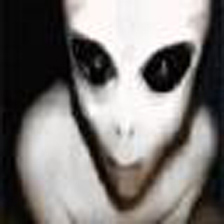 While I don't know, and refuse to make any claims without further direct experiences, if alien abductions really happen (and suspect these could be the imagination's way of covering up or describing otherwise even more inexplicable experiences), it seems clear that people have many reasons to feel and believe that they have or might be abducted, whether in fear or even desire for such extra-terrestrial intrusion, that has led to aliens becoming a potent symbol in our post-modern age. While often addressed through stereotypes of new-age fanaticism or pop-skepticism, alien beings may still say something vital about what it means or feels like to be human. Mac Tonnies of Posthuman Blues seems to suggest that the image of the gray aliens may be either a projection of our desire to transcend being merely human in this post/trans-human age, or a metaphoric anxiety nightmare left over from the horrors of war and technology from the middle of last century.
I am not quite convinced however that aliens don't also cover an impulse or feeling that is an ancient one for which these are only the most recent and applicable symbol: that of feeling alienated or disconnected from the other. Consider for example Greek legends of people being kidnapped by fauns or waylaid by sirens, Victorian romances in which men become monsters and vampires, or even the Biblical angels, who contain that same longing to transcend our everyday experiences through external salvation (angels being technically depicted as eye-studded revolving spheres that sound more like UFOs than anything else). Looking at my relatives' experiences, they clearly were in extreme situations of alienation, which they only found words for in terms of alien abduction: I don't belong, therefor I must have been removed/transformed. I suffered from the same kind of alienation as a child, feeling that either I didn't belong or that no one else did, a feeling particularly strong as a tenager dealing with understanding one's place in the social spheres, much less the celestial spheres. After trying and failing to fit in I tried not to fit in, and didn't fit in there either, and only found some relief from this anxiety in music and art, listening to Bowie's Ziggy Stardust, his myth of the good alien come to save all the alienated youth certainly allowing me (and I imagine many others) to feel that they did belong, somewhere, even if that was in the distant stars, much like a modern day Ezekial, whose visions of angels the Jews turned to during the alienating reign of Nebuchadnezzar. "Look out your window I can see his light/ If we can sparkle he may land tonight/ Don't tell your poppa or he'll get us locked up in fright."
While children are certainly more inclined to describe or occlude their experiences in imaginistic terms or characters, I suspect this feeling of being alienated may belong to everyone. As rational creatures whose perceptions work through distinction rather than homogenization of experiences, it is no wonder that some of the hardest struggles of history have risen from our perceived human differences. Race, sex, class, customs, gender, age, intelligence, ability, etc, whether arbitrary or not, when taken as the primary signifier and worth of individuals, reduces up to a type or group often at odds with or misunderstood by others outside that group, leading to such bromides as "men are from Mars/ women from Venus," or more real conflicts like the recent racial profiling and arrest of the black professor Gates in his own home (not to mention centuries of national or racial warfare). Orson Scott Card, in his brilliant Ender's Quartet novels sets up the Hierarchy of Exclusion, which seems to operate on a function between familiarity and communicability:
"The Nordic language recognizes four orders of foreignness. The first is the otherlander, or utlanning, the stranger that we recognize as being a human of our world, but of another city or country. The second is the framling... This is the stranger that we recognize as human, but of another world. The third is the raman, the stranger that we recognize as human, but of another species. The fourth is the true alien, the varelse, which includes all the animals, for with them no conversation is possible. They live, but we cannot guess what purposes or causes make them act. They might be intelligent, they might be self-aware, but we cannot know it." -from Speaker for the Dead
Of course, when the other is so foreign to us that we can't communicate, it often ends in direct conflict, or goes further, beyond anything remotely conceivable and thus truly alien. While this final level of total alienness could be interpreted as encounters with the numinous or ineffable - I am partial to the idea that God is the ultimate alien - it also points to our boundaries of knowledge and description, and more directly to the human experience of being bound in an individual consciousness. To some degree we are all alien to each other, and even sometimes to ourselves: this is a limit to our ability to express who we are and what our experiences of the world mean, and the alien may be the mask, the image we refer others to in order to describe what might otherwise be inexplicable, what feels out of this world, much like Freud's idea of the uncanny or un-homelike, except with Earth as Home, we react with fear and wonder to that which is extraordinarily unfamiliar. In an age when we can finally begin to say that we know most of what is on Earth, there is still more, roughly 98% more, in the Heavens than we can fit into our scientific philosophies, dark matter and gravity if not little gray beings (though the truth may still be out there... so might God for all we can prove or disprove).
I occasionally tell people that I'm in support of space exploration, which often (and more often than I'd have hoped in the 21st Century) draws blank or incredulous stares, as if I really am from outer space. As the author of the exceptional Red Mars,Kim Stanley Robinson recently pointed out, in conjunction with the 40th anniversary of the first moon landing, there is still a reason for going to space. Forget interstellar exploration, forget contact with other potentially intelligent life in the universe, forget finding a habitable new home for when this one inevitably wears out, the current resurgence of space programs could be local; by living on other planets in our solar system we might better figure out how to live on and take care of this planet, which is in sore need of better stewardship. Though this may first mean resolving those lingering problems of otherness that still plague and alienate mankind.
Which isn't to say that we can't refamiliarlize ourselves with those who are other from us, a process of dealienazation, which can only begin at home. This was one of the lessons I learned from seeing my family this week, that our secrets are symptomatic of larger miscommunications that lead to conflicts and division the way they do in the larger world, that even though we are all involved in fields of communication (as more and more people are these days), we are still shockingly out of touch from each other, as if E.T. had never extended his finger for contact. But all it sometimes takes is a phone call or a letter, or even just a smile, to make our families familiar to us again, which can equally apply to strangers, enemies, the world. Though we are all aliens lost in space, we are all human on Earth together, one vast estranged family still learning to accept each other and explain what this all might mean. Perhaps one day we'll be able to look up at the stars together, and when we see the occasional peculiar lights zipping around like nothing but unidentifiable objects, we can finally discuss them openly, or just say hello.
Asking my folks about it later gave us a little more information, though they too seemed anxious to change the subject: my cousin woke up one night in the woods far from the bunker (perhaps an alien abduction being more sane than their cult). My brother on the other hand had a much more normal upbringing, but this included a lot of educational struggles and being outcasted at school, which left him with some strange compulsive behaviors that he could only, and adamantly explained as having been abducted. While these situations could be explained as dissociation or social anxieties mixed with hyperactive imaginations, that doesn't account for the small triangular scar that they both have from whatever experience did happen to them. The strange thing was my mother's comments vis-à me.
Personally I can recall (and have written of here before) being a kid and being paralyzed with fear of taking out the garbage at night, because I knew that a mothership would descend from the orange sky to get me, perhaps if they hadn't already. Or in the '90s when that pointy-chinned bug-eyed alien face was becoming a pop cultural icon I found it horrifying even to think about (though admittedly I felt that way about spiders and the California Raisins). Before that though when I was really young my mother helped edit the Time-Life Mysteries of the Unknown series on paranormal experiences, having to check sources for the articles. Apparently, though I have no memory of it, we were one day in a bookstore where she picked up Whitley Strieber's book of UFO research, on the cover of which was that iconic grayfaced alien. When I saw it I flipped out, telling her that I had seen those creatures before - that they had come for me in my dreams - which could have all sorts of interpretations but was clearly so terrifying that I completely repressed it, and have only recently begun to allow myself to see and sort through the symbol of the alien in my dreamwork practices. Though thinking back I always wondered or suspected if I'd been abducted, or was myself an alien, because my whole life I have clearly felt different or separated from my fellow human beings.
While I don't know, and refuse to make any claims without further direct experiences, if alien abductions really happen (and suspect these could be the imagination's way of covering up or describing otherwise even more inexplicable experiences), it seems clear that people have many reasons to feel and believe that they have or might be abducted, whether in fear or even desire for such extra-terrestrial intrusion, that has led to aliens becoming a potent symbol in our post-modern age. While often addressed through stereotypes of new-age fanaticism or pop-skepticism, alien beings may still say something vital about what it means or feels like to be human. Mac Tonnies of Posthuman Blues seems to suggest that the image of the gray aliens may be either a projection of our desire to transcend being merely human in this post/trans-human age, or a metaphoric anxiety nightmare left over from the horrors of war and technology from the middle of last century. I am not quite convinced however that aliens don't also cover an impulse or feeling that is an ancient one for which these are only the most recent and applicable symbol: that of feeling alienated or disconnected from the other. Consider for example Greek legends of people being kidnapped by fauns or waylaid by sirens, Victorian romances in which men become monsters and vampires, or even the Biblical angels, who contain that same longing to transcend our everyday experiences through external salvation (angels being technically depicted as eye-studded revolving spheres that sound more like UFOs than anything else). Looking at my relatives' experiences, they clearly were in extreme situations of alienation, which they only found words for in terms of alien abduction: I don't belong, therefor I must have been removed/transformed. I suffered from the same kind of alienation as a child, feeling that either I didn't belong or that no one else did, a feeling particularly strong as a tenager dealing with understanding one's place in the social spheres, much less the celestial spheres. After trying and failing to fit in I tried not to fit in, and didn't fit in there either, and only found some relief from this anxiety in music and art, listening to Bowie's Ziggy Stardust, his myth of the good alien come to save all the alienated youth certainly allowing me (and I imagine many others) to feel that they did belong, somewhere, even if that was in the distant stars, much like a modern day Ezekial, whose visions of angels the Jews turned to during the alienating reign of Nebuchadnezzar. "Look out your window I can see his light/ If we can sparkle he may land tonight/ Don't tell your poppa or he'll get us locked up in fright."
While children are certainly more inclined to describe or occlude their experiences in imaginistic terms or characters, I suspect this feeling of being alienated may belong to everyone. As rational creatures whose perceptions work through distinction rather than homogenization of experiences, it is no wonder that some of the hardest struggles of history have risen from our perceived human differences. Race, sex, class, customs, gender, age, intelligence, ability, etc, whether arbitrary or not, when taken as the primary signifier and worth of individuals, reduces up to a type or group often at odds with or misunderstood by others outside that group, leading to such bromides as "men are from Mars/ women from Venus," or more real conflicts like the recent racial profiling and arrest of the black professor Gates in his own home (not to mention centuries of national or racial warfare). Orson Scott Card, in his brilliant Ender's Quartet novels sets up the Hierarchy of Exclusion, which seems to operate on a function between familiarity and communicability:
"The Nordic language recognizes four orders of foreignness. The first is the otherlander, or utlanning, the stranger that we recognize as being a human of our world, but of another city or country. The second is the framling... This is the stranger that we recognize as human, but of another world. The third is the raman, the stranger that we recognize as human, but of another species. The fourth is the true alien, the varelse, which includes all the animals, for with them no conversation is possible. They live, but we cannot guess what purposes or causes make them act. They might be intelligent, they might be self-aware, but we cannot know it." -from Speaker for the Dead
Of course, when the other is so foreign to us that we can't communicate, it often ends in direct conflict, or goes further, beyond anything remotely conceivable and thus truly alien. While this final level of total alienness could be interpreted as encounters with the numinous or ineffable - I am partial to the idea that God is the ultimate alien - it also points to our boundaries of knowledge and description, and more directly to the human experience of being bound in an individual consciousness. To some degree we are all alien to each other, and even sometimes to ourselves: this is a limit to our ability to express who we are and what our experiences of the world mean, and the alien may be the mask, the image we refer others to in order to describe what might otherwise be inexplicable, what feels out of this world, much like Freud's idea of the uncanny or un-homelike, except with Earth as Home, we react with fear and wonder to that which is extraordinarily unfamiliar. In an age when we can finally begin to say that we know most of what is on Earth, there is still more, roughly 98% more, in the Heavens than we can fit into our scientific philosophies, dark matter and gravity if not little gray beings (though the truth may still be out there... so might God for all we can prove or disprove).
I occasionally tell people that I'm in support of space exploration, which often (and more often than I'd have hoped in the 21st Century) draws blank or incredulous stares, as if I really am from outer space. As the author of the exceptional Red Mars,Kim Stanley Robinson recently pointed out, in conjunction with the 40th anniversary of the first moon landing, there is still a reason for going to space. Forget interstellar exploration, forget contact with other potentially intelligent life in the universe, forget finding a habitable new home for when this one inevitably wears out, the current resurgence of space programs could be local; by living on other planets in our solar system we might better figure out how to live on and take care of this planet, which is in sore need of better stewardship. Though this may first mean resolving those lingering problems of otherness that still plague and alienate mankind.
Which isn't to say that we can't refamiliarlize ourselves with those who are other from us, a process of dealienazation, which can only begin at home. This was one of the lessons I learned from seeing my family this week, that our secrets are symptomatic of larger miscommunications that lead to conflicts and division the way they do in the larger world, that even though we are all involved in fields of communication (as more and more people are these days), we are still shockingly out of touch from each other, as if E.T. had never extended his finger for contact. But all it sometimes takes is a phone call or a letter, or even just a smile, to make our families familiar to us again, which can equally apply to strangers, enemies, the world. Though we are all aliens lost in space, we are all human on Earth together, one vast estranged family still learning to accept each other and explain what this all might mean. Perhaps one day we'll be able to look up at the stars together, and when we see the occasional peculiar lights zipping around like nothing but unidentifiable objects, we can finally discuss them openly, or just say hello.
3.13.2009
The Circles (in the style of Faulkner)
We laid ‘em low. Pa said to grab the scythe an the lantern, an head out to the am’ranth, e’en of itn so dark it scares me. He grabbed the bundle an when he done buryin it Pa come out ta help me cut. I ask him why’rd it gottena be circles if they was commin out anyways, an he jus’ slap me an say ta keep on cutting ‘em. Aftern hour or so we’d gotten three circles down an half the lines, an he finally say cause thatn what Snopes did when they’da come out for them horses he stolen. Snopes jus’ cut the circles an when the goverm’t come out they jus’ paid him off ta hushn it up. Never asked about no horses. Why’d they do that, I say, an Pa jus’ give me that look, liken what he gave me when he found me still holden the shotgun in ma hands, an he say keepn cuttin. Ifn only yarn brother was here to help, we’da get these crops laid low afore morn.
Well, when we’sa finally done, an the sun start to dis’pate the witchin’ lights of the fog offna highway, Pa, he took a deep sigh, leanin thar on the handle the scythe like he’n a skinny grey shadow, when finally he ses it: alyens. Whatn ya mean alyens, I ses, like the ‘drigez family thatn come up narth an you ses a stealin all the jobs atn the plant? Nome, he cuffed me agan, an stared up trembling atn the silent orange dawn. I don’t mean no man asa come across a natchel border. I mean alyens, from upn stars. Goverm’t don’ like ‘em none. An I nodded, an I knew then whatn he meant, cause Jed’d read them stories to me at night and say theys a comin and it scaren me so bad that I… So I’sa started runnin, lookin up at ‘em fadin night an them hostile stars as ifn some fant’sy ship is gonna come sail’n outna ma nightmares.
So when they foun me, hidin in the hedges, I hollered good, them flashin lights an beams I thoughtn was some space monster, an I started holler’n real good then. We did it, I ses, cause’n me ‘at shot Jed, an so we made ‘em crop circles, but we’s did it, not yarn, I swear. Please don’ taken me up in yar mothernship or noth’n. Son, they ses, watchu holler’n ‘bout, an then I don’ know whetherna laugh orn cry, cause’n it was only the goverm’t an’ I scared it was some bug-eyed alyen!
Well, when we’sa finally done, an the sun start to dis’pate the witchin’ lights of the fog offna highway, Pa, he took a deep sigh, leanin thar on the handle the scythe like he’n a skinny grey shadow, when finally he ses it: alyens. Whatn ya mean alyens, I ses, like the ‘drigez family thatn come up narth an you ses a stealin all the jobs atn the plant? Nome, he cuffed me agan, an stared up trembling atn the silent orange dawn. I don’t mean no man asa come across a natchel border. I mean alyens, from upn stars. Goverm’t don’ like ‘em none. An I nodded, an I knew then whatn he meant, cause Jed’d read them stories to me at night and say theys a comin and it scaren me so bad that I… So I’sa started runnin, lookin up at ‘em fadin night an them hostile stars as ifn some fant’sy ship is gonna come sail’n outna ma nightmares.
So when they foun me, hidin in the hedges, I hollered good, them flashin lights an beams I thoughtn was some space monster, an I started holler’n real good then. We did it, I ses, cause’n me ‘at shot Jed, an so we made ‘em crop circles, but we’s did it, not yarn, I swear. Please don’ taken me up in yar mothernship or noth’n. Son, they ses, watchu holler’n ‘bout, an then I don’ know whetherna laugh orn cry, cause’n it was only the goverm’t an’ I scared it was some bug-eyed alyen!
3.09.2009
The Big Hunt
They say there’s no rest for the wicked, but perhaps it’s more apt to say there’s no explanation for the rational minded. At least there’s funding, even if it comes from eccentric billionaires.
“We’re cryptoxenologists,” I told him as I slid into the booth, shaking the last of the rain off my trench coat, “trained professionals in the scientific methods. Not ghost hunters.” Despite the expensive felt hat pulled low over his face, which was shadowed in the flashing light show of the Vegas club, I could still see a mad gleam in his eyes, like a kid setting his targets on the Holy Grail. So this was Robert Bigelow, I thought, of Bigelow Aerospace Advanced Space Studies, and my new patron.
“Don’t worry,” he smiled, the quivering of his fat jowls sending a shiver down my replaced spine, “I’m still talking aliens, UFOs, what have you. I need someone I can trust independent from the Mutual UFO Network to head a special division of my Star Impact Project: we’re after the big one, the biggest alien of them all.”
“Bigger than Roswell? Than the Vogans, than Xenu?”
“Very.”
“Hmm. You’ve got me intrigued, but I don’t come cheap. Is this supposed to be a Category Two or Three, physical traces, physiological effects in the witnesses?”
“Yes.” He smiled again; gesturing at the drink which a peculiarly androgynous waiter had set on the dark table. “Traces and effects of every imaginable kind. I didn’t believe it myself first either. This one’s beyond old Vallee’s categorizations. You want the run down?”
“Don’t you have a spec sheet? I’d like to get started before another bug hunter gets the goods.”
“No, I want you to understand the scope of what we’re dealing with here. Humor me.”
I shrugged back in the booth and took the drink, the first of many he’d be paying for I imagined. Its taste was impossible to pin down. While Bigelow talked I wondered what kind of alien we were hunting here, where it fit in Card’s Hierarchy of Foreignness, as varelse or raman: the other-as-enemy or other-as-self. I hoped the later; friendly aliens are always easier to negotiate with, and cover up after they leave town. But as the fat billionaire talked I began to think he was referring to the last function of foreignness, that ghost in the machine: the other as wholly and in-fucking-effably other.
“Wait, wait,” I stammered, sloshing the last of the weird blue drink on the tabletop, “did you just list as traces certain international monuments, text, rituals, and as physiological effects specific systems of belief and social codification, including the whole of our cultural value system?”
He smiled again, and this time the fear it caused me was almost enough to make me jump up and run screaming from the club, from the whole cursed city of Las Vegas, lit up like a giant welcoming beacon in the deserted night. “I told you I’m after that most alien of aliens…”
I gripped the table; the spilled drink sticky and surreal under my fingers. “You… you’re talking about God aren’t you?”
“We’re cryptoxenologists,” I told him as I slid into the booth, shaking the last of the rain off my trench coat, “trained professionals in the scientific methods. Not ghost hunters.” Despite the expensive felt hat pulled low over his face, which was shadowed in the flashing light show of the Vegas club, I could still see a mad gleam in his eyes, like a kid setting his targets on the Holy Grail. So this was Robert Bigelow, I thought, of Bigelow Aerospace Advanced Space Studies, and my new patron.
“Don’t worry,” he smiled, the quivering of his fat jowls sending a shiver down my replaced spine, “I’m still talking aliens, UFOs, what have you. I need someone I can trust independent from the Mutual UFO Network to head a special division of my Star Impact Project: we’re after the big one, the biggest alien of them all.”
“Bigger than Roswell? Than the Vogans, than Xenu?”
“Very.”
“Hmm. You’ve got me intrigued, but I don’t come cheap. Is this supposed to be a Category Two or Three, physical traces, physiological effects in the witnesses?”
“Yes.” He smiled again; gesturing at the drink which a peculiarly androgynous waiter had set on the dark table. “Traces and effects of every imaginable kind. I didn’t believe it myself first either. This one’s beyond old Vallee’s categorizations. You want the run down?”
“Don’t you have a spec sheet? I’d like to get started before another bug hunter gets the goods.”
“No, I want you to understand the scope of what we’re dealing with here. Humor me.”
I shrugged back in the booth and took the drink, the first of many he’d be paying for I imagined. Its taste was impossible to pin down. While Bigelow talked I wondered what kind of alien we were hunting here, where it fit in Card’s Hierarchy of Foreignness, as varelse or raman: the other-as-enemy or other-as-self. I hoped the later; friendly aliens are always easier to negotiate with, and cover up after they leave town. But as the fat billionaire talked I began to think he was referring to the last function of foreignness, that ghost in the machine: the other as wholly and in-fucking-effably other.
“Wait, wait,” I stammered, sloshing the last of the weird blue drink on the tabletop, “did you just list as traces certain international monuments, text, rituals, and as physiological effects specific systems of belief and social codification, including the whole of our cultural value system?”
He smiled again, and this time the fear it caused me was almost enough to make me jump up and run screaming from the club, from the whole cursed city of Las Vegas, lit up like a giant welcoming beacon in the deserted night. “I told you I’m after that most alien of aliens…”
I gripped the table; the spilled drink sticky and surreal under my fingers. “You… you’re talking about God aren’t you?”
2.22.2009
The Anthropological Perspective in LeGuin's The Left Hand of Darkness
The Anthropological Perspective in LeGuin's The Left Hand of Darkness
In his essay on The Left Hand of Darkness, Martin Bickman discusses the ways in which Ursula K. Le Guin plays with different formal elements to more clearly express the content and themes of her novel. While Bickman points to the use of structural arguments and descriptive passages, he neglects to mention one of the main stylistic techniques through which Le Guin illuminates her theme of finding unity through diversity, that of the narrative voice or point of view through which the story is told. The narrator, Genly Ai, claims that he will make his report on the planet Gethen as if it were a story (Le Guin, 7), but through the majority of the novel this record is rather told as if it were field notes on an unknown culture, that is, as an anthropological survey. As we are given little of Genly’s emotional responses or personal history, it is primarily through, and against, this anthropological perspective that we see the narrator struggling to understand the otherness of the alien culture in which he is placed.
Le Guin herself was the daughter of the anthropologist A.L. Kroeber, and this fascination with the studying of other cultures influences a number of her works. From the sociological study of the short story The Ones Who Walk Away from Omelas, to the all-encompassing cultural portrait of a world in Always Coming Home, Le Guin presents other peoples and places with the attention to details of custom that make individual cultures unique. It is perhaps a testament to her abilities as an author that she is able to create a narrator who also sees the strange world he comes to from this anthropological perspective. For instance, Genly goes to great page lengths to accurately describe the New Years celebration of Karhide, from its socio-political stratification to specifics of costume, entertainment, and ritual (Le Guin, 8-12). Elsewhere Genly analyzes the Karhidian diet, the floor plan of the royal Palace, and the planet’s political and technological history as if these were the necessary or obvious perspectives to the telling of his story. Though he is afraid the Gethenians think he will, “judge as an alien” (Le Guin, 11), the only judgments Genly makes at first are objective and observational ones.
The clearest we learn of Genly’s subjective past is that he comes from Earth, but more directly he arrives as an Envoy from the Ekumen, an interplanetary federation socially and technologically more advanced than the cultures on Gethen. This cultural difference is so vast and incomprehensible to the Gethenians that the king of Karhide asks why they should have, “anything to do with all these nations of monsters living out in the Void” (Le Guin, 38). This response may have been similar to what Western, imperialist cultures on our planet encountered when ‘discovering’ other indigenous peoples during the age of colonization. While Genly has been sent to communicate with, and not colonize, the Gethenians, he faces the same problem faced by real world anthropologists: that of having to understand the native people with whom he would talk. Genly is aware that he has to, “see the people of the planet through their own eyes” (Le Guin, 17); to which end he collects local myths and stories throughout the text. Despite the inclusion of these narratives of the other, Genley still sees his task as difficult due to differences in Gethenian sexuality or the socio-political intricacies of shifgrethor, but it may actually be because of the way his anthropological perspective treats the other.
In his essay, Self and Other in SF: Alien Encounters, Carl D. Malmgren sets up a three-tiered model for the perspectives through which aliens, the other, are generally encountered in science fiction: “other as enemy, other as self, other as other” (Malmgren, 18). The narrator of The Left Hand of Darkness clearly wants to reach the point of viewing the Gethenian other as self, but until he achieves that perspective he does not see them as either enemies or wholly other. From his broader cultural background in the Ekumen, which has abolished war ages ago, Genly has no desire to see Gethenians as enemies. Even when he is sent to the prison farm in Orgoreyn he discusses events with no sense of animosity, and at worst only feels further away from understanding the cultures around him. On the other hand, Genly’s perspective does not treat the other as wholly other, that is, as impossible to understand from our human vantage point. They may be other now, but through observation they might become known, even if that requires long, inhospitable journeys such as Genly goes on to see the Foretellers. But until these journeys are made, the anthropological perspective treats the other as an object, as something to be studied, classified, and perhaps even used. While Genly wants to understand Gethenian culture, his objective attention to cultural details keeps him from participating in the kinds of individual relationships necessary to apprehending the other as self, the relationships that are at the core of Le Guin’s novel.
Objectivity, it seems, is the greatest fallacy of the anthropological perspective. Is it possible to encounter the other without affecting and being affected by the other’s culture? Genly’s arrival on Gethen and his attempts to educate the Gethenians of the Ekumen drastically reshape the political machinations of both the Karhidians and the Orgoreyns. Each side wants to use Genley to leverage their own socio-political position on the planet, despite his warning that, “we’re all sons of the same Hearth” (Le Guin, 39). Genly’s own objective perspective similarly suffers from or is changed by this commingling of cultural ideas and values. While he participates in a number of feasts and civic ceremonies as an outsider, Genly chooses to participate directly in the Foretelling at the Otherhord Fastness. The answer he receives not only changes Gethenian culture by determining that the Ekumen will arrive within five years, but also introduces Genly to the religious Handdarata concept of, “the perfect uselessness of knowing the answer to the wrong question” (Le Guin, 71). This clearly non-objective state of mind haunts Genly through the rest of the book, making it increasingly difficult for him to interpret what he observes when he arrives in Orgoreyn. Estraven points out that Genly demands an “inordinate trustfulness,” and can not see that the machine of Orgoreyn conceals its machinations (Le Guin, 144 and 146), which lands the Envoy in the prison farm of Pulefen.
Genly and Estraven’s escape onto the Ice marks the place in the story where the novel’s theme of unity through diversity may become possible. It is also when Genly’s anthropological perspective begins to break down. The narration at this point goes back and forth each chapter between the two characters, signifying that one perspective alone is not enough to convey unity. Similarly, it is Estraven’s narratives that here take a scientific and objective turn, describing the quality of the Ice and its effect on the cultures of Gethen with the details that only someone from within that culture could know. Genly meanwhile has little culture to observe, and his narratives tend toward the minutia of physiological survival rather than the objective studying of the other. The other here is now nature itself, but the act of survival disallows the separation from the world that is necessary to the anthropological perspective.
Though the narrator’s perspective weakens as The Left Hand of Darkness draws to a close, it is still uncertain whether the cultural differences between the Ekumen and Gethen are surmountable enough for Genly to understand the other as self. Each of these cultures has their own method for directly connecting to others; for Gethenians it is the sexual state of Kemmer, while for members of the Ekumen it is Mindspeech, a form of telepathy. When they are alone on the ice, Estraven says that he and Genly are, “equals at last, equal, alien, alone” (Le Guin, 221). Yet when he goes into Kemmer, Genly is not able or refuses to participate, denying the form of connection from Gethenian culture. Instead Genly convinces Estraven to participate in Mindspeech, which he claims is “the only important thing” his culture has to give to Gethen (Le Guin, 233), equating this act as an instance of cultural dominance. Even then Estraven can only hear Genly through the voice of one of his own people, and consequently rejects the cultural gift of connection and communication between equals.
Throughout the story then it seems that it is not Genly’s objective anthropological perspective, or even his culture’s “superior” values, that enables him to achieve his mission of bringing the Ekumen to Gethen. All these things do is succeed to alienate the narrator from his own people when they finally arrive, leaving Genly more culturally adrift than when he arrived. He becomes other from himself. Instead it is Estraven who allows the Ekumen culture into his own, for he alone was broadminded enough from the beginning to not only understand his own culture, but also the necessity of welcoming an alien other into their midst. While he has been the Envoy’s strongest ally, Genly was unable to see this, let alone trust Estraven, precisely because of his dehumanizing perspective of the other as an object of study.
In his essay on The Left Hand of Darkness, Martin Bickman discusses the ways in which Ursula K. Le Guin plays with different formal elements to more clearly express the content and themes of her novel. While Bickman points to the use of structural arguments and descriptive passages, he neglects to mention one of the main stylistic techniques through which Le Guin illuminates her theme of finding unity through diversity, that of the narrative voice or point of view through which the story is told. The narrator, Genly Ai, claims that he will make his report on the planet Gethen as if it were a story (Le Guin, 7), but through the majority of the novel this record is rather told as if it were field notes on an unknown culture, that is, as an anthropological survey. As we are given little of Genly’s emotional responses or personal history, it is primarily through, and against, this anthropological perspective that we see the narrator struggling to understand the otherness of the alien culture in which he is placed.
Le Guin herself was the daughter of the anthropologist A.L. Kroeber, and this fascination with the studying of other cultures influences a number of her works. From the sociological study of the short story The Ones Who Walk Away from Omelas, to the all-encompassing cultural portrait of a world in Always Coming Home, Le Guin presents other peoples and places with the attention to details of custom that make individual cultures unique. It is perhaps a testament to her abilities as an author that she is able to create a narrator who also sees the strange world he comes to from this anthropological perspective. For instance, Genly goes to great page lengths to accurately describe the New Years celebration of Karhide, from its socio-political stratification to specifics of costume, entertainment, and ritual (Le Guin, 8-12). Elsewhere Genly analyzes the Karhidian diet, the floor plan of the royal Palace, and the planet’s political and technological history as if these were the necessary or obvious perspectives to the telling of his story. Though he is afraid the Gethenians think he will, “judge as an alien” (Le Guin, 11), the only judgments Genly makes at first are objective and observational ones.
The clearest we learn of Genly’s subjective past is that he comes from Earth, but more directly he arrives as an Envoy from the Ekumen, an interplanetary federation socially and technologically more advanced than the cultures on Gethen. This cultural difference is so vast and incomprehensible to the Gethenians that the king of Karhide asks why they should have, “anything to do with all these nations of monsters living out in the Void” (Le Guin, 38). This response may have been similar to what Western, imperialist cultures on our planet encountered when ‘discovering’ other indigenous peoples during the age of colonization. While Genly has been sent to communicate with, and not colonize, the Gethenians, he faces the same problem faced by real world anthropologists: that of having to understand the native people with whom he would talk. Genly is aware that he has to, “see the people of the planet through their own eyes” (Le Guin, 17); to which end he collects local myths and stories throughout the text. Despite the inclusion of these narratives of the other, Genley still sees his task as difficult due to differences in Gethenian sexuality or the socio-political intricacies of shifgrethor, but it may actually be because of the way his anthropological perspective treats the other.
In his essay, Self and Other in SF: Alien Encounters, Carl D. Malmgren sets up a three-tiered model for the perspectives through which aliens, the other, are generally encountered in science fiction: “other as enemy, other as self, other as other” (Malmgren, 18). The narrator of The Left Hand of Darkness clearly wants to reach the point of viewing the Gethenian other as self, but until he achieves that perspective he does not see them as either enemies or wholly other. From his broader cultural background in the Ekumen, which has abolished war ages ago, Genly has no desire to see Gethenians as enemies. Even when he is sent to the prison farm in Orgoreyn he discusses events with no sense of animosity, and at worst only feels further away from understanding the cultures around him. On the other hand, Genly’s perspective does not treat the other as wholly other, that is, as impossible to understand from our human vantage point. They may be other now, but through observation they might become known, even if that requires long, inhospitable journeys such as Genly goes on to see the Foretellers. But until these journeys are made, the anthropological perspective treats the other as an object, as something to be studied, classified, and perhaps even used. While Genly wants to understand Gethenian culture, his objective attention to cultural details keeps him from participating in the kinds of individual relationships necessary to apprehending the other as self, the relationships that are at the core of Le Guin’s novel.
Objectivity, it seems, is the greatest fallacy of the anthropological perspective. Is it possible to encounter the other without affecting and being affected by the other’s culture? Genly’s arrival on Gethen and his attempts to educate the Gethenians of the Ekumen drastically reshape the political machinations of both the Karhidians and the Orgoreyns. Each side wants to use Genley to leverage their own socio-political position on the planet, despite his warning that, “we’re all sons of the same Hearth” (Le Guin, 39). Genly’s own objective perspective similarly suffers from or is changed by this commingling of cultural ideas and values. While he participates in a number of feasts and civic ceremonies as an outsider, Genly chooses to participate directly in the Foretelling at the Otherhord Fastness. The answer he receives not only changes Gethenian culture by determining that the Ekumen will arrive within five years, but also introduces Genly to the religious Handdarata concept of, “the perfect uselessness of knowing the answer to the wrong question” (Le Guin, 71). This clearly non-objective state of mind haunts Genly through the rest of the book, making it increasingly difficult for him to interpret what he observes when he arrives in Orgoreyn. Estraven points out that Genly demands an “inordinate trustfulness,” and can not see that the machine of Orgoreyn conceals its machinations (Le Guin, 144 and 146), which lands the Envoy in the prison farm of Pulefen.
Genly and Estraven’s escape onto the Ice marks the place in the story where the novel’s theme of unity through diversity may become possible. It is also when Genly’s anthropological perspective begins to break down. The narration at this point goes back and forth each chapter between the two characters, signifying that one perspective alone is not enough to convey unity. Similarly, it is Estraven’s narratives that here take a scientific and objective turn, describing the quality of the Ice and its effect on the cultures of Gethen with the details that only someone from within that culture could know. Genly meanwhile has little culture to observe, and his narratives tend toward the minutia of physiological survival rather than the objective studying of the other. The other here is now nature itself, but the act of survival disallows the separation from the world that is necessary to the anthropological perspective.
Though the narrator’s perspective weakens as The Left Hand of Darkness draws to a close, it is still uncertain whether the cultural differences between the Ekumen and Gethen are surmountable enough for Genly to understand the other as self. Each of these cultures has their own method for directly connecting to others; for Gethenians it is the sexual state of Kemmer, while for members of the Ekumen it is Mindspeech, a form of telepathy. When they are alone on the ice, Estraven says that he and Genly are, “equals at last, equal, alien, alone” (Le Guin, 221). Yet when he goes into Kemmer, Genly is not able or refuses to participate, denying the form of connection from Gethenian culture. Instead Genly convinces Estraven to participate in Mindspeech, which he claims is “the only important thing” his culture has to give to Gethen (Le Guin, 233), equating this act as an instance of cultural dominance. Even then Estraven can only hear Genly through the voice of one of his own people, and consequently rejects the cultural gift of connection and communication between equals.
Throughout the story then it seems that it is not Genly’s objective anthropological perspective, or even his culture’s “superior” values, that enables him to achieve his mission of bringing the Ekumen to Gethen. All these things do is succeed to alienate the narrator from his own people when they finally arrive, leaving Genly more culturally adrift than when he arrived. He becomes other from himself. Instead it is Estraven who allows the Ekumen culture into his own, for he alone was broadminded enough from the beginning to not only understand his own culture, but also the necessity of welcoming an alien other into their midst. While he has been the Envoy’s strongest ally, Genly was unable to see this, let alone trust Estraven, precisely because of his dehumanizing perspective of the other as an object of study.
5.13.2008
Oh Holy Space
This just in, The Vatican says it's okay to believe in aliens.
"Ruling out the existence of aliens would be like "putting limits" on God's creative freedom."
This is interesting to me, as it raises some interesting questions about certain inhuman religious creatures. Angels for instance, not your friendly winged people variety but some like the Ophanim which were depicted as eye-covered nested wheels.

Certainly one could nowadays imagine beings like this coming from outer space, unless of course all the prophets were on heavy drugs. Then again, I suppose people might say the same thing about those who claim to talk to both aliens and God.
"Ruling out the existence of aliens would be like "putting limits" on God's creative freedom."
This is interesting to me, as it raises some interesting questions about certain inhuman religious creatures. Angels for instance, not your friendly winged people variety but some like the Ophanim which were depicted as eye-covered nested wheels.
Certainly one could nowadays imagine beings like this coming from outer space, unless of course all the prophets were on heavy drugs. Then again, I suppose people might say the same thing about those who claim to talk to both aliens and God.
3.20.2008
Radicals in Space
"I may agree with Shelley that poets are the unacknowledged legislators of the world, but he didn't mean they really get many laws enacted, and I guess I didn't ever really look for definable, practical results of anything I wrote. My utopias are not blueprints. In fact, I distrust utopias that pretend to be blueprints. Fiction is not a good medium for preaching or for planning. It is really good, though, for what we used to call conscious-raising."
-Ursula K. LeGuin, on anarchy and writing, interviewed by the Infoshop News
This is a pretty wonderful statement, considering that one of her utopias was the novel "The Dispossessed," in which the anarchists are given the moon. Though this may not be such a feasible blueprint, it certainly raised my consciousness up above earthly concerns when I was a young anarchist.
While we are on the topic of interviews and the radicalizing of space, here is the final interview with Arthur C. Clarke before his death, in which it is revealed that he probably didn't get his last wish, which was for aliens to finally reveal themselves on earth. But certainly he did his part to make Earth a much more welcoming place for them.
1.30.2008
On Transcendence
I have been thinking much lately about what has been a lifelong desire to transcend or escape from what has otherwise felt like a mundane and often painful reality. I have desired true miracles, magical occurences, other realities, even yesterday I was looking at some buildings on campus and thought that if I walked past them I might find myself in another set of places that do not exist except in my dreams. I have longed for this since I was a child, and my twin and I used to walk up and down the beach creating an imaginary mansion between us that we would inhabit whenever life was just too little to hold our attentions. I have always sought the irreal, and all my arts, rebellions, highs (of which there have been many), have just been a part of this desire. And yet I still don't know why. Was there some buried crises or trauma from my childhood thjat forced me to want to escape reality? Was there instead no such crises? Was this just a product of my overactive imagination, precocious reading, social ostracization, and somewhat spiritual upbringing? Am I really just a "recovering Catholic," in that I've sought for all manner of spiritual and liminal experiences because God never showed himself to exist?
I have been equally fascinated with magic from a young age, and have been involved over the years with all manner of ritual and religious behaviors. And though many irreal and seemingly miraculous things have happened in my life, whether by my own actions or not, never has anything occured that has completely surpassed my expectations of what is possible. Even my "meeting with God" in '03 can be attributed to the liminal or shamanic state induced by the San Pedro I had consumed, and thus reduced to chemicals in the brain and the powers of imagination. The clouds did not open up while I was walking down the street and angels step out to greet me. It was only ever the sunset, and the only angel I've met is, despite her immense powers, only all too human. I never woke up from a horrendous nightmare to find myself metamorphosized into an enormous insect. It has instead only been a feeling, a metaphor. I think of my younger brother, supposedly kidbnapped by aliens. Did this really happen? Is it only psychological? Is there any difference between the two if reality is indeed some holographic simulation, as scientists currently theorize? Was I abducted too, and have I just repressed it and continually sought out proof, justification? Instead am I merely jealous that it was not me? I used to take the garbage out, and look up at the orange sky in delirious fear that this time they were actually coming to get me. I did not long for it. And the time I was in Oregon and looked up to see that one point of light doing loops in the sky unlike a star, plane, or satelite before speeding off. I was almost relieved, accepted it, perhaps because it was so far away, so inconsequential to verge on the meaningless and thus not a threat to my reality. And I was also stoned.
Show me a sign! I want to cry out, distraught that this glaring lack of a true miracle or magic really does disprove God, the transcendent, forgetting perhaps the miraculous complexity and improbability of the ultimately real, which has yet to reveal anything more than that. It is these thoughts which occasionally lead me to the question of intentionally going mad, in order to see the spirits that we feel must lurk on the other side of the real, forever taunting us with thir elusive presences. It is the lure of the voices, the visions, the unrectifiable break from the Real. And of course, even that insanity is reducible to a state of mind, as is all perception.
Perhaps we can never quite let ourselves experience, or even just see, that which is beyond our conception of the possible. Perhaps there are miracels walking amongst us all the time, and it is just easier, safer to function, to stick to our patterned realities and not let any of that in. We wouldn't know what we were looking at anyway, and would walk right past, the way I couldn't see those peculiar rose-like mushrooms growing in the forest until a friend had pointed them out to me. And then I saw them everywhere. I want to learn, like Rilke's character Malte, to look, and to look again. I think of all the gods, the faeries, Eliade's hierophanies that filled past ages, and I suspect that these were seen because they were then not beyond what was possible, what was expected. We now just have other things that are possible, that are expected, in which the irreal holds very little socio-cultural value. I could only roughly begin to ask why that is.
For all the looking I've done, for all I've tried to extend my perceptions and conceptions of what is possible, for all the incredible things I've actually seen (and if you'd have only seen what I've seen with these eyes), I am still waiting for something that is yet a hundred percent outside of my expectations. I am still waiting for reality to break open, for the time when I will walk over that hill and find myself in that other place that I can only vaguely go to in my dreams.
I have been equally fascinated with magic from a young age, and have been involved over the years with all manner of ritual and religious behaviors. And though many irreal and seemingly miraculous things have happened in my life, whether by my own actions or not, never has anything occured that has completely surpassed my expectations of what is possible. Even my "meeting with God" in '03 can be attributed to the liminal or shamanic state induced by the San Pedro I had consumed, and thus reduced to chemicals in the brain and the powers of imagination. The clouds did not open up while I was walking down the street and angels step out to greet me. It was only ever the sunset, and the only angel I've met is, despite her immense powers, only all too human. I never woke up from a horrendous nightmare to find myself metamorphosized into an enormous insect. It has instead only been a feeling, a metaphor. I think of my younger brother, supposedly kidbnapped by aliens. Did this really happen? Is it only psychological? Is there any difference between the two if reality is indeed some holographic simulation, as scientists currently theorize? Was I abducted too, and have I just repressed it and continually sought out proof, justification? Instead am I merely jealous that it was not me? I used to take the garbage out, and look up at the orange sky in delirious fear that this time they were actually coming to get me. I did not long for it. And the time I was in Oregon and looked up to see that one point of light doing loops in the sky unlike a star, plane, or satelite before speeding off. I was almost relieved, accepted it, perhaps because it was so far away, so inconsequential to verge on the meaningless and thus not a threat to my reality. And I was also stoned.
Show me a sign! I want to cry out, distraught that this glaring lack of a true miracle or magic really does disprove God, the transcendent, forgetting perhaps the miraculous complexity and improbability of the ultimately real, which has yet to reveal anything more than that. It is these thoughts which occasionally lead me to the question of intentionally going mad, in order to see the spirits that we feel must lurk on the other side of the real, forever taunting us with thir elusive presences. It is the lure of the voices, the visions, the unrectifiable break from the Real. And of course, even that insanity is reducible to a state of mind, as is all perception.
Perhaps we can never quite let ourselves experience, or even just see, that which is beyond our conception of the possible. Perhaps there are miracels walking amongst us all the time, and it is just easier, safer to function, to stick to our patterned realities and not let any of that in. We wouldn't know what we were looking at anyway, and would walk right past, the way I couldn't see those peculiar rose-like mushrooms growing in the forest until a friend had pointed them out to me. And then I saw them everywhere. I want to learn, like Rilke's character Malte, to look, and to look again. I think of all the gods, the faeries, Eliade's hierophanies that filled past ages, and I suspect that these were seen because they were then not beyond what was possible, what was expected. We now just have other things that are possible, that are expected, in which the irreal holds very little socio-cultural value. I could only roughly begin to ask why that is.
For all the looking I've done, for all I've tried to extend my perceptions and conceptions of what is possible, for all the incredible things I've actually seen (and if you'd have only seen what I've seen with these eyes), I am still waiting for something that is yet a hundred percent outside of my expectations. I am still waiting for reality to break open, for the time when I will walk over that hill and find myself in that other place that I can only vaguely go to in my dreams.
1.23.2008
Open Faith in the Digital Age
Seventy-five million years ago, Xenu, the wicked ruler of the Galactic Federation, drugged billions of his (remarkably earth-like 1950's era) people and shipped them on a spacecraft to earth, where they were stacked around volcanoes and blown up with hydrogen bombs. The tormented spirits of these aliens remain on earth, coalescing around people and causing them grave spiritual harm that must be exorcised with expensive spiritual technologies.
Such is the story revealed to advanced level members of the Church of Scientology, leading many to decry the religion as simply bad, mail-order science fiction for the rich and famous. As creation myths go, the story of Xenu is no more absurd, and just as reflexive of its socio-cultural milieu, as the creation mythologies of the majority of the world's religions (keeping in mind that instead of tribal priests, its founder was a 20th Century sci-fi author). What strikes me, however, is the exorbitant fees paid by members of the Church of Scientology to have this doctrine revealed to them, or to even join the cult in the first place. But even this isn't new. The Vedic religion of ancient India, one of the world's oldest ritual cults that laid the foundation for Hinduism, was primarily written by the priest-poet caste for payment by the warrior-king caste. The religion reflected the monied desires and glories with little interest in or from the commoners, whose own gods got no sacrifices and were often picked as the demonic enemies of the gods of the ruling class.
Thankfully we live in a much more advanced age, in which religious freedom both allows anyone to practice whatever kind of faith they choose, and the rest of us to practice our own faiths (while simultaneously suffering the other guy with some level of curiosity and/or amusement). At least that's the theory anyways. Questions of the insidious involvement of the Christian right in U.S. governmental policy aside, the Church of Scientology has created somewhat of a stir over the years with their vehement refusal to let anyone else see, use, or much less critique their material. Recently, an indoctrination video starring the renowned Scientologist Tom Cruise was leaked onto the internet, and then swiftly suppressed by the religion, with the threat of lawsuits if it was not taken down. Which of course backfired, and led a group of hackers, named Anonymous, to declare an open war on the CoS.
I first became aware of this interesting religious battle several days ago, when Anonymous released a mass of secret Scientology documents, which were posted on a site that has now (for some odd reason) been unfortunately deleted. It seems that much of the reasons behind this war deal with the aforementioned accusations of suppression of information, assertions that the church has killed several people over the years, and that the Anonymous hackers may be a gang of teenage kids out for laughs. While a handful dead do not rival the wake of countless bodies many religions have left behind, and while I generally practice a respectful tolerance for any belief that does not threaten a person or people who have not willingly joined that cult, something that significantly sets the Church of Scientology apart is that their faith is not free. I don't believe there is a single other set of religious texts that is not open to the public, at all, which in this age of information freedom (whether you like it or not) seems to be an attitude of almost medieval occultism. Of course so is assailing someone else's faith just because you think it would be a fun thing to do. Even all the old occult manuscripts are online, somewhere.
Though judging from the sheer incomprehensibility of the deleted, leaked documents (as mildly attested to by this guide of Scientologist terminology), it doesn't seem certain that having their religious texts open to the public would make the Church of Scientology any more endearing to the public eye.
Such is the story revealed to advanced level members of the Church of Scientology, leading many to decry the religion as simply bad, mail-order science fiction for the rich and famous. As creation myths go, the story of Xenu is no more absurd, and just as reflexive of its socio-cultural milieu, as the creation mythologies of the majority of the world's religions (keeping in mind that instead of tribal priests, its founder was a 20th Century sci-fi author). What strikes me, however, is the exorbitant fees paid by members of the Church of Scientology to have this doctrine revealed to them, or to even join the cult in the first place. But even this isn't new. The Vedic religion of ancient India, one of the world's oldest ritual cults that laid the foundation for Hinduism, was primarily written by the priest-poet caste for payment by the warrior-king caste. The religion reflected the monied desires and glories with little interest in or from the commoners, whose own gods got no sacrifices and were often picked as the demonic enemies of the gods of the ruling class.
Thankfully we live in a much more advanced age, in which religious freedom both allows anyone to practice whatever kind of faith they choose, and the rest of us to practice our own faiths (while simultaneously suffering the other guy with some level of curiosity and/or amusement). At least that's the theory anyways. Questions of the insidious involvement of the Christian right in U.S. governmental policy aside, the Church of Scientology has created somewhat of a stir over the years with their vehement refusal to let anyone else see, use, or much less critique their material. Recently, an indoctrination video starring the renowned Scientologist Tom Cruise was leaked onto the internet, and then swiftly suppressed by the religion, with the threat of lawsuits if it was not taken down. Which of course backfired, and led a group of hackers, named Anonymous, to declare an open war on the CoS.
I first became aware of this interesting religious battle several days ago, when Anonymous released a mass of secret Scientology documents, which were posted on a site that has now (for some odd reason) been unfortunately deleted. It seems that much of the reasons behind this war deal with the aforementioned accusations of suppression of information, assertions that the church has killed several people over the years, and that the Anonymous hackers may be a gang of teenage kids out for laughs. While a handful dead do not rival the wake of countless bodies many religions have left behind, and while I generally practice a respectful tolerance for any belief that does not threaten a person or people who have not willingly joined that cult, something that significantly sets the Church of Scientology apart is that their faith is not free. I don't believe there is a single other set of religious texts that is not open to the public, at all, which in this age of information freedom (whether you like it or not) seems to be an attitude of almost medieval occultism. Of course so is assailing someone else's faith just because you think it would be a fun thing to do. Even all the old occult manuscripts are online, somewhere.
Though judging from the sheer incomprehensibility of the deleted, leaked documents (as mildly attested to by this guide of Scientologist terminology), it doesn't seem certain that having their religious texts open to the public would make the Church of Scientology any more endearing to the public eye.
1.02.2008
We are the heroes of our own dreams
A recent article at Psychology Today suggests that dreams may serve the function of training us for how to deal with threats. Citing the vast number of nightmarish and negative dreams over fantasies and problem solving, researchers believe that dreams may be a practice-place for understanding how to respond to real-world difficulties, even to the point of suggesting that all those nightmares of zombies and aliens are really misappropriated imagery that fills the old evolutionary role of running from the saber-tooth tigers.
Robert Stickgold however, holds that dreaming is much more complex than rehearsal. He points, for example, to the ability of sleep to allow us to integrate and consolidate knowledge, or to come up with novel and artistic solutions. During sleep, our brains are making sense of the world, discovering new associations among existing memories, looking for patterns, formulating rules. "That's how we create meaning," says Stickgold. "Our brain puts things together."
Personally I agree that dreams can help us deal with threats, and help integrate our knowledge about the world, but even still there is some element of the fantastic, the joking and playful, the absurd, that dreams can always present to us, even in our most "realistic" dreams, that suggests to me something above and beyond a mere flight response. Perhaps dreams allow us not only to integrate our knowledge of the world, but articulate a deeper sense of personal relationship to this world, and everything that may or may not happen in it.

Last night I watched Paprika for the third time, which, in the opinion of someone who admittedly has been paying attention to the depiction of dreams in media since about third grade when I discovered Little Nemo in Slumberland, is a rather stunning depiction of the sheer insanity, intricate symbolism, and metaphysical speculation that I have always associated with dreaming. In the chaotic parade of all things under the sun, the use of Jungian archetypes fighting against Freudian repressions, imagistic leitmotifs that accompany each character, or the final idea that perhaps all our dreams are connected, this movie, based off the book by Yasutaka Tsutsui (that was apparently based off the authors own dreams and I desperately wish was in an English translation), certainly does not depict dreams as being a mere "threat-evasion" or problem solving technique, but a true reveling ground of the psyche and all that is possible in the human imagination.
Robert Stickgold however, holds that dreaming is much more complex than rehearsal. He points, for example, to the ability of sleep to allow us to integrate and consolidate knowledge, or to come up with novel and artistic solutions. During sleep, our brains are making sense of the world, discovering new associations among existing memories, looking for patterns, formulating rules. "That's how we create meaning," says Stickgold. "Our brain puts things together."
Personally I agree that dreams can help us deal with threats, and help integrate our knowledge about the world, but even still there is some element of the fantastic, the joking and playful, the absurd, that dreams can always present to us, even in our most "realistic" dreams, that suggests to me something above and beyond a mere flight response. Perhaps dreams allow us not only to integrate our knowledge of the world, but articulate a deeper sense of personal relationship to this world, and everything that may or may not happen in it.
Last night I watched Paprika for the third time, which, in the opinion of someone who admittedly has been paying attention to the depiction of dreams in media since about third grade when I discovered Little Nemo in Slumberland, is a rather stunning depiction of the sheer insanity, intricate symbolism, and metaphysical speculation that I have always associated with dreaming. In the chaotic parade of all things under the sun, the use of Jungian archetypes fighting against Freudian repressions, imagistic leitmotifs that accompany each character, or the final idea that perhaps all our dreams are connected, this movie, based off the book by Yasutaka Tsutsui (that was apparently based off the authors own dreams and I desperately wish was in an English translation), certainly does not depict dreams as being a mere "threat-evasion" or problem solving technique, but a true reveling ground of the psyche and all that is possible in the human imagination.
Subscribe to:
Comments (Atom)

