As a writer and avid reader it often worries me that in this hyper-modern world literature is becoming a rather insular art form: those who read read, and the rest, the majority, don't. This is one reason why I am fascinated by book lists such as these lists of
the 50 best cult books or
banned and challenged books. Hell, I even geek out over lists on Amazon, because sometimes these kinds of arbitrary collections can point me to books I ought to read, and even more importantly, suggest the extreme influence literature has had, and still has, on individuals.
For me however it is often not enough to read, or list, books that are inspiring, deviant, and fantastic for their own sake. Who hasn't tripped through the imaginations of Kafka, Burroughs, Vonnegut, or Poe? The more I read the more I become aware that one thing literature can do is describe, and allow us to experience, ever finer shades of being- much the way good classical music can create subtle emotional tensions through the contrast of chords, a masterful narrative can create as equally refined tensions through the tools of plot, language, identification. Of course, this has also meant for me a quest to discover ever more complex psychological narratives and descriptions of irreality, somewhat along the lines of Italo Calvino's idea of a library created out of books that only belong on the periphery of the established canon, the shamans and madmen of the book world, that by their tentative inclusion change our perceptions on the rest of our literally conjured experiences. On that note I want to present my own list of authors and texts that by haunting and redefining the canonical texts have been rather indispensable in my understanding of what is possible to experience.
Samuel Beckett- "Stories and Texts for Nothing," "Molloy," "Malone Dies," "The Unnamable," etc. While most people are familiar with "Waiting for Godot," the play that made him famous, few have braved Beckett's prose writing. Dense and dreamlike only scratch the surface, having been influenced heavily by Joyce and Proust, Beckett sets out to destroy every convention and form of thought available to language, so that we are left with plotless, settingless, and even characterless stories that nonetheless explore the despair and consciousness of what it means to be alive. Not for the casual reader, or even most experienced ones.
Nick Blinko- "Primal Screamer." The singer and artist of seminal anarcho-punk band Rudimentary Peni, Blinko followed in the footsteps of many great artists by going insane. From the asylum he produced an album dedicated entirely to H.P. Lovecraft, and this novel. "Primal Screamer" charts his descent into madness and childhood regression from the perspective of his psychiatrist, who may also be going mad.
Jorge Luis Borges- "Labyrinths," etc. I won't say much because he's more well known these days. Storytelling as the philosophy of infinite regression. A must read.
Julio Cortázar- "Hopscotch," "All Fires the Fire," etc. Though Borges, Márquez, Fuentes, and Vargas Llosa are perhaps the more widely known Latin American authors, Cortázar was also highly responsible for the Boom of Latin American Fiction in the 60s-70s. More urbane than Márquez's colonial-themed magical realism, Cortázar's work often deals with the loose boundaries of history and desire. Furthermore, his work "Hopscotch" has been hailed as the first hypertext novel or literary choose-your-own-adventure, featuring several chapters that can be inserted into the main text while remaining an immanently lyrical read.
Mark Z. Danielewski- "House of Leaves," "Only Revolutions." Also becoming more popular as his latest novel was nominated for several awards, Danielewski's "House of Leaves" was for years a cult classic circling around the internets. Personally I was not too impressed by his powers of storytelling, but was fascinated by the innovative, non-linear, and self-referential form of his texts, which are like reading trembling, labyrinthian, academic papers. And the idea of a house that continues to get larger inside itself gave me exquisite nightmares for about a week.
Mircea Eliade- "The Forbidden Forest," "Two Occult Tales," etc. Most famous as a scholar and founder of comparative religions, the Romanian Eliade always considered himself more of a storyteller. While the vast erudition of his academic work has a way of looping in on itself, his fiction does nothing but benefit from an intricate understanding of world mythological themes, put at the service of describing the psychological effects of time and the World Wars. He also writes some rather fantastic short stories based on his wide occult knowledge. A personal favorite.
Richard Hell- "Godlike," "Go Now." Another punk turned poet and author, Hell was most famous for his song "Blank Generation" with the Voidoids. His work offers a curious modern updating of several literary traditions that inspired his life. "Go Now" corrupts the Beat spirit of Kerouac and Clellon Holmes, while "Godlike" re-imagines the life of Rimbaud and Verlaine as gay New York poets on acid, all the while retaining a grasp on the frailness or pointlessness of humanity.
John Clellon Holmes- "Go." The novel that made the Beats a household word, and yet now falls outside the Beat canon. In the same vein as many other good author-wandering-around-aimlessly stories (cf. Henry Miller), "Go" gives an accurate portrait of the drunken striving and frightened insignificance of the best minds of his generation.
J.K. Huysmans- "Au Rebours (Against the Grain)," "Lá-Bas (Down There)." In the widely read "Portrait of Dorian Grey," Oscar Wilde has his character read a peculiar text that changes his life. That book happens to be "Au Rebours," which depicts the kind of decadent French lifestyle that Wilde only dreamed of living. Starting from this decadence, Huysmans manages to span the gamut of extreme experience in his works, from attending satanic masses to eventually joining a monastery.
Comte de Lautréamont- "Les Chants de Maldoror." Entirely unknown in its time, this work was eventually rediscovered by the surrealists who hailed it as one of the two masterpieces that informed their movement, especially the line: "The chance encounter on a dissecting table of a sewing machine and an umbrella." "The Songs of Maldoror" is a long imagistic prose poem about a relentless and possibly demonic anti-hero who has renounced God, mankind, and ultimately himself. Camus was also fascinated about this work and there are shadows of Maldoror in "The Stranger."
Stéphane Mallarmé- "Divigations," var. prose poems. While more often poetic then a prose writer, the Symbolist Mallarmé, along with Baudelaire in "Paris Spleen" and Rimbaud in "Seasons of Hell," attempted to destroy the boundary between poetry and prose, creating narratives outside of traditional syntactic forms that could be read for both the story and images at once. These works also capture the picture of the distraught French writer so eloquently distilled later in Sartre's "Nausea." On the other hand, Mallarmé's most famous poem, "A Throw of the Dice Will Never Abolish Chance," is a sprawling meta-poem about writing where words strewn everywhere on the page can be read in whatever order the reader chooses.
Gérard de Nerval- "Aurélia," etc. The other major influence on the Surrealists, as well as on Proust and Joseph Cornell, Nerval manages to record the fantastic dreams and hallucinations that accompany his descent into madness. Before and after his madness he paints vivid scenes of childhood love, Parisian neighborhoods, and occult rituals.
Kenneth Patchen- "The Journal of Albion Moonlight." A major influence on the Beats and collaborator with jazz musicians, Patchen somehow taps into the collective horror of World War II, penning a disjointed and surreal journal of a group of people fleeing and raging against a ubiquitous army of wolves. Phenomenal and chilling, this is the 40s, an emotional intensity never reached in the work of Pynchon, including the ballsy move of making both Jesus and Hitler misunderstood minor characters to his plot. A must read.
Milorad Pavić- "Dictionary of the Khazars," etc. More experiments with non-linear narratives. This text weaves a mythic story over several centuries through tentatively connected encyclopedia articles that can be read in any order and sound like masterful fairy-tales. Pavić's other works take the form of crossword puzzles and tarot readings.
Victor Pelevin- "The Yellow Arrow." I haven't read any of Pelevin's other work, but the Yellow Arrow is a personal favorite. A dark allegory about life and the Russian State, in which a man who is riding on a train that never stops, houses countries of people, and the dead are thrown out the windows, begins to wonder what would happen if he were able to get off. Beautiful and simple.
Fernando Pessoa- "The Book of Disquiet." Pessoa distinguished himself by creating several distinct literary heteronyms, who are the authors of their own works. In "The Book of Disquiet," one of these invented authors muses about the uncertainty and tedium of his life, and desire to imagine something different. For some reason I couldn't get through the book (mostly due to my own disquiet), though lines and images from it come back to me from time to time.
Rainer Maria Rilke- "The Notebooks of Malte Laurids Brigge." Many are familiar with his "Duino Elegies," and some colleges even require his "Letters to a Young Poet" in freshmen classes, but Rilke's only novel remains somewhat of a mystery. Much like other existential, man-about-town texts, in which not much happens but a character's obsession becomes fully lived (cf. Sartre and nausea, Lautréamont and evil, Miller and sex), Rilke's Malte is troubled by the question of death and transcendence, and that place where the veil of reality is torn to reveal poetic meaning. Though as a whole the "Notebooks" wanders off without a proper finish, many of the scenes display a linguistic and imagistic virtuosity that I don't think is rivaled in any other piece of literature. A personal favorite, try to find Stephen Mitchell's masterful translation.
Bruno Schulz- "The Street of Crocodiles." An obscure Polish art teacher, Schulz wrote down his childhood memories as letters to a fellow teacher and later published them as short stories. While drawing on the clarity and warmth of early Proust, as well as the ability to let incidental objects trigger emotional memories, Schulz sets himself apart by being able to see the extreme magic and dark possibilities that are peculiar to childhood. A personal favorite. The title piece also later served as inspiration for a short film by the Brothers Quay.
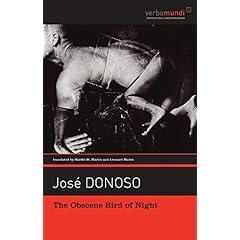
Of course, like all lists, this one is far from comprehensive. Other authors I am just discovering now deserve to be on here, such as Felisberto Hernandez, José Donoso, and E.T.A. Hoffmann, each of whom refines this library of unique experiences further. Hopefully others may read this and discover an author worth checking into, and if there are any texts that you have found inspirational or experientially exquisite, please post a comment.