
Fictionology’s central belief, that any imaginary construct can be incorporated into the church’s ever-growing set of official doctrines, continues to gain popularity. Believers in Santa Claus, his elves, or the Tooth Fairy are permitted—even encouraged—to view them as deities. Even corporate mascots like the Kool-Aid Man are valid objects of Fictionological worship.
“My personal savior is Batman,” said Beverly Hills plastic surgeon Greg Jurgenson. “My wife chooses to follow the teachings of the Gilmore Girls. Of course, we are still beginners. Some advanced-level Fictionologists have total knowledge of every lifetime they have ever lived for the last 80 trillion years.”
“Sure, it’s total bullshit,” Jurgenson added. “But that’s Fictionology. Praise Batman!” [...]
“Scientology can only offer data, such as how an Operating Thetan can control matter, energy, space, and time with pure thought alone,” McSavage said. “But truly spiritual people don’t care about data, especially those seeking an escape from very real physical, mental, or emotional problems.”
McSavage added, “As a Fictionologist, I live in a world of pretend. It’s liberating.”
Interestingly, I personally suspect that if there is any kind of contemporary folk mythology, this is essentially it, the belief in any literary or culture character as an object of worship, wisdom, or personal identification. Just because in the past the culture characters we did this with were gods does not mean contemporary characters are any less available for their symbolic significance. One just has to look at the hype surrounding the release of new superhero movies, the lines around theaters like ancient temples. Perhaps without intending to the Onion seems to have hit exactly on what makes pop culture tick in the human heart.
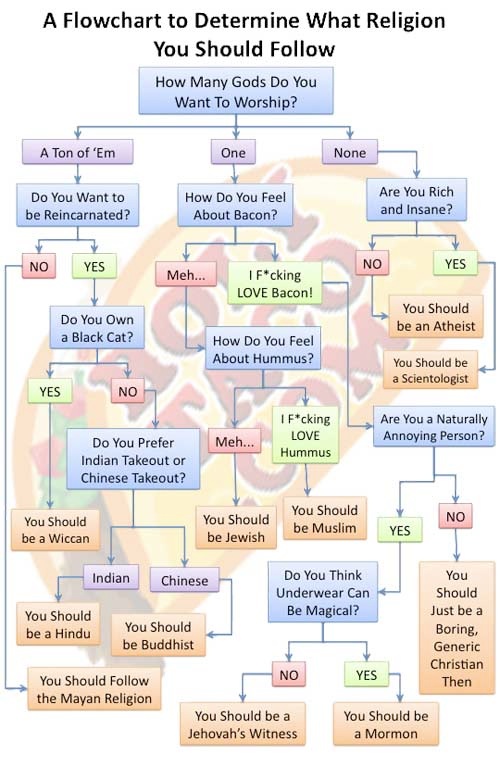
For further perusal, here's an interesting tor.com article on the role memory and recognition play in making quality stories, as well as a handy chart to help you determine (based off food preferences) what religion you should belong to.


No comments:
Post a Comment